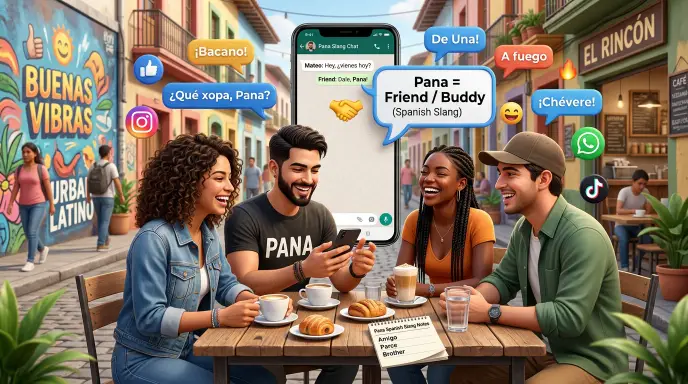
Pana Spanish slang means “friend,” “buddy,” or “close companion” in many Spanish speaking communities, especially in Venezuela and some parts of Latin America. People use pana as a warm and casual way to address someone they trust, similar to saying “bro,” “mate,” or “my friend” in English.
The term pana Spanish slang is commonly searched by people who hear it in conversations, movies, music, TikTok videos, or online chats and want to understand its meaning. While the word sounds simple, its meaning can change slightly depending on the country and situation.
In this guide, you will learn what pana Spanish slang means, where it comes from, how people use it, if it is rude, and how it compares with other Spanish words for friendship.
Quick Answer: What Does Pana Spanish Slang Mean?
Pana Spanish slang means “friend,” “buddy,” “pal,” or “close friend.” It is an informal word used mostly in Venezuela and some Caribbean and Latin American communities to show friendliness and connection.
Example:
- “Ese es mi pana.”
Meaning: “That is my friend.” - “Gracias, pana.”
Meaning: “Thanks, buddy.”
The word usually has a positive and friendly tone.
What Does Pana Spanish Slang Mean?
Pana is a casual Spanish slang word used to describe a friend, companion, or someone you feel comfortable with. It is not a formal word. Instead, it belongs to everyday conversations between people who have a friendly relationship.
When someone says “mi pana,” they usually mean:
- My friend
- My buddy
- My close pal
- My homie
- My trusted person
The feeling behind the word is often similar to calling someone “bro” or “mate” in English.
For example:
“Voy al partido con mi pana.”
“I’m going to the game with my friend.”
Here, pana simply refers to a person the speaker knows and likes.
Full Meaning and Definition of Pana
The direct definition of pana in slang is:
Pana (noun): A friendly informal term for a friend, companion, or someone from your social group.
It is mainly used as a form of address or a way to describe friendship.
Common English translations:
| Spanish Slang | English Meaning |
| Pana | Friend |
| Mi pana | My friend |
| Buen pana | Good friend |
| Pana mío | My buddy / my close friend |
The exact translation depends on the context. Sometimes it means a normal friend, while other times it suggests a very close relationship.
Different Meanings of Pana Spanish Slang
Although pana usually means “friend,” it can have slightly different meanings depending on the region and conversation.
1. Pana Meaning: Friend or Buddy
This is the most common meaning.
People use pana when talking casually with someone they know.
Examples:
- “Mi pana me ayudó con el trabajo.”
- “My friend helped me with the work.”
- “Ese pana juega muy bien fútbol.”
- “That guy plays soccer very well.”
In this use, pana is friendly and respectful.
2. Pana Meaning: Close Friend or Trusted Person
Sometimes pana means more than just an acquaintance. It can describe someone who is loyal or close.
Example:
- “Él es mi pana de verdad.”
- “He is my real friend.”
This suggests trust and a strong friendship.
3. Pana as a Way to Address Someone
People may also use pana directly when speaking to another person.
Examples:
- “¿Qué pasó, pana?”
- “What’s up, buddy?”
- “Oye, pana, ven aquí.”
- “Hey, friend, come here.”
This is similar to saying:
- Bro
- Dude
- Man
- Buddy
The tone depends on the speaker’s relationship with the listener.
Is Pana Spanish Slang Used Everywhere?
No. Pana is not equally common in every Spanish speaking country.
It is strongly associated with:
- Venezuela
- Some Caribbean Spanish-speaking communities
- Certain Latin American regions
In other Spanish-speaking countries, people may understand it because of movies, music, migration, or the internet, but they may use different words for “friend.”
For example:
| Region | Common Friend Slang |
| Venezuela | Pana |
| Mexico | Cuate, amigo, compa |
| Spain | Tío, colega |
| Argentina | Amigo, loco, che |
| Colombia | Parcero, amigo |
The meaning is similar, but local slang changes from place to place.
Where Is Pana Spanish Slang Commonly Used?
Pana is most commonly used in Venezuela, where it is one of the most recognized casual words for “friend.” It is also understood in some other Latin American communities because of cultural exchange, migration, music, and online communication.
The word is especially common in:
- Everyday conversations
- Friend groups
- Street conversations
- Music and entertainment
- Social media comments
- Online chats
A Venezuelan speaker might naturally say:
“Voy con mis panas esta noche.”
“I’m going with my friends tonight.”
Here, panas is the plural form of pana and means “friends.”
Pana on Social Media and Online Platforms
The use of pana Spanish slang has expanded online. Many Spanish-speaking users use it in casual digital conversations on platforms like TikTok, Instagram, Snapchat, Discord, Reddit, and messaging apps.
Online, pana usually keeps the same friendly meaning.
On TikTok
Creators may use pana in videos or comments to sound friendly and connected with their audience.
Example:
“Mi pana siempre tiene los mejores consejos.”
“My friend always has the best advice.”
The word can create a relaxed and relatable tone.
In Text Messages
Friends may use pana as a quick greeting or nickname.
Examples:
Person 1:
“¿Qué haces, pana?”
Meaning:
“What are you doing, buddy?”
Person 2:
“Todo bien, pana. ¿Y tú?”
Meaning:
“All good, friend. And you?”
On Discord and Gaming Communities
Spanish-speaking gamers may use pana when talking with teammates.
Examples:
- “Buen juego, pana.”
- “Good game, buddy.”
- “Mi pana me cubrió en la partida.”
- “My friend covered me in the match.”
In gaming spaces, it works similarly to words like “bro” or “mate.”
Origin and History of Pana Spanish Slang
The exact origin of pana as Spanish slang is not completely clear, and different explanations exist. What is clear is that the word became strongly connected with Venezuelan Spanish and Caribbean-style informal speech.
Some language researchers connect pana with Caribbean Spanish usage and possible influence from English words related to friendship, but the exact development is debated.
It is important not to present one uncertain origin story as proven fact.
What we know:
- The word has been used in Venezuelan Spanish for many years.
- It became a common informal term for friendship.
- Migration and internet culture helped more Spanish speakers recognize it.
Unlike newer internet slang, pana did not start on TikTok or social media. It existed in spoken Spanish before becoming visible online.
Is Pana Spanish Slang Rude, Offensive, or Harmless?
Pana is generally harmless and friendly slang. It is usually a positive word used to show closeness or friendliness.
However, the meaning depends on:
- Who says it
- Who hears it
- The relationship between people
- The tone of voice
Friendly use:
“Gracias, pana, me ayudaste mucho.”
Meaning:
“Thanks, buddy, you helped me a lot.”
This sounds warm and appreciative.
Possible misunderstanding:
If someone uses pana with a person they do not know well, it may sound too casual depending on the situation.
For example, saying:
“Oye, pana, necesito hablar contigo.”
to a stranger may feel overly familiar.
It is not offensive, but it may not match every social setting.
Can You Use Pana at Work or School?
Pana is usually too informal for professional situations.
You can use it with:
✅ Close friends
✅ Casual conversations
✅ Online communities
✅ Informal messages
Avoid using it in:
❌ Job interviews
❌ Formal emails
❌ Business meetings
❌ Academic writing
For example:
Not recommended:
“Thanks, pana, for the report.”
Better:
“Thank you for the report.”
Among classmates or coworkers who are also friends, it may be acceptable in casual chats.
Pana vs Other Spanish Words for Friend
Spanish has many words that mean “friend,” but each one has a different regional feeling.
| Word | Region | Meaning | Tone |
| Pana | Venezuela / some Latin regions | Friend, buddy | Very casual |
| Amigo | Most Spanish-speaking areas | Friend | Neutral |
| Compa | Mexico and Central America | Buddy, companion | Casual |
| Parcero | Colombia | Friend, close mate | Casual |
| Colega | Spain | Friend, colleague | Casual |
| Cuate | Mexico | Friend | Informal |
Pana has a strong connection with Venezuelan identity, while amigo is understood everywhere.
Real Life Examples of Pana Spanish Slang
Example 1: Friendly Conversation
Spanish:
“Mi pana viene a mi casa mañana.”
English:
“My friend is coming to my house tomorrow.”
Context:
A person is talking about a close friend.
Example 2: Greeting Someone
Spanish:
“¿Qué tal, pana?”
English:
“How’s it going, buddy?”
Context:
A casual greeting between friends.
Example 3: Online Comment
Spanish:
“Ese video estuvo increíble, pana.”
English:
“That video was amazing, friend.”
Context:
A friendly social media comment.
Example 4: Gaming Chat
Spanish:
“Pana, necesito ayuda en esta misión.”
English:
“Buddy, I need help in this mission.”
Context:
A teammate asking another player for support.
Example 5: Family Conversation
Spanish:
“Mi hermano salió con sus panas.”
English:
“My brother went out with his friends.”
Context:
Talking about a group of friends.
Similar Slang Words Related to Pana
Pana is one of many informal words used to describe friendship in Spanish. Different countries have their own slang terms that carry a similar meaning.
Understanding these related words helps you recognize regional differences in Spanish conversations.
| Slang Word | Meaning | Common Region | Example |
| Amigo | Friend | Most Spanish-speaking countries | “Mi amigo viene hoy.” |
| Compa | Buddy / companion | Mexico, Central America | “Qué onda, compa.” |
| Parcero | Close friend | Colombia | “Él es mi parcero.” |
| Cuate | Friend | Mexico | “Es mi cuate.” |
| Colega | Friend / mate | Spain | “Voy con mi colega.” |
| Hermano | Brother / close friend | Many regions | “Gracias, hermano.” |
While these words can overlap, pana has a special connection with Venezuelan Spanish and often creates a feeling of trust and familiarity.
Why Do People Use Pana?
People use pana Spanish slang because it creates a friendly and relaxed feeling in conversation.
Instead of using a formal word like “friend,” speakers choose pana to show:
- Friendship
- Trust
- Connection
- Familiarity
- A casual relationship
Slang often helps people feel closer to each other. Calling someone pana can make a conversation sound warmer and less formal.
For example:
Formal:
“Él es mi amigo.”
Casual:
“Él es mi pana.”
Both sentences mean “He is my friend,” but the second one sounds more relaxed and personal.
When Should You Avoid Using Pana?
Although pana is friendly, it is not suitable for every situation.
You should avoid using it when:
1. Speaking in Formal Situations

Do not use pana in professional or official communication.
Examples:
❌ Job application:
“Dear manager, thanks, pana.”
✅ Better:
“Dear manager, thank you.”
2. Talking to Someone You Do Not Know
Using slang with strangers can sometimes feel too familiar.
Example:
A stranger:
“Excuse me, can you help me?”
Your response:
“Sure, pana!”
This may sound unusual depending on the location.
A safer option:
“Sure, no problem.”
3. Academic Writing
Slang words like pana should not appear in:
- Essays
- Research papers
- Formal reports
- Professional documents
Use standard words like:
- Friend
- Companion
- Colleague
instead.
Common Misunderstandings About Pana
Misunderstanding 1: Pana Means “Brother”
Some people think pana directly means “brother.”
That is not correct.
The word usually means:
- Friend
- Buddy
- Pal
However, because close friends are sometimes treated like family, the feeling can be similar to saying “brother” in English.
Example:
“Ese es mi pana.”
Usually means:
“That is my friend.”
Not:
“That is my biological brother.”
Misunderstanding 2: Pana Is Used Everywhere in Spanish
Spanish has many regional differences.
A Venezuelan speaker may use pana naturally, while someone from another country may prefer another slang word.
For example:
- Venezuela pana
- Colombia parcero
- Mexico compa
- Spain colega
The word is understood by many Spanish speakers, but it is not the main slang term everywhere.
Misunderstanding 3: Pana Is Internet Slang
Although pana Spanish slang appears often online today, it did not begin as an internet-only expression.
People used it in spoken conversations before platforms like TikTok, Instagram, and Discord became popular.
The internet simply helped more people encounter the word.
Is Pana Still Popular or Becoming Old Fashioned?
Pana remains a common and recognizable slang word, especially in Venezuelan Spanish.
Unlike some internet slang terms that quickly become outdated, pana has a longer life because it is part of everyday spoken language.
Its popularity can change depending on:
- Country
- Age group
- Community
- Online trends
Younger users may combine it with newer internet expressions, while older speakers may use it naturally in everyday speech.
Pana Meaning in Different Contexts
| Context | Meaning | Tone |
| Talking with friends | Close friend | Warm and casual |
| Online chat | Buddy / pal | Friendly |
| Gaming | Teammate or friend | Relaxed |
| Music and videos | Friend or member of a group | Informal |
| Workplace | Usually too casual | Not recommended |
Context matters more than the word itself.
Frequently Asked Questions About Pana Spanish Slang
What does pana mean in Spanish slang?
Pana means friend, buddy, or close companion in Spanish slang. It is especially common in Venezuela and some Latin American communities.
Is pana a bad word?
No. Pana is not a bad word. It is normally a positive and friendly slang term.
The only issue is that it may sound too casual in formal situations.
What does “mi pana” mean?
“Mi pana” means “my friend,” “my buddy,” or “my pal.”
Example:
“Mi pana está aquí.”
Meaning:
“My friend is here.”
Is pana used on TikTok?
Yes. Spanish speaking users may use pana on TikTok, Instagram, and other platforms when talking casually with friends or followers.
Can I call someone pana?
Yes, if the situation is casual and the person is comfortable with informal language.
It works best with:
- Friends
- Online communities
- Casual conversations
Avoid using it in formal settings.
What is the difference between pana and amigo?
Both mean “friend,” but amigo is a standard Spanish word used everywhere, while pana is informal slang with strong regional connections, especially to Venezuela.
Conclusion
Pana Spanish slang means “friend,” “buddy,” or “close companion.” It is a friendly and informal word that shows connection and familiarity, especially in Venezuelan Spanish.
The word is commonly used in conversations, social media, gaming chats, and casual interactions. While it is harmless and positive, it is best saved for informal situations rather than professional or academic communication.
If you hear someone say “mi pana,” they are usually talking about someone they trust or feel comfortable with. Understanding words like pana helps you follow modern Spanish conversations and connect better with different Spanish speaking communities.

I enjoy writing about English vocabulary and making difficult words easier to understand. I create simple guides on synonyms, word meanings, example sentences, quizzes, and everyday English to help students, ESL learners, and writers improve their vocabulary. Before publishing any article, I research trusted dictionaries and language resources to keep the information clear and accurate. My goal is to make learning English simple, practical, and enjoyable for everyone.