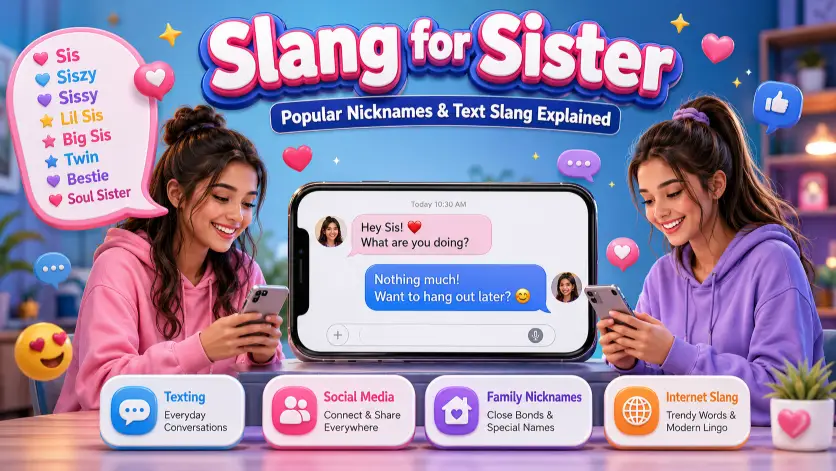
Slang for sister refers to informal words, nicknames, and expressions people use instead of saying “sister.” Common examples include sis, sissy, sista, big sis, lil sis, and bro sis, depending on the relationship and situation.
These terms are often used in texting, social media, family conversations, and online communities. People search for slang for sister because they want to understand friendly messages, find cute nicknames, or choose a modern way to address a sister figure.
The right word depends on tone, age, culture, and the closeness between people.In this guide, you will learn what different sister slang terms mean, where they are used, if they are appropriate, and how they sound in real conversations.
Quick Answer: Slang for Sister
Slang for sister means casual or informal words used to refer to a female sibling or a close female friend who feels like family. The most common slang term is “sis,” which is short for sister and is widely used in texts, social media, and everyday conversations.
Other examples include:
- Sis : the most common casual version of sister
- Sista : a playful or cultural spelling of sister
- Sissy : often a cute childhood nickname
- Big sis : an older sister
- Lil sis : a younger sister
- Sister from another mister : a close female friend
The meaning can change depending on who says it and the relationship behind it.
What Does Slang for Sister Mean?
Slang for sister describes informal language used to show familiarity, affection, friendship, or closeness. It does not always refer to a biological sister.
For example:
- A person may say “Hey sis” to their actual sister.
- Someone may say “Thanks, sis!” to a close female friend.
- Online creators may call followers “sis” to create a friendly connection.
The word usually carries a warm and supportive feeling. However, the tone depends on the speaker and the situation.
A message like:
“Sis, you need to see this!”
sounds friendly and casual.
But:
“Listen, sis…”
could sound playful, serious, or even slightly sarcastic depending on the conversation.
Common Slang Words for Sister
Different slang terms have different feelings. Some sound cute, some sound modern, and some are connected to specific communities.
| Slang Term | Meaning | Tone | Common Use |
| Sis | Short for sister | Friendly, casual | Texting, social media, daily speech |
| Sista | Alternative spelling of sister | Playful, expressive | Informal conversations |
| Sissy | Sister nickname | Cute, childhood, affectionate | Families |
| Big Sis | Older sister | Respectful, caring | Family and friendships |
| Lil Sis | Younger sister | Sweet, protective | Family and close friends |
| Sister from another mister | Very close female friend | Humorous, affectionate | Friends |
| Sis-bro | Sister-like friend | Casual | Online communities |
What Does “Sis” Mean in Texting?
Sis is the most common slang abbreviation for sister in texting and online conversations. It is a shorter, more casual way to say “sister.”
People use sis to:
- Show friendship
- Express support
- Sound relaxed
- Create a feeling of closeness
Examples:
Text message:
“Sis, did you finish the assignment?”
Meaning:
“Sister, did you finish the assignment?”
Another example:
“You look amazing, sis!”
Here, “sis” may refer to a friend rather than a real sibling.
Is “Sis” Only Used for Real Sisters?
No. Sis can refer to both family members and close female friends.
In modern conversations, especially online, people often use “sis” as a friendly term for someone they trust or relate to.
Examples:
- A beauty influencer may say, “Sis, this product is amazing.”
- Friends may call each other “sis” to show closeness.
- Someone may use “sis” when supporting another person.
This wider use is common on platforms like TikTok, Instagram, Snapchat, and casual messaging apps.
What Does “Sista” Mean?
Sista is an informal spelling of “sister.” It is usually used to create a more expressive or playful style.
The term became popular through music, entertainment, and certain cultural communities. It is not simply a random spelling mistake; it has been used intentionally to represent a particular speaking style.
Examples:
“My sista always has my back.”
“Love you, sista!”
The meaning is similar to “sister,” but the feeling may be more expressive or casual.
What Does “Ma Sista Artinya” Mean?
If you searched ma sista artinya, the phrase is generally understood as asking for the meaning of “my sista.” “Sista” is an informal spelling of “sister,” while “ma” can be used casually for “my” in some informal expressions.
Depending on the context, “sista” can refer to a real sister or a woman who is treated like a sister. The phrase may appear in songs, social media posts, captions, or casual conversations.
Example:
“Love you, ma sista!”
This gives the message a warm and affectionate tone.
What Does “Sissy” Mean?
Sissy can have different meanings depending on context.
1. As a sister nickname
In many families, “sissy” is a cute nickname for a sister, especially among children.
Example:
“My sissy helped me with my homework.”
Here, it means sister and sounds affectionate.
2. As an insult
In some situations, “sissy” can also be used as an insult meaning someone is weak or not brave. This use is considered rude and outdated by many people.
Example:
“Don’t be a sissy.”
This does not mean sister. It is a negative use and can offend people.
Because of this difference, context matters.
Different Types of Sister Slang and Their Meanings
Family Based Sister Slang
These terms are commonly used between relatives:
- Sis : simple and common
- Sissy : affectionate nickname
- Big sis : older sister
- Little sis / lil sis : younger sister
Example:
“My big sis taught me how to drive.”
Friendship Based Sister Slang

Some words describe a close female friend rather than a family member.
Examples:
- Sis
- Girl
- Bestie
- Sister from another mister
Example:
“She’s not my real sister, but she’s my sis.”
This shows emotional closeness rather than a biological connection.
Slang Word for Sister: What Do People Say?
A common slang word for sister is “sis,” but people use several informal terms depending on age and relationship. For a younger sibling, slang for little sister may include “lil sis,” “little sis,” or simply “sis.”
For example:
- “My lil sis just started school.”
- “I’m picking up my little sis after class.”
These expressions sound casual and affectionate. They are especially common in texting, family conversations, and social media.
The phrase sisters slang can also describe the wider group of informal words people use when talking about sisters or sister-like friendships. Not every term has exactly the same meaning, so context is important.
Where Is Sister Slang Commonly Used?
Slang for sister appears in many casual communication spaces, including texting, social media, gaming communities, and everyday conversations. The meaning often stays the same, but the tone can change depending on the platform.
Understanding the platform helps you know if the term sounds natural or forced.
Slang for Sister in Text Messages
In texting, short words like sis are popular because they are quick, friendly, and easy to type.
People commonly use sister slang when:
- Giving advice
- Sharing exciting news
- Showing support
- Talking casually with friends or family
Examples:
Text conversation:
Person 1: “I finally passed my driving test!”
Person 2: “Congrats sis! I knew you could do it.”
Here, “sis” shows encouragement and friendliness.
Another example:
“Sis, you have to watch this movie.”
This means:
“You should watch this movie.”
It does not necessarily mean the person is talking to their actual sister.
Sister Slang on TikTok and Instagram
On platforms like TikTok and Instagram, sis is often used as a friendly community word.
Creators may use it while talking to followers because it creates a feeling of connection.
Examples:
- “Sis, this makeup trick changed everything.”
- “Listen sis, you deserve better.”
- “Sis, don’t ignore these warning signs.”
In these cases, “sis” works almost like saying:
- friend
- girl
- bestie
It is usually meant to sound supportive and relatable.
However, using it with strangers can sometimes feel too familiar if the relationship is not friendly.
Sister Slang on Snapchat
On Snapchat, casual language is common because conversations are usually quick and personal.
Terms like:
- sis
- sissy
- lil sis
- big sis
may appear in:
- private chats
- group messages
- story replies
Example:
“Thanks sis for the snap!”
The word creates a friendly tone rather than a formal one.
Sister Slang on Discord and Gaming Communities
In gaming spaces and Discord groups, sister slang is less about family and more about friendship.
A player might say:
“My sis helped me choose my character.”
This could mean:
- their actual sister
- a close female gaming friend
Gaming communities often use family style words such as:
- bro
- sis
- fam
- squad
to show teamwork and belonging.
Example:
“Good game, sis! That was a great move.”
This sounds like friendly teamwork.
Is Slang for Sister Rude or Offensive?
Most slang for sister is harmless and friendly, especially terms like sis and big sis.
However, the meaning depends on:
- the speaker
- the relationship
- the tone
- the situation
A term that sounds friendly between friends may sound strange coming from a stranger.
| Term | Usually Positive? | Possible Issue |
| Sis | Yes | May feel too familiar from strangers |
| Big sis | Yes | Could sound childish in some settings |
| Lil sis | Yes | May sound like someone is talking down to another person |
| Sissy | Sometimes | Can be insulting if used negatively |
| Sista | Depends | May feel unnatural if used without understanding context |
Can You Use “Sis” at Work?
Generally, sis is not recommended in professional workplaces unless the environment is very casual.
Professional communication usually requires more neutral language.
Casual workplace example:
“Thanks, sis, you saved the project!”
This may be acceptable between close coworkers who already speak casually.
Formal workplace example:
“Hey sis, can you send the report?”
This may sound too informal with a manager, client, or new coworker.
Better alternatives include:
- Thanks!
- Appreciate your help.
- Thank you for your support.
- Hi [name]
Can You Use Sister Slang With Teachers or Older People?
Usually, no.
Calling a teacher:
“Thanks sis!”
may sound disrespectful or overly casual unless that person has specifically encouraged that style.
With older relatives or people you do not know well, it is safer to use:
- their name
- a respectful title
- a normal greeting
Context matters more than the word itself.
Why Do People Use Sister Slang?
People use sister slang because it creates a sense of connection.
Common reasons include:
1. Showing Affection
A person may use “sis” to show care.
Example:
“You got this, sis!”
The message feels more personal than simply saying:
“You can do it.”
2. Creating Friendship
Online communities often use family style words to make strangers feel closer.
Words like:
- sis
- bro
- fam
create a feeling of belonging.
3. Making Conversations More Casual
Slang makes messages sound relaxed and natural.
Compare:
“Hello sister, how are you?”
with:
“Hey sis, how are you?”
The second one sounds more like everyday speech.
Origin and History of Sister Slang
The basic idea of using informal versions of “sister” has existed for a long time, especially in family conversations and close communities.
The shortened form “sis” developed naturally from the word sister and became widely used in casual speech and writing.
The broader use of “sis” as a friendly term for non-family members became especially common through:
- popular culture
- music
- online communities
- social media platforms
The exact moment when “sis” became internet slang is difficult to identify because informal language usually spreads gradually rather than appearing at one specific time.
Some siste related expressions are connected to cultural speech styles and communities, so their meaning can depend on who is using them and where.
Does “Sis” Come From Internet Culture?
Partly.
The word sis existed before modern social media, but platforms like:
- TikTok
- Twitter/X
- YouTube
- online forums
helped make its broader friendly use more visible.
Today, “sis” can be used by:
- friends
- influencers
- online communities
- family members
The internet did not create the word, but it helped expand its meaning.
Similar Slang Words for Sister
Many informal words can express a similar idea.
| Word | Meaning | Feeling |
| Bestie | Close friend | Friendly |
| Girl | Casual female friend | Relaxed |
| BFF | Best friend forever | Playful |
| Fam | Someone like family | Close connection |
| Bro | Close friend (gender-neutral in some contexts) | Casual |
| Homegirl | Female friend from the same community | Friendly |
These words are not exact replacements because each has a slightly different feeling.
Sister in Slang: Common Sister Slang Words
Sister in slang can refer to a real sister or a close female friend who feels like family. Common sister slang words include “sis,” “sista,” “sissy,” “big sis,” and “lil sis.” The exact meaning depends on the relationship, age, and tone of the conversation.
People may also search for sister meaning slang when they see words like “sis” used for someone who is not a biological sibling. In online conversations, these terms often express friendship, support, or emotional closeness.
Example:
“Thanks, sis! You always know what to say.”
Here, “sis” may refer to a close friend rather than an actual sister.
Real Life Examples of Sister Slang
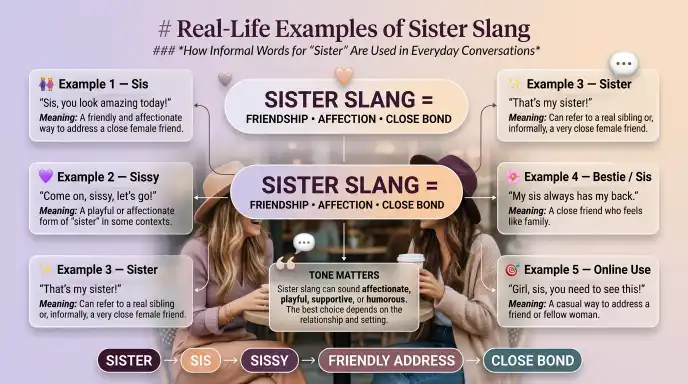
The best way to understand slang for sister is to see how people actually use it. The same word can feel different depending on the relationship, platform, and tone.
Example 1: Talking to a Real Sister
Text message:
“Sis, can you help me pick an outfit for tomorrow?”
Meaning:
The person is talking to their actual sister in a casual and affectionate way.
Tone:
Friendly, comfortable, and personal.
Example 2: Talking to a Close Friend
Conversation:
“Sis, you were amazing during the presentation!”
Meaning:
The speaker is not talking about a biological sister. They are using “sis” to show friendship and support.
Tone:
Warm and encouraging.
Example 3: TikTok or Instagram Comment
“Sis understood the assignment!”
Meaning:
The person is praising someone for doing something very well.
Tone:
Positive, playful, and internet friendly.
This phrase is common in online culture and does not literally mean the person is someone’s sister.
Example 4: Snapchat Conversation
Person 1:
“I finally bought the dress I wanted.”
Person 2:
“Yesss sis! It looks perfect.”
Meaning:
The speaker is showing excitement and support.
Example 5: Gaming Community
“Nice strategy, sis. That helped us win.”
Meaning:
A gamer is using “sis” as a friendly team term.
Tone:
Casual teamwork.
Example 6: Family Conversation
“My lil sis just started college.”
Meaning:
The speaker is talking about their younger sister.
Tone:
Caring and proud.
When Should You Avoid Using Sister Slang?
Although most sister slang is harmless, there are situations where it may not be the best choice.
1. Formal Communication
Avoid using terms like sis in:
- job applications
- business emails
- professional reports
- official messages
Example:
❌ “Hey sis, I attached the document.”
Better:
✅ “Hello Sarah, I have attached the document.”
2. When You Do Not Know the Person Well
Calling a stranger “sis” can sometimes feel too personal.
Example:
“Thanks sis”
A close friend may appreciate it, but a stranger may find it unusual.
3. When the Person May Not Like Informal Labels
Not everyone enjoys being called:
- sis
- girl
- bestie
- bro
Some people prefer direct communication without nicknames.
4. Avoid Using “Sissy” as an Insult
The word sissy has a negative meaning in some contexts.
Using it to suggest someone is weak or scared can be hurtful.
Example:
❌ “Don’t be a sissy.”
This use is not about a sister and can be considered disrespectful.
Common Misunderstandings About Sister Slang
“Sis” Always Means Biological Sister
Not true.
Today, “sis” often means a close female friend or someone a person feels connected to.
Example:
“Thanks sis for your advice.”
The person may be thanking a friend.
“Sista” Is Just a Spelling Mistake
Not exactly.
“Sista” is an intentional informal spelling used in certain styles of speech and writing. It has appeared in music, culture, and casual conversations.
Everyone Uses Sister Slang the Same Way
People use these terms differently depending on:
- age
- location
- online community
- personal style
A teenager on TikTok may use “sis” differently from someone speaking with family members.
Is Sister Slang Still Popular?
Yes, many sister slang terms are still commonly used, especially sis.
However, slang changes quickly. Some expressions may become less common or feel outdated over time.
For example:
- Sis remains widely understood.
- Sista may sound more stylized or old fashioned in some situations.
- Sissy is less commonly used by younger people because of its second meaning as an insult.
The popularity of slang depends heavily on the platform and community using it.
Frequently Asked Questions
Q1.What is the most common slang for sister?
The most common slang for sister is “sis.” It is a short, casual version of “sister” used in texting, social media, and everyday conversations
Q2.What does “sis” mean in text?
In text messages, sis usually means sister, but it can also mean a close female friend. It is often used to show support, friendship, or affection.
Example:
“You look great sis!”
Q3.Is “sis” a rude word?
No, sis is generally not rude. It is usually friendly and positive. However, it may feel inappropriate if used with strangers, customers, teachers, or in formal situations.
Q4.Can guys use “sis”?
Yes. Anyone can use “sis” when speaking to a female friend, family member, or someone they want to address in a friendly way.
The meaning depends on the relationship and tone.
Q5.What does “big sis” mean?
Big sis means an older sister.
It can also describe an older female friend who gives advice or acts like a protective sister.
Example:
“She’s my big sis at work. She always helps me.”
Q6.What does “lil sis” mean?
Lil sis means younger sister.
It can also refer to a younger female friend or someone who is treated like a younger sibling.
Q7.What is another word for sister in slang?
Popular alternatives include:
- sis
- sista
- sissy
- big sis
- lil sis
- sister from another mister
- bestie (for a close female friend)
Q8.Is “sista” still used?
Yes, but it is less common than “sis.” It is usually used for a playful, expressive, or cultural style rather than everyday texting.
Q9.Polite Alternatives to Sister Slang
If you want a more neutral or respectful option, use:
- sister
- my sibling
- friend
- colleague
- her name
- their preferred nickname
Examples:
Casual:
“Thanks sis!”
Neutral:
“Thanks, I appreciate your help.”
Professional:
“Thank you for your support.”
Q10.Why Understanding Sister Slang Matters
Knowing informal language helps people understand conversations across different platforms and communities.
A message containing “sis” may not be about family at all. It may simply show:
- friendship
- encouragement
- respect
- emotional connection
Understanding context prevents confusion and helps people communicate more naturally online and offline.
Conclusion:
Slang for sister includes casual terms like sis, sista, sissy, big sis, and lil sis that people use to describe real sisters, close friends, or sister like relationships. Among these, sis is the most common and widely accepted term.
These expressions are usually friendly and positive, but the meaning depends on the situation. A word that sounds supportive between friends may not fit in a professional or formal setting.
When using sister slang, think about your relationship with the person, the platform you are using, and the tone you want to create. The right context makes these words feel natural and respectful.
Final takeaway: “Sis” is the safest and most common slang for sister, but choosing the right term depends on who you are talking to and where you are using it.