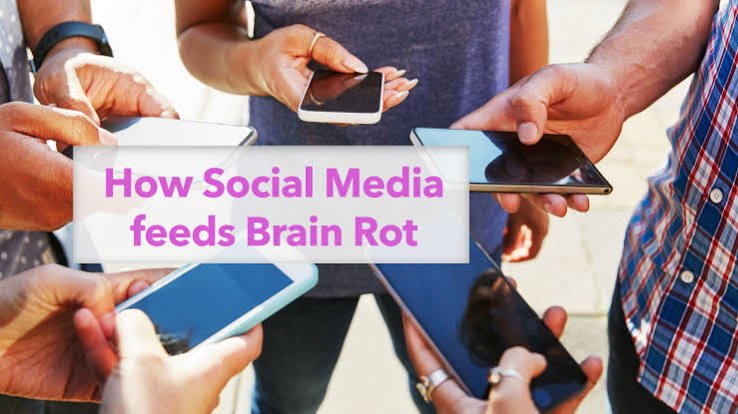
The internet constantly introduces new slang words, expressions, and trends that quickly become part of everyday conversations. One term that has gained significant attention across social media platforms is “brain-rot.” You may have seen people using this word in TikTok comments, Instagram captions, YouTube videos, memes, or online discussions. It is often used humorously to describe someone who spends too much time thinking about a particular trend, watching entertaining videos, or consuming repetitive online content.
But what does brain-rot actually mean on social media? Is it an insult, a joke, or a way of describing internet culture? The meaning can change depending on the situation, the person using it, and the type of content being discussed.
In modern online conversations, brain-rot usually refers to an excessive interest in something, especially internet content, memes, celebrities, fictional characters, gaming references, or viral trends. People often use it to describe the feeling of constantly thinking about something they enjoy or spending so much time watching related content that it becomes difficult to stop.
For example, someone who watches the same funny TikTok videos repeatedly might say, “I have TikTok brain-rot.” A person who cannot stop talking about a television series might describe themselves as having “show brain-rot.”
The expression is generally informal and humorous. It does not necessarily mean that someone has a medical or psychological problem. Instead, it has become a popular way to describe the influence of internet entertainment on people’s thoughts, interests, habits, and everyday language.
Understanding this slang term can help you follow online conversations, recognize popular memes, and communicate more naturally with people who regularly use social media.
1. What Does Brain-rot Mean?
Brain-rot is an internet slang expression used to describe an excessive or intense interest in something, particularly online content, entertainment, memes, or digital trends.
The word combines two ordinary English words: “brain” and “rot.” When used literally, the combination sounds unpleasant. However, its modern internet meaning is usually exaggerated and humorous.
People use brain-rot when something occupies their thoughts so frequently that they feel unable to stop thinking about it. It can describe watching the same videos repeatedly, constantly discussing a favorite celebrity, remembering internet jokes, or becoming deeply interested in a fictional character.
For example:
- “I have celebrity brain-rot right now.”
- “This song has given me serious brain-rot.”
- “My entire personality is gaming brain-rot.”
- “I cannot stop watching these videos. My brain is completely fried.”
In these examples, brain-rot communicates a strong attachment to something entertaining or interesting.
The expression can also describe online content that people consider repetitive, meaningless, strange, or overly addictive. For instance, someone might call a collection of random viral videos “brain-rot content” because the videos are designed primarily to entertain rather than provide useful information.
The meaning depends heavily on context. Sometimes it describes an individual’s obsession with something they love. In other situations, it criticizes low-quality internet entertainment.
In most casual conversations, brain-rot is not intended to be taken literally. It is a playful expression that reflects how strongly internet culture can influence people’s attention and interests.
2. Where Did the Word Brain-rot Come From?
The idea behind brain-rot existed long before TikTok, Instagram, or modern social media. People have used expressions involving a “rotting brain” for many years to criticize entertainment, media consumption, and activities they considered intellectually unproductive.
Historically, similar expressions were used to describe television programs, novels, games, and other forms of entertainment that critics believed encouraged passive thinking.
However, the modern internet meaning developed through online communities, particularly fandom spaces, meme culture, and social media discussions.
People participating in online fandom s frequently use exaggerated language to describe their interests. Someone who becomes extremely interested in a movie, television show, musician, video game, or fictional character might jokingly say that the subject has taken over their brain.
Over time, brain-rot became a convenient expression for describing this experience.
The term gained wider visibility through platforms such as TikTok, Tumble, Geddit, Instagram, and X. Users began applying it to everything from popular fictional characters to viral sounds and short-form video trends.
Social media helped the expression spread because it was short, memorable, funny, and easy to include in captions and comments.
Another reason for its popularity is that it describes an experience many internet users recognize. People frequently discover something entertaining online, consume large amounts of related content, and continue thinking about it even after leaving the platform.
Brain-rot provides a simple and humorous way to describe that feeling.
3. Why Is Brain-rot Trending on Social Media?
Brain-rot has become popular because it connects with several major features of modern internet culture.
Social media users enjoy discovering expressions that communicate complicated feelings through a single word. Brain-rot is especially useful because it can describe obsession, entertainment, repetition, humor, and internet addiction depending on the context.
There are several reasons behind its popularity.
Short-form video culture
Platforms such as TikTok, Instagram Reels, and YouTube Shorts encourage users to watch short videos one after another. A person may open an application to watch one video and unexpectedly spend an hour viewing similar content.
When someone becomes deeply interested in a particular type of video, they might jokingly describe the experience as brain-rot.
Meme culture
Memes frequently use exaggeration, absurd humor, and unexpected references. Brain-rot fits naturally into this environment because it can describe content that is intentionally ridiculous or difficult to forget.
Online fandom s
Fans of television shows, movies, celebrities, musicians, and video games often use brain-rot to describe their intense interests. It gives them a humorous way to communicate their enthusiasm.
Relatable experiences
Many internet users recognize the experience of repeatedly watching the same videos, listening to the same song, or thinking about a fictional character throughout the day.
The expression makes these experiences easier to discuss.
Viral communication
When a word becomes popular in comments, captions, and reaction videos, other users begin adopting it. This creates a cycle in which the expression becomes increasingly familiar.
Brain-rot is therefore more than an isolated slang word. It reflects how modern internet users communicate about entertainment, attention, and digital habits.
4. What Does Brain-rot Mean on TikTok?
On TikTok, brain-rot can have several meanings depending on the video and its audience.
One common meaning is becoming extremely interested in a particular subject. A user might repeatedly watch videos about a celebrity, television series, video game, or fictional character and describe the experience as brain-rot.
For example, someone might post a video with the caption:
“I have been watching edits of this character for three hours. This is serious brain-rot.”
The creator is expressing an exaggerated level of interest in the character.
Brain-rot can also refer to unusual or repetitive videos that users watch for entertainment. These videos might feature strange sounds, unexpected jokes, random characters, exaggerated reactions, or confusing situations.
Some TikTok users also use the expression to describe content that feels intentionally meaningless.
For example:
“My For You Page is full of brain-rot.”
This statement means that the user’s TikTok recommendation feed contains videos they consider silly, repetitive, or unusually entertaining.
Another example is:
“That sound has become my brain-rot.”
This means the person keeps remembering or repeating a particular audio trend.
The expression can also appear in humorous challenges, reaction videos, and comment sections.
On TikTok, the meaning is usually informal. It can express enjoyment, embarrassment, criticism, or playful self-awareness.
5. What Does Brain-rot Mean on Instagram?
Instagram users often use brain-rot in captions, comments, Reels, and Stories.
The meaning is generally similar to its TikTok usage, but Instagram also has a strong connection with lifestyle content, entertainment, celebrities, fashion, and fandom communities.
For example, someone might upload several pictures of their favorite singer and write:
“Current brain-rot.”
This suggests that the singer is occupying a significant amount of their attention.
Another person might share a collection of funny videos and caption it:
“Daily dose of brain-rot.”
In this situation, the expression refers to humorous or random internet entertainment.
Instagram users may also describe a particular meme, song, or television show as their latest obsession.
Common examples include:
- “My current brain-rot is this Netflix series.”
- “Instagram brain-rot is getting out of control.”
- “This meme lives in my head rent-free.”
- “I have developed a new celebrity obsession.”
Brain-rot can also be used sarcastically. Someone might criticize a video by commenting that it represents everything they dislike about modern social media.
Therefore, understanding the surrounding caption and conversation is important when interpreting the expression.
6. What Does Brain-rot Mean in Text Messages?
In text messages, brain-rot usually describes an intense interest, repeated thoughts, or an obsession with something entertaining.
Friends may use it when discussing their favorite songs, television programs, celebrities, games, or online trends.
For example:
Person A: “Have you watched the new series?”
Person B: “Yes. I have serious brain-rot now.”
Person B means that the series has become an intense interest and they cannot stop thinking about it.
Another example:
Person A: “Why do you keep sending me these memes?”
Person B: “Because I have meme brain-rot.”
This is a humorous way to explain why someone repeatedly shares similar content.
The expression can also describe something that keeps playing in someone’s mind.
For example:
“I heard that song yesterday, and now I have brain-rot.”
This means the person cannot stop remembering or thinking about the song.
In everyday messaging, brain-rot is generally casual slang. It is more appropriate for conversations with friends and people who understand internet humor than for formal professional communication.
7. What Is Brain-rot Content?
Brain-rot content refers to online entertainment that users describe as extremely silly, repetitive, absurd, chaotic, or mentally distracting.
It is commonly associated with short-form videos, memes, viral sounds, unusual characters, exaggerated reactions, and random jokes.
Unlike educational content, brain-rot content does not necessarily aim to teach a lesson or communicate meaningful information. Its primary purpose is often to attract attention and entertain viewers.
Examples can include:
- Random animal videos with exaggerated sound effects.
- Repetitive memes and internet jokes.
- Strange editing styles.
- Unusual combinations of unrelated images and sounds.
- Viral characters and fictional scenarios.
- Repeated clips with unexpected endings.
- Nonsense humor that becomes popular through repetition.
Not everyone uses the expression in the same way. Some people use brain-rot content as a positive description of entertaining videos, while others use it negatively to criticize low-effort material.
For example, someone might say:
“This video is pure brain-rot, and I love it.”
Here, the speaker enjoys the absurd humor.
Another person might say:
“I am tired of seeing brain-rot content everywhere.”
This expresses frustration with repetitive or meaningless videos.
The difference comes from the speaker’s attitude toward the content.
8. What Is Italian Brain-rot?
Italian brain-rot is a particular internet meme trend associated with bizarre AI-generated characters, unusual names, exaggerated visuals, and synthetic or exaggerated audio.
Despite the name, the trend is not simply a collection of traditional Italian jokes or authentic Italian cultural material.
It became recognizable through strange combinations of imaginary creatures, animals, objects, and other visual elements. Many videos use humorous names that sound Italian-inspired, dramatic narration, and repetitive audio.
Some recognizable examples associated with this trend include:
- Trilateral Tralala.
- Bombardier Crocodile.
- Ballerina Capuchin.
- Rung Rung Rung Sahur.
These characters became recognizable through short videos, memes, edits, and online discussions.
Italian brain-rot became popular partly because its humor is intentionally strange. The characters are often visually unexpected, and their names and sounds are designed to be memorable.
Many users share these videos because they are funny, confusing, or different from ordinary social media content.
The trend also demonstrates how AI-generated images and audio can become part of internet meme culture.
However, the phrase Italian brain-rot should not be confused with the broader meaning of brain-rot. Italian brain-rot refers to a particular meme style, while brain-rot is a much wider slang expression.
9. What Does Brain-rot Mean in Fandom Culture?
Fandom culture is one of the important environments in which brain-rot is used.
A fandom is a community of people who share an interest in a particular subject, such as a television series, movie, book, musician, celebrity, video game, or fictional universe.
Fans often spend significant amounts of time discussing their favorite subjects, creating artwork, sharing theories, watching edits, and communicating with other fans.
Brain-rot describes the intense excitement that can develop around these interests.
For example, a person who watches a television series might say:
“I have character brain-rot.”
This means that they cannot stop thinking about a particular character.
Someone who repeatedly watches videos of their favorite musician might say:
“Concert brain-rot is real.”
This describes the excitement and memories associated with attending a concert.
Other examples include:
- Anime brain-rot.
- Movie brain-rot.
- Book character brain-rot.
- K-pop brain-rot.
- Gaming brain-rot.
- Celebrity brain-rot.
Fandom brain-rot is often positive because it communicates enthusiasm and enjoyment.
It can also create opportunities for people to connect with others who share their interests.
10. Is Brain-rot a Positive or Negative Word?

Brain-rot can be positive, negative, or neutral depending on how someone uses it.
It does not have one fixed emotional meaning.
Positive meaning
People sometimes use brain-rot to express excitement about something they genuinely enjoy.
For example:
“I have music brain-rot because this album is amazing.”
The person is communicating enthusiasm and appreciation.
Negative meaning
Brain-rot can also criticize repetitive or low-quality entertainment.
For example:
“Social media is full of brain-rot these days.”
This suggests that the speaker believes online content has become less meaningful or valuable.
Neutral or humorous meaning
Many people use brain-rot simply as a joke.
For example:
“I watched cooking videos all morning. My brain-rot is getting serious.”
The speaker is exaggerating their interest for comedic effect.
The context determines whether the word is a compliment, criticism, or playful observation.
11. What Does Brain-rot Mean in Gen Z Slang?
Brain-rot is commonly associated with Gen Z and younger internet communities because these groups frequently participate in online trends, fandom discussions, memes, and short-form video culture.
However, people from different age groups can use the expression.
In Gen Z slang, brain-rot often describes becoming deeply attached to something found online.
For example:
“My brain-rot era has officially started.”
This means someone has entered a period of intense interest in a particular subject.
Another example:
“That meme has caused permanent brain-rot.”
This humorously suggests that the meme is so memorable that the person cannot forget it.
Other expressions that may appear alongside brain-rot include:
- Rent-free: Something that stays in someone’s mind.
- Living for it: Strongly enjoying something.
- Obsessed: Being extremely interested in something.
- Chronically online: Spending a significant amount of time on the internet.
- Deluxe: An informal slang term for delusional thinking, often used jokingly.
- Lore: Background information or a developing story surrounding a person, character, or situation.
These expressions are not identical, but they often appear in similar online conversations.
Brain-rot has become part of a broader vocabulary that helps younger internet users express humor, identity, interests, and reactions.
12. What Are Some Common Examples of Brain-rot?
Understanding examples is one of the easiest ways to learn how to use brain-rot correctly.
Here are several situations where the expression is commonly used.
Example 1: Music obsession
“I have had this song on repeat for five hours. It is giving me brain-rot.”
Meaning: The person cannot stop listening to the song.
Example 2: Television series
“I finished the entire season, and now I have serious character brain-rot.”
Meaning: The person is extremely interested in a character from the series.
Example 3: TikTok videos
“My entire For You Page is brain-rot.”
Meaning: The user’s recommended videos contain lots of silly or repetitive content.
Example 4: Gaming
“Playing this game every night has given me gaming brain-rot.”
Meaning: The person spends a lot of time playing or thinking about the game.
Example 5: Memes
“That meme has been stuck in my head all day.”
Meaning: The meme is difficult to forget.
Example 6: Celebrity interest
“I cannot stop watching interviews of this actor. Celebrity brain-rot is real.”
Meaning: The person has developed a strong interest in the celebrity.
Example 7: Random internet humor
“Why am I laughing at this nonsense? Internet brain-rot!”
Meaning: The person finds absurd online content entertaining.
Example 8: Friends and conversations
“All we talk about is this show. We both have the same brain-rot.”
Meaning: Both friends are extremely interested in the same subject.
Example 9: Viral audio
“I keep repeating that sound without realizing it. I have brain-rot.”
Meaning: A particular audio trend has become stuck in the person’s mind.
Example 10: Fictional characters
“I downloaded the game just because of this character. This is serious brain-rot.”
Meaning: The person is strongly attracted to or interested in the character.
These examples show that brain-rot is flexible and can be applied to different types of interests and experiences.
13. What Is the Difference Between Brain-rot and Brainwashing?
Brain-rot and brainwashing may sound similar because both words involve the brain, but they have very different meanings.
Brain-rot is an informal internet expression. It generally describes an intense interest in something, repeated consumption of online content, or entertainment that people consider meaningless.
Brainwashing refers to attempts to manipulate or strongly influence someone’s beliefs, attitudes, or behavior through psychological pressure, persuasion, or other forms of influence.
For example:
“I have movie brain-rot.”
This means someone is thinking excessively about a movie.
“That group is trying to brainwash people.”
This suggests that someone is attempting to manipulate other people’s beliefs.
The two expressions should not be used interchangeably.
Brain-rot is generally humorous and informal, while brainwashing describes a much more serious concept.
14. Is Brain-rot a Real Medical Condition?
No. Brain-rot is not a recognized medical diagnosis.
Although the expression contains the word “brain,” people generally use it as slang rather than as a medical description.
When someone says they have brain-rot because they watch too many videos, they are usually exaggerating their behavior for humor.
However, excessive screen time and uncontrolled social media use can affect everyday routines.
For example, spending too much time online may interfere with sleep, concentration, schoolwork, professional responsibilities, and personal relationships.
These concerns should be discussed using accurate terms rather than assuming that someone has a condition called brain-rot.
It is also important to distinguish between joking about an internet obsession and experiencing genuine difficulty controlling online habits.
Someone who regularly loses sleep, struggles to complete responsibilities, or feels unable to reduce their social media use may benefit from healthier digital habits or professional guidance if the problem is persistent.
The slang expression itself does not establish a medical problem.
15. How Does Social Media Create Brain-rot Experiences?
Social media platforms are designed to help users discover content that matches their interests.
Recommendation systems analyze different signals, which may include viewing activity, interactions, follows, searches, and other engagement patterns.
These systems can make it easier to find entertaining videos and discover new subjects.
However, they can also encourage repeated consumption of similar content.
Consider someone who watches several videos about a particular television series.
The platform may recommend more clips, interviews, fan edits, discussions, and related videos.
The person then watches more of that content, which can lead to additional recommendations.
This process can create a cycle of repeated exposure.
Several factors contribute to this experience.
Personalized recommendations
Social media feeds often display content based on previous activity. Users may repeatedly encounter topics they have already shown interest in.
Endless scrolling
Many platforms allow users to continue viewing content without reaching a natural stopping point.
Short videos
Short-form videos can be consumed quickly, making it easy to watch many clips in a relatively short period.
Social interaction
Likes, comments, shares, and discussions encourage users to participate in online trends.
Viral repetition
Popular sounds, jokes, and formats may appear across thousands of accounts.
Together, these features can make particular subjects feel difficult to escape.
This is one reason why brain-rot has become a relatable expression for describing modern internet experiences.
16. What Does Brain-rot Mean in Gaming?
Gaming communities frequently use brain-rot to describe an intense interest in a video game, character, strategy, story line, or gaming meme.
Players may spend hours thinking about a game even when they are not actively playing it.
For example:
“I have Mine-craft brain-rot.”
This means someone is extremely interested in Mine-craft and frequently thinks about playing it or watching related content.
Another example:
“This character has given the entire community brain-rot.”
This suggests that players are unusually interested in a particular character.
Gaming brain-rot can involve:
- Watching game-play videos repeatedly.
- Discussing game updates.
- Creating memes about characters.
- Watching professional gaming competitions.
- Thinking about strategies.
- Sharing fan-made content.
- Replaying favorite missions.
- Following gaming influence’s.
In many gaming communities, the term is used affectionately.
Players may jokingly criticize themselves for spending too much time thinking about a game while also enjoying their interest.
However, maintaining a healthy balance between gaming and other responsibilities remains important.
17. What Does Brain-rot Mean in Relationships?
Brain-rot can also appear in conversations about romantic interests, friendships, and relationships.
Someone might use the expression to describe constantly thinking about another person.
For example:
“I have a crush brain-rot.”
This means the person is thinking about their crush frequently.
Another example:
“Relationship brain-rot is real.”
This could describe someone who spends a lot of time thinking about romantic relationships, discussing couples, or watching relationship-related content.
The term can also refer to fictional couples.
For instance:
“I have serious brain-rot about this fictional couple.”
The speaker is expressing an intense interest in two characters and their relationship.
These uses are generally playful rather than serious.
However, the expression should not automatically be interpreted as unhealthy attachment or emotional dependence. The context matters.
18. What Is the Difference Between Brain-rot and an Obsession?
Brain-rot and obsession are related in casual internet conversations, but they are not exactly the same.
An obsession is a broader term that can describe an intense or persistent preoccupation with a particular subject, person, activity, or idea.
Brain-rot is a more informal expression associated with internet culture and exaggerated enthusiasm.
For example:
“I am obsessed with this new album.”
This communicates a strong interest in the music.
“This album has given me brain-rot.”
This communicates a similar feeling but adds a humorous internet-style exaggeration.
The word obsession can also have serious psychological meanings in certain contexts. Brain-rot generally does not.
People should therefore consider the context before interpreting either word too literally.
19. Why Do People Enjoy Brain-rot Memes?
Brain-rot memes are popular because they offer quick entertainment and often use humor that does not require a complicated explanation.
Many memes are deliberately absurd. Their purpose is to surprise viewers, create unexpected reactions, or make ordinary situations appear ridiculous.
There are several reasons people enjoy them.
Easy entertainment
People can understand many memes within seconds.
Shared humor
When friends recognize the same meme, they can share an experience and communicate through a common reference.
Unexpected combinations
Some brain-rot memes combine unrelated characters, sounds, objects, and situations. This unpredictability can make them funny.
Community participation
Users often create their own versions of popular formats, giving them opportunities to participate in online trends.
Repetition
Familiar jokes and sounds can become funny through repeated exposure, particularly when communities continue changing or adapting them.
Stress relief
Some people watch humorous videos to relax after work, school, or other daily responsibilities.
However, humor is subjective. A meme that one person finds hilarious may seem confusing or irritating to another.
20. How Can You Use Brain-rot in Everyday Conversations?
Brain-rot is easy to use once you understand its meaning.
It generally works best in informal conversations, social media captions, comments, and messages with friends.
Here are some natural ways to use it.
When discussing a favorite show
“I have so much brain-rot after watching that series.”
When talking about music
“This song has become my latest brain-rot.”
When sharing memes
“Sending you my daily brain-rot.”
When discussing TikTok
“I opened TikTok for five minutes and ended up watching brain-rot for an hour.”
When talking about gaming
“I think I have gaming brain-rot because I keep thinking about the new update.”
When discussing celebrities
“My celebrity brain-rot is getting out of control.”
When describing a viral trend
“Everyone on my feed has the same brain-rot right now.”
These examples show that the expression can fit naturally into many casual situations.
However, it is generally not suitable for formal reports, business emails, academic writing, or professional presentations.
In formal situations, more precise expressions such as excessive media consumption, repeated exposure to online content, or intense interest may be more appropriate.
21. What Are Similar Words to Brain-rot?
Several slang expressions communicate feelings similar to brain-rot.
Understanding these alternatives can help you recognize different forms of online communication.
Obsessed
Used when someone has a very strong interest in something.
Example: “I am obsessed with this song.”
Rent-free
Used when something remains in someone’s thoughts without requiring effort.
Example: “That scene lives rent-free in my head.”
Chronically online
Used to describe someone who spends a significant amount of time on the internet and is highly familiar with online culture.
Example: “You are so chronically online if you understand that reference.”
Hyper-fixation
A term commonly used to describe an intense period of concentration or interest in a particular subject. Its meaning can vary depending on context and may also be used in discussions of divergence.
Example: “My current hyper fixation is photography.”
Addicted
An informal word people sometimes use to describe repeatedly wanting something. In clinical contexts, addiction has a more specific meaning and should not be used casually as a diagnosis.
Example: “I am addicted to watching cooking videos.”
Hooked
Means being very interested in something and wanting more.
Example: “I am hooked on this new series.”
Down bad
An internet expression that can describe someone showing intense romantic interest or attraction.
Example: “He is completely down bad for that character.”
Although these expressions overlap in some situations, they have different meanings and should not be treated as exact synonyms.
22. Does Brain-rot Have Different Meanings on Different Platforms?
Yes. Although the general meaning remains similar, the expression can be used differently across social media platforms.
TikTok
Brain-rot frequently describes repetitive videos, viral audio, internet memes, and intense interests in popular trends.
Users commonly include the expression in captions, Reels, Stories, and comments about celebrities, entertainment, and personal interests.
YouTube
Brain-rot can describe unusual videos, repetitive entertainment, gaming content, and collections of internet memes.
Geddit
The expression often appears in fandom discussions, gaming communities, meme forums, and conversations about internet culture.
X
Users may employ brain-rot in short posts about viral discussions, celebrities, trending topics, and online arguments.
Discord
Gaming and fandom communities may use brain-rot when discussing characters, jokes, favorite games, and shared online interests.
The platform may influence the type of content being discussed, but the central idea remains an exaggerated or excessive interest in something.
23. Can Brain-rot Affect Your Attention and Productivity?
Brain-rot itself is slang, but the behaviors people associate with it can sometimes influence attention and productivity.
For example, repeatedly checking social media may interrupt activities that require concentration.
Someone who frequently switches between short videos, messages, and notifications might find it harder to remain focused on a single task.
This does not mean that every person who enjoys memes or short-form videos will experience concentration problems.
The effect depends on individual habits, the amount of time spent online, personal responsibilities, and other circumstances.
Some potential challenges associated with excessive social media use include:
- Spending more time online than originally planned.
- Delaying homework or professional tasks.
- Staying awake later than intended.
- Frequently checking notifications.
- Finding it difficult to take breaks from entertainment.
- Interrupting conversations to check a phone.
- Reducing time available for offline activities.
These experiences are not unique to brain-rot content. They can occur with many forms of digital entertainment.
A practical approach is to pay attention to how online activities affect everyday life rather than judging content simply because it is entertaining.
24. How Can You Avoid Too Much Brain-rot Content?
There is nothing inherently wrong with enjoying memes, videos, games, or online entertainment.
The important thing is maintaining a healthy relationship with digital media.
If you feel that social media is taking too much of your time, several simple strategies may help.
Set daily screen-time limits
Decide how much time you want to spend on entertainment applications. Use built-in device settings to monitor your usage.
Turn off unnecessary notifications
Frequent notifications can encourage repeated checking. Disable alerts that are not important.
Take regular breaks
Step away from screens periodically and spend time doing other activities.
Choose content intentionally
Instead of scrolling endlessly, search for specific videos or subjects you actually want to watch.
Create a bedtime routine
Avoid allowing late-night scrolling to interfere with sleep.
Explore offline interests
Reading, exercising, cooking, drawing, walking, and spending time with friends can provide enjoyable alternatives to online entertainment.
Keep social media in perspective
Remember that viral trends are temporary. You do not need to follow every new meme or online discussion.
The goal is not to eliminate entertainment but to make sure it does not interfere with important parts of everyday life.
25. Is Brain-rot an Insult?
Brain-rot is not automatically an insult.
Many people use it to describe their own interests or joke about something they enjoy.
For example:
“I have anime brain-rot.”
This is usually a playful statement rather than a negative judgment.
However, the word can become insulting when directed at someone in a critical or disrespectful way.
For example:
“Your videos are nothing but brain-rot.”
This statement may suggest that the speaker considers someone’s content meaningless or low-quality.
Similarly, calling someone’s interests brain-rot could sound dismissive if they are discussing something they genuinely care about.
Tone, relationship, and context all influence how the expression is received.
When communicating online, it is useful to understand that humor does not always translate perfectly between different audiences.
26. Why Is Brain-rot So Popular Among Younger Internet Users?
Younger internet users often participate in digital communities where trends develop quickly.
They encounter new expressions through videos, memes, comments, gaming communities, and conversations with friends.
Brain-rot fits naturally into this environment because it is flexible and easy to understand.
There are several reasons it appeals to younger audiences.
First, it communicates strong feelings without requiring long explanations.
Second, it is closely connected to humor and exaggerated internet language.
Third, it allows people to describe shared experiences.
Fourth, it can be adapted to almost any interest, including music, sports, gaming, fashion, movies, and celebrities.
Finally, the term reflects a generation of internet users who are comfortable discussing how online entertainment influences their everyday thoughts and routines.
However, the expression is not limited to one generation. Anyone familiar with social media can understand and use it.
27. How Does Brain-rot Reflect Modern Internet Culture?
Brain-rot reflects several important changes in how people consume entertainment and communicate online.
In earlier periods, entertainment was often connected to scheduled television programs, physical publications, or specific events.
Modern social media provides a continuous stream of videos, images, discussions, and recommendations.
Users can move between different types of entertainment within seconds.
This environment has influenced the development of internet slang.
People create short expressions to describe experiences that are common across digital communities.
Brain-rot is an example of this development.
It reflects:
- The popularity of short-form entertainment.
- The influence of viral memes.
- The growth of online fandom communities.
- The spread of AI-generated content.
- The importance of humor in digital communication.
- The increasing connection between entertainment and personal identity.
- The speed at which internet language changes.
The expression also shows how online communities can transform ordinary words into new cultural references.
The word brain-rot existed before its current popularity, but social media gave it a wider and more recognizable meaning.
28. Can Adults Use the Word Brain-rot?
Yes. Brain-rot is not limited to teenagers or young adults.
Anyone who understands the expression can use it in an appropriate informal setting.
An adult who watches sports highlights repeatedly might say:
“I have football brain-rot this season.”
Someone who enjoys cooking videos could say:
“My current brain-rot is watching restaurant reviews.”
A movie enthusiast might say:
“I have been thinking about that movie all week. Serious brain-rot.”
These examples are natural because the word describes a familiar experience rather than a particular age group.
However, people should consider their audience. Someone unfamiliar with internet slang may misunderstand the expression.
In professional communication, clearer language is usually preferable.
29. Is Brain-rot the Same as Doom scrolling?
No. Brain-rot and doom scrolling are different expressions.
Brain-rot describes an excessive interest in something or content that people consider silly, repetitive, or mentally distracting.
Doom scrolling describes repeatedly consuming negative or distressing news and information online, often for longer than intended.
For example:
“I have football brain-rot.”
This means someone is extremely interested in football.
“I spent two hours doom scrolling election news.”
This means someone repeatedly consumed news about a particular subject, potentially despite feeling distressed or overwhelmed.
Both terms relate to digital media habits, but they describe different experiences.
Brain-rot is often humorous and can involve positive interests.
Doom scrolling generally refers to repeated exposure to negative or worrying information.
30. What Does Brain-rot Mean in Online Comments?
Online comments are one of the places where slang expressions become especially visible.
Users often write short reactions rather than complete explanations.
Brain-rot is useful in comment sections because it communicates a recognizable feeling quickly.
Consider these examples:
“This is peak brain-rot.”
The user thinks the content represents an extreme form of absurd or silly internet entertainment.
“Brain-rot has officially taken over my feed.”
The user sees similar content repeatedly.
“Not me developing brain-rot over a fictional character.”
The user is joking about becoming unusually interested in a character.
“Welcome to my brain-rot collection.”
The user is sharing several pieces of content related to a particular interest.
“Another day, another brain-rot video.”
The user is humorously describing repeated exposure to entertaining online content.
These examples show why the expression works well in digital conversations.
31. Will Brain-rot Remain Popular in the Future?
Internet slang changes constantly.
Some expressions become part of everyday language, while others disappear after a particular trend loses popularity.
Brain-rot has characteristics that may help it remain recognizable.
It is flexible, humorous, and connected to experiences that are common across social media.
Even when individual memes become outdated, the broader idea of becoming excessively interested in online content is unlikely to disappear.
New platforms, entertainment formats, viral characters, and online communities will continue introducing different ways for people to express their interests.
The specific meaning of brain-rot may also continue changing.
For example, a term that initially describes a particular fandom obsession may later become associated with AI-generated memes or a new category of short-form entertainment.
This is a normal part of internet language development.
The future popularity of the expression will depend on how online communities continue using and adapting it.
32. Common Mistakes People Make When Using Brain-rot
Although brain-rot is relatively easy to understand, people sometimes misunderstand its meaning.
Here are several common mistakes.
Thinking it is always negative
Brain-rot can be used positively, negatively, or humorously. It does not always criticize someone’s interests.
Confusing it with a medical condition
Brain-rot is internet slang, not a recognized medical diagnosis.
Assuming it only refers to TikTok
The expression is used across many platforms, including Instagram, YouTube, Geddit, Discord, and X.
Thinking it only describes children
People from different age groups use the term.
Confusing it with Italian brain-rot
Italian brain-rot is a specific meme trend. The general expression has a much broader meaning.
Using it in every situation
Although the word is popular online, it may not be suitable for professional or formal communication.
Understanding these differences makes it easier to interpret the word accurately.
33. Frequently Asked Questions About Brain-rot
What does brain-rot mean in simple words?
Brain-rot is internet slang describing an intense interest in something or excessive consumption of online content. People often use it humorously when they cannot stop thinking about a meme, song, character, celebrity, or trend.
Is brain-rot a bad word?
No. Brain-rot is generally informal slang rather than profanity. It can be used positively, negatively, or humorously depending on the context.
What does brain-rot mean on TikTok?
On TikTok, brain-rot usually refers to becoming obsessed with a trend, repeatedly watching certain videos, or consuming strange and repetitive internet entertainment.
What is Italian brain-rot?
Italian brain-rot is a viral meme style featuring bizarre AI-generated characters, unusual names, and exaggerated audio. It is a specific internet trend rather than the general definition of brain-rot.
Does brain-rot mean addiction?
Not necessarily. People may use brain-rot to joke about spending too much time on something. It does not automatically indicate addiction or another medical condition.
What is an example of brain-rot?
“I have anime brain-rot because I cannot stop watching videos about my favorite character.” This means the person has become extremely interested in that character.
What does brain-rot mean in texting?
In text messages, brain-rot usually describes something that occupies someone’s thoughts repeatedly, such as a song, game, movie, celebrity, or online trend.
Can brain-rot be positive?
Yes. People frequently use it to express enthusiasm for something they enjoy. It can be a playful way of describing a strong interest.
What is brain-rot content?
Brain-rot content refers to online videos, memes, and entertainment that people consider absurd, repetitive, chaotic, or intentionally meaningless.
Is brain-rot a Gen Z word?
It is strongly associated with modern internet slang and younger online communities, but people of different ages can use it.
What is the opposite of brain-rot?
There is no single official opposite. Depending on the context, people might use expressions such as meaningful content, educational content, or productive activities.
Why do people say something lives rent-free in their head?
This expression means that a particular idea, memory, song, or image stays in someone’s thoughts without requiring effort. It is related to the way people use brain-rot.
Can a song cause brain-rot?
In casual slang, yes. People may say a song gives them brain-rot when they repeatedly listen to it or cannot stop thinking about its lyrics or melody.
Is brain-rot only about social media?
No. Although it is strongly connected to internet culture, people also use it for television shows, movies, books, games, music, celebrities, and other interests.
What does brain-rot era mean?
Brain-rot era describes a period when someone is extremely interested in a particular subject or type of entertainment.
Conclusion
Brain-rot is one of the recognizable expressions of modern internet culture. It describes an intense interest in something, repeated thoughts about online entertainment, or content that people consider silly, repetitive, and absurd.
The expression is especially common on TikTok, Instagram, YouTube, Geddit, and other social media platforms. People use it when discussing memes, viral sounds, fictional characters, celebrities, video games, music, and television shows.
Its meaning depends on context. Sometimes it expresses excitement about a favorite subject. In other situations, it criticizes low-quality entertainment or excessive social media consumption.
It is also important to remember that brain-rot is slang rather than a medical condition. Although excessive screen time can affect daily routines, using the expression does not mean that someone has a psychological or neurological problem.
As internet culture continues to evolve, new trends and expressions will appear. Brain-rot provides a useful example of how online communities transform familiar words into new forms of communication.
Understanding this term makes it easier to follow social media conversations, recognize popular memes, and understand the humor behind modern internet slang.
For more information about this vertical Click Here
For more information about this articular Click Here