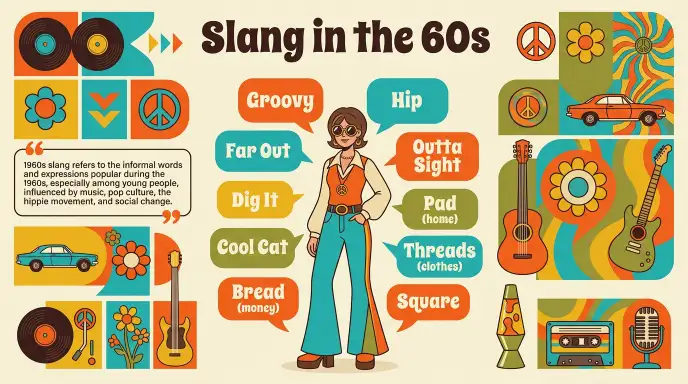
Slang in the 60s refers to the informal words and expressions that became popular during the 1960s. These phrases reflected the culture, music, fashion, and social changes of the decade.
People search for slang in the 60s to understand old movies, TV shows, songs, books, or conversations from that era. Many of these expressions are still recognized today, while others have become outdated.
This guide explains what 1960s slang means, where it came from, how people used it, and which phrases remain popular today.
Quick Answer:Slang in the 60s
Slang in the 60s includes informal words and phrases commonly used during the 1960s to express emotions, describe people, or react to situations. Many terms were influenced by youth culture, rock music, the hippie movement, and everyday American life.
What Does Slang in the 60s Mean?
Slang in the 60s means the informal vocabulary that people commonly used during the 1960s instead of standard English. These expressions helped speakers sound relaxed, trendy, or part of a particular social group.
Unlike modern internet slang, 1960s slang was mainly spoken in everyday conversations. It later appeared in movies, television, magazines, and popular music.
For example:
Person 1:
“That concert was far out.”
Person 2:
“Yeah, it was groovy.”
Both “far out” and “groovy” were popular slang expressions meaning something was excellent or impressive.
Slang in the 60s Definition
The phrase “slang in the 60s” does not refer to one specific word. Instead, it describes the collection of informal expressions widely used during the 1960s.
These words often reflected:
- Youth culture
- Rock and roll music
- The hippie movement
- Surf culture
- Television and movies
- Everyday friendships
Many expressions from this period focused on positivity, freedom, excitement, and creativity.
Is Slang in the 60s Rude, Offensive, or Neutral?
Most 1960s slang was neutral or friendly. People used it to sound casual and expressive rather than formal.
However, some slang from that era may now sound outdated or carry meanings that have changed over time.
For example:
“Groovy”
This was a positive compliment.
“Far out”
This expressed surprise or admiration.
Some other expressions from the 1960s reflected attitudes that are no longer considered appropriate today. When reading historical books or watching older films, it is helpful to understand the time period in which those words were used.
Where Was Slang in the 60s Commonly Used?
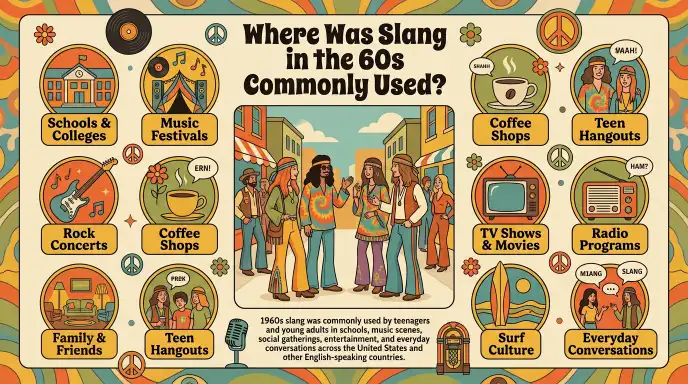
People used 1960s slang almost everywhere in daily life.
Everyday conversations
Teenagers often used slang while talking with friends.
Example:
“That party was groovy.”
Meaning:
“The party was great.”
Schools and colleges
Students adopted new slang quickly because trends spread through classrooms and campuses.
Example:
“He’s a real cool cat.”
Meaning:
“He is a very cool person.”
Music culture
Many popular musicians used slang in interviews and song lyrics.
Rock bands and folk singers helped introduce new expressions to wider audiences.
Television and movies
Films and TV shows from the 1960s frequently included slang to make characters sound modern and relatable.
Because of this, many people today still recognize famous phrases from that decade.
Why Did Slang Become So Popular in the 1960s?
The 1960s was a decade of major cultural change. Young people wanted language that felt different from previous generations.
Several influences helped new slang spread quickly.
Music
Rock music introduced fresh words and expressions.
Artists often created memorable phrases that fans copied.
The Hippie Movement
The hippie movement encouraged peace, creativity, and self-expression.
Many famous slang words came from this culture.
Television
Popular TV shows brought regional slang to audiences across the country.
People heard new expressions every week.
Growing Youth Culture
Teenagers and young adults had a stronger influence on fashion, entertainment, and language than ever before.
Slang became a way to express identity and belong to a social group.
Popular Slang in the 60s
Many expressions from the 1960s remain famous today.
| Slang Term | Meaning | Example |
| Groovy | Excellent or cool | “That song is groovy.” |
| Far out | Amazing or surprising | “That idea is far out.” |
| Cool cat | Stylish person | “He’s a cool cat.” |
| Dig | Understand or appreciate | “I dig your music.” |
| Hip | Fashionable or aware | “She’s really hip.” |
| Threads | Clothes | “Nice threads!” |
| Pad | Home or apartment | “Come over to my pad.” |
| Bummer | Disappointment | “Missing the concert was a bummer.” |
| Right on | I agree or exactly | “Right on!” |
| Flower power | Peace and love movement | “Flower power changed youth culture.” |
These expressions became symbols of the decade and are still recognized in classic films and music.
Real Life Examples of Slang in the 60s
Friendly conversation
Person 1:
“I love your new jacket.”
Person 2:
“Thanks! It’s pretty groovy.”
Meaning:
The jacket is stylish and attractive.
Casual conversation
Friend:
“Let’s meet at my pad after school.”
Meaning:
“Let’s meet at my house.”
Music conversation
Person 1:
“Did you hear the new album?”
Person 2:
“Far out! It’s incredible.”
Meaning:
The album is amazing.
Movie conversation
Friend:
“I really dig this movie.”
Meaning:
“I really like this movie.”
Was Slang in the 60s Used in Text Messages?
No. Text messaging and social media did not exist during the 1960s.
However, many classic expressions still appear online today.
People sometimes use words like:
- Groovy
- Cool cat
- Dig
- Right on
These are often used for humor, nostalgia, or to give conversations a vintage feel.
Origin and Background of Slang in the 60s
The slang of the 1960s grew from a mix of music, youth culture, civil rights movements, surfing culture, and the growing influence of television. As teenagers and young adults looked for new ways to express themselves, they created words and phrases that sounded different from the language used by older generations.
The hippie movement also had a major influence on 1960s slang. Ideas about peace, freedom, creativity, and individuality inspired expressions like “far out,” “right on,” and “flower power.” These words reflected the optimistic spirit of many young people during that time.
Music played an equally important role. Artists in rock, folk, and soul music often used informal language in interviews, performances, and song lyrics. Fans quickly adopted these expressions, helping them spread across the United States and later to other English speaking countries.
Unlike today’s internet slang, which can become popular within days, most 1960s slang spread through face to face conversations, radio stations, television programs, newspapers, and magazines.
Comparison With Modern Slang
Although language has changed over the years, the purpose of slang remains the same. Both 1960s slang and modern slang help people express personality, emotions, and belonging.
| 1960s Slang | Modern Slang | Similar Meaning |
| Groovy | Fire | Excellent or impressive |
| Far out | Mind-blowing | Amazing or surprising |
| Cool cat | GOAT | Someone admired or respected |
| Dig | I’m into it | Like or appreciate something |
| Right on | Facts | Strong agreement |
| Hip | Drip | Stylish or fashionable |
Modern slang spreads mainly through TikTok, Instagram, Snapchat, Discord, Reddit, and online gaming. By comparison, slang in the 60s spread through music, television, movies, and everyday conversations.
When to Avoid Using Slang in the 60s
Most 1960s slang is friendly and harmless, but it may not always fit today’s conversations.
You should avoid using it in:
- Professional business emails
- Academic assignments
- Formal presentations
- Job interviews
- Official documents
For example:
Informal:
“That presentation was groovy.”
Formal:
“That presentation was excellent.”
Older slang may also confuse younger people who are unfamiliar with expressions from the 1960s.
Why Do People Still Use Slang in the 60s?
Although many expressions are decades old, people still enjoy using them for several reasons.
Nostalgia
Many people use classic slang because it reminds them of the music, movies, and culture of the 1960s.
Humor
Old fashioned slang can make conversations more playful.
Example:
“Those sunglasses are groovy.”
Pop Culture
Classic films, television shows, and music continue introducing younger generations to 1960s expressions.
Vintage Style
Some people enjoy using older slang because it gives conversations a retro feel.
Impact of Slang in Communication
Slang has always helped people communicate in a more relaxed and personal way.
The slang of the 1960s allowed young people to:
- Express individuality
- Build friendships
- Share cultural identity
- Show enthusiasm
- Create memorable conversations
Many of today’s slang expressions serve exactly the same purpose, even though the words themselves have changed.
Language continues to evolve, but the role of slang remains remarkably similar across generations.
Is Slang in the 60s Safe for Social Media?
Yes. Most slang from the 1960s is safe to use on modern social media platforms.
People sometimes use classic expressions in:
- TikTok videos
- Instagram captions
- Facebook posts
- Reddit discussions
- Vintage themed content
- Music communities
Examples include:
“That outfit is groovy.”
“Right on!”
“I totally dig this song.”
These expressions are generally understood as fun, nostalgic references rather than modern everyday slang.
However, some older expressions have fallen out of use or may carry meanings that have changed over time. If you are unsure about a particular phrase, it is best to check its modern meaning before using it publicly.
Common Misunderstandings About Slang in the 60s
Mistake 1: Thinking every old word is 1960s slang
Not every old expression came from the 1960s. Some popular words existed long before that decade.
Mistake 2: Assuming people still use all 1960s slang today
While words like “groovy” and “far out” are still recognized, they are usually used for humor or nostalgia rather than everyday conversation.
Mistake 3: Believing all 1960s slang had the same meaning everywhere
Different regions and communities sometimes used slang differently. Some expressions were more common in certain cities or social groups than others.
Frequently Asked Questions
Q1: What is slang in the 60s?
Slang in the 60s refers to the informal words and phrases that became popular during the 1960s. These expressions reflected youth culture, music, fashion, and everyday life.
Q2: What were some popular slang words in the 1960s?
Some of the best known examples include “groovy,” “far out,” “dig,” “right on,” “cool cat,” “threads,” “pad,” and “bummer.”
Q3: Why did people use slang in the 60s?
People used slang to express themselves, fit into social groups, sound modern, and reflect the changing culture of the decade.
Q4: Is 1960s slang still used today?
Some expressions are still used, but most appear in nostalgic conversations, classic movies, music discussions, or retro themed content rather than everyday speech.
Q5: Was 1960s slang offensive?
Most popular 1960s slang was friendly and harmless. However, a few expressions from that era may now sound outdated or inappropriate because language and social attitudes have changed over time.
Q6: Can I use 1960s slang on social media?
Yes. Classic expressions like “groovy,” “far out,” and “right on” are generally safe to use. They are often used to create a fun or vintage style.
Q7. What was the most popular slang word in 1964?
One of the most popular slang words in 1964 was “groovy,” used to describe something fashionable, exciting, or impressive. It became widely associated with the youth culture of the 1960s.
Q8. How did people say “cool” in the 60s?
In the 1960s, people often said “groovy,” “far out,” or simply “cool” to describe something they liked. These expressions were common in music, fashion, and everyday conversations.
Q9. What is a 70’s slang word?
A well known 1970s slang word is “far out,” meaning amazing, exciting, or unbelievable. Other popular 70s slang terms include “funky,” “rad,” and “boogie.”
Conclusion:
Slang in the 60s reflects one of the most memorable periods in modern English. Influenced by music, youth culture, television, and the hippie movement, these expressions helped people communicate in a relaxed and creative way. Words like “groovy,” “dig,” “far out,” and “right on” became symbols of the decade and are still recognized today.
Although many of these phrases are no longer part of everyday speech, they continue to appear in classic films, songs, books, and social media posts celebrating vintage culture. Understanding slang in the 60s helps you better appreciate the language, history, and cultural changes that shaped modern English.