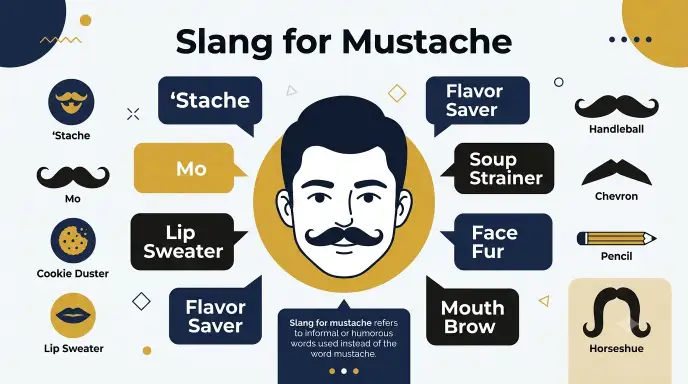
Slang for Mustache refers to informal, funny, or trendy words people use instead of the word mustache. Common slang terms include ‘stache, mo, cookie duster, lip sweater, and flavor saver, often used in casual conversations or online.
While the word “mustache” is the standard term, many people use playful slang names like “stache,” “face curtain,” or other humorous expressions to talk about facial hair. These slang terms can show personality, humor, style, or admiration for someone’s look.
If you see them on social media, in movies, or during everyday conversations, understanding mustache slang helps you follow modern language trends and internet culture.
In this guide, we will explore popular slang for mustache, their meanings, and how people use them in real life situations.
Quick Answer: Slang for Mustache
Slang for mustache refers to informal, funny, or creative words people use instead of the regular word “mustache.” Common examples include stache, soup strainer, flavor saver, nose neighbor, cookie duster, and crumb catcher. These terms are usually playful and are used in jokes, conversations, memes, and online communities.
What Does Slang for Mustache Mean?
Slang for mustache means a casual or creative nickname for facial hair that grows above the upper lip. People use these expressions to make conversations more fun, describe a certain style, or joke about someone’s facial hair.
Unlike the standard word “mustache,” slang terms often carry extra feelings. They may sound:
- Funny
- Friendly
- Playful
- Old fashioned
- Stylish
- Teasing
For example:
“My new stache is finally growing in.”
Here, stache simply means mustache.
Another example:
“That cookie duster is impressive.”
This is a humorous way to describe a large or noticeable mustache.
The meaning usually depends on the speaker’s tone and the relationship between people.
Why Do People Use Slang for Mustache?
People use slang because it makes everyday communication more relaxed and expressive. A simple word like “mustache” describes the facial hair, but slang adds personality.
Someone might say:
“Nice mustache.”
This sounds normal.
But:
“Nice stache!”
feels more casual and friendly.
Slang terms are common in:
- Text messages
- Social media comments
- Memes
- Comedy content
- Friend groups
- Online communities
People often use these words when talking about famous mustache styles, funny pictures, or personal grooming choices.
Popular Slang Terms for Mustache
There are many informal names for a mustache. Some are common, while others are mainly used as jokes.
| Slang Term | Meaning | Tone |
| Stache | Short form of mustache | Casual |
| Soup strainer | A large or thick mustache | Funny |
| Flavor saver | Humorous name for facial hair above the lip | Playful |
| Cookie duster | A funny term for a noticeable mustache | Comical |
| Nose neighbor | Mustache close to the nose area | Silly |
| Lip sweater | Joke name suggesting warmth above the lip | Funny |
| Face broom | A humorous description of facial hair | Playful |
| Mustachio | Stylish or exaggerated mustache name | Old fashioned/fun |
Not every person uses these terms. Some are more common in jokes, movies, memes, or specific communities.
The Most Common Mustache Slang: “Stache”
“Stache” is probably the most widely recognized slang term for mustache.
It is created by shortening the original word “mustache.” This type of shortening is common in English slang.
Examples:
- Mustache Stache
- Sunglasses Sunnies
- Refrigerator Fridge
People often use “stache” because it sounds casual and modern.
Examples:
“My stache is finally looking good.”
“I’m growing a new stache for the winter.”
“His handlebar stache looks amazing.”
The word is generally harmless and works well in casual conversations.
Funny Slang Names for Mustache
Many mustache slang terms are created for humor. They are not official words but are understood because the meaning is obvious from context.
Soup Strainer
“Soup strainer” is a funny nickname for a thick mustache.
The joke comes from imagining the mustache as something that could catch food or liquid.
Example:
“His soup strainer is bigger than his smile.”
Tone:
Usually playful teasing.
Flavor Saver
“Flavor saver” is another humorous term for a mustache.
It jokes about the mustache being near the mouth area.
Example:
“That old school flavor saver gives him a 1970s look.”
Tone:
Funny and casual.
Cookie Duster
“Cookie duster” is a playful nickname for a mustache.
It suggests a mustache so large that it could collect crumbs from eating cookies.
Example:
“His cookie duster is back after shaving last year.”
Tone:
Usually joking, not insulting.
Lip Sweater
“Lip sweater” is a humorous expression based on the idea that a mustache sits above the lip like a small sweater.
Example:
“He grew a serious lip sweater during winter.”
Tone:
Silly and comedic.
Where Is Mustache Slang Commonly Used?
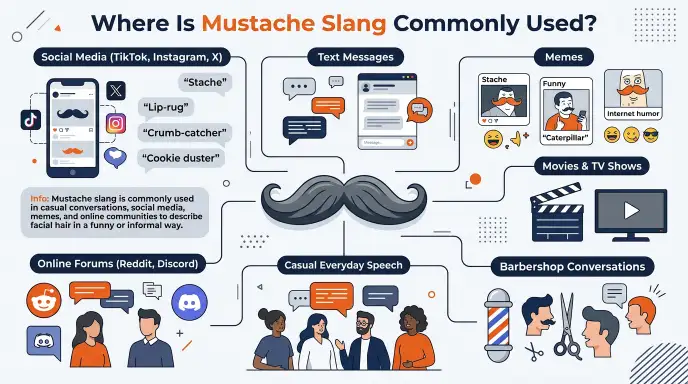
Mustache slang appears in many casual spaces, especially where people share humor or personal style.
Social Media
Platforms like TikTok, Instagram, Reddit, and Snapchat often use funny facial hair terms in:
- Comments
- Memes
- Videos
- Style discussions
Example:
“Bro’s stache is legendary.”
This means the person’s mustache looks impressive.
Texting and Messaging
Friends may use mustache slang while joking.
Example:
“Are you keeping the stache?”
Meaning:
“Are you keeping your mustache?”
The shortened word makes the message feel casual.
Gaming Communities
Gaming groups sometimes use facial hair jokes when talking about characters or players.
Example:
“That character’s stache gives him boss energy.”
The slang is usually meant as humor.
Comedy and Entertainment
Comedians often use funny mustache names because facial hair has long been connected with jokes, character design, and stereotypes.
Classic characters with dramatic mustaches have helped make mustache humor popular.
Is Mustache Slang Rude, Offensive, or Harmless?
Most slang for mustache is harmless.
Terms like:
- Stache
- Mustachio
- Lip sweater
are usually playful.
However, some terms can sound teasing depending on the situation.
For example:
“Soup strainer”
might be funny between friends, but a stranger could find it disrespectful if the comment sounds mocking.
Context matters.
Before using a funny nickname, consider:
- Your relationship with the person
- Their sense of humor
- The situation
A joke between close friends may not work the same way in a workplace or formal setting.
Is Mustache Slang Appropriate at Work?
Most mustache slang is too casual for professional communication.
In a workplace setting, it is better to use:
- Mustache
- Facial hair
- Grooming style
Example:
Professional:
“Your mustache style looks different.”
Casual:
“Your stache looks great!”
The second example is fine with friends but may not fit a formal conversation.
Origin and Background of Mustache Slang
Mustache slang does not come from one single source. Many terms developed naturally through humor, culture, and everyday conversations.
The shortened form “stache” became popular because English speakers often shorten words to make them feel more casual. Similar shortened forms appear in many areas of language, especially among younger speakers and online communities.
Funny names like “soup strainer” and “cookie duster” developed from jokes about the appearance and location of a mustache. These expressions are examples of creative wordplay rather than official slang with a specific inventor.
Mustache humor has also been influenced by:
- Comedy
- Movies
- Fashion trends
- Vintage styles
- Internet memes
- Pop culture
Large or unique mustaches have often been connected with certain personalities, professions, or historical images. Because of this, people created playful nicknames to describe different styles.
The exact first use of many funny mustache slang terms is difficult to verify. Some expressions have been used informally for decades, while others became more visible through online culture.
Different Types of Mustache Slang by Style
Some slang terms describe the personality or appearance of a mustache rather than the facial hair itself.
Handlebar Stache
A handlebar stache describes a mustache with long ends that curl upward like bicycle handles.
Example:
“His handlebar stache makes him look like a classic gentleman.”
Tone:
Usually positive and stylish.
Pencil Stache
A pencil stache refers to a very thin mustache.
The term comes from the idea that the mustache looks as thin as a pencil line.
Example:
“He brought back the pencil stache look from old movies.”
Tone:
Often connected with vintage fashion.
Big Stache
A big stache simply describes a large or thick mustache.
Example:
“That big stache is impossible to miss.”
Tone:
Neutral or positive.
Baby Stache
A baby stache refers to a small or newly growing mustache.
Example:
“I’m still working on my baby stache.”
Tone:
Usually playful.
Real Life Examples of Mustache Slang
Understanding the tone helps you know when these terms fit naturally.
Friendly Conversation
Friend:
“Are you growing a mustache?”
Reply:
“Yeah, I’m trying to build a strong stache.”
Meaning:
The person is casually talking about growing facial hair.
Tone:
Friendly and relaxed.
Social Media Example
Instagram comment:
“That stache is giving classic movie vibes.”
Meaning:
The mustache looks stylish or memorable.
Tone:
Complimentary.
Funny Example Between Friends
Friend:
“Your mustache is getting serious.”
Reply:
“Yep, the cookie duster is here to stay.”
Meaning:
The person is joking about their noticeable mustache.
Tone:
Playful.
Fashion Context
Post caption:
“New look: handlebar stache and vintage jacket.”
Meaning:
The person is showing a specific style.
Tone:
Confident and fashionable.
Workplace Example
Coworker:
“I noticed you changed your facial hair.”
Better response:
“Thanks, I decided to grow a mustache.”
Using “mustache” is clearer and more professional than saying:
“I grew a soup strainer.”
Comparison of Mustache Slang Terms
Different terms create different impressions.
| Term | Meaning | Best Used In |
| Stache | Casual word for mustache | Friends, texting, social media |
| Mustachio | Fun or dramatic mustache term | Humor, creative writing |
| Handlebar stache | Curled mustache style | Fashion discussions |
| Pencil stache | Thin mustache style | Style conversations |
| Soup strainer | Funny name for thick mustache | Jokes with friends |
| Cookie duster | Humorous mustache nickname | Casual humor |
Similar Slang and Related Terms
Mustache slang is connected to other facial hair expressions.
Beard
A beard refers to facial hair growing on the chin, cheeks, and jaw.
Example:
“He grew a beard during the winter.”
Goatee
A goatee is facial hair focused around the chin area.
Example:
“He changed from a mustache to a goatee.”
Five O’Clock Shadow
This describes short facial hair that appears after shaving.
Example:
“He has a little five o’clock shadow.”
Moustachioed
This is a more formal or humorous word meaning someone has a mustache.
Example:
“The moustachioed actor became famous for his look.”
Why Do People Like Using Mustache Slang?
People use mustache slang because it adds personality to conversations.
A normal description:
“He has a mustache.”
A more expressive version:
“He has a legendary stache.”
The slang version creates more emotion.
People also use these terms because:
- They sound fun
- They create humor
- They show familiarity
- They make conversations less formal
- They work well in memes and online posts
Internet communities especially enjoy playful words because they help people share reactions quickly.
When Should You Avoid Using Mustache Slang?
Mustache slang is usually harmless, but there are situations where regular language works better.
Avoid funny slang when:
- Speaking in a professional meeting
- Writing formal documents
- Talking to someone you do not know well
- Giving serious feedback
For example:
Formal:
“Your mustache style suits you.”
Casual:
“Your stache is amazing.”
Both are understandable, but the second one is more informal.
Also avoid using teasing terms if you are unsure if someone likes jokes about their appearance.
Facial hair is a personal style choice, and some people may not appreciate humorous comments.
Polite Alternatives to Mustache Slang
If you want a neutral way to talk about facial hair, use:
- Mustache
- Facial hair
- Grooming style
- Facial hair style
- Upper lip hair
Examples:
“I like your mustache style.”
“Your facial hair looks well maintained.”
These phrases work in almost any situation.
Common Misunderstandings About Mustache Slang
Not Every Funny Term Is Widely Used
Some names may appear online but are not common in everyday speech.
For example, one person may know “cookie duster,” while another person may have never heard it before.
Slang Meaning Depends on Tone
A nickname can sound friendly or insulting depending on how it is said.
Example:
“Nice stache!”
Usually sounds positive.
“Look at that soup strainer.”
Could be funny or could sound like teasing.
Mustache Slang Is Not a Secret Code
Most mustache slang is simple humor. It is not an abbreviation or hidden meaning.
Frequently Asked Questions
Q1: What is the most common slang for mustache?
The most common slang for mustache is “stache.” It is a shortened, casual version of the word mustache and is widely understood.
Q2: What does stache mean in slang?
Stache means mustache. People use it as a shorter and more casual way to talk about facial hair above the upper lip.
Q3: Is mustache slang offensive?
Most mustache slang is not offensive. Terms like “stache” are harmless, while funny names like “soup strainer” depend on the tone and relationship between people.
Q4: What are funny names for a mustache?
Funny names for a mustache include soup strainer, cookie duster, flavor saver, lip sweater, and nose neighbor.
Q5: Can I use mustache slang at work?
It is better to avoid humorous mustache slang in professional settings. Using the word “mustache” or “facial hair” is clearer and more appropriate.
Q6: What does “growing a stache” mean?
“Growing a stache” means allowing a mustache to grow instead of shaving it.
Q7. Is Stash Slang for Mustache?
Yes, stash is a shortened slang form of mustache. It is often used casually, especially in phrases like “fresh stash” or “great stash.”
Q8. What Is Another Term for Mustache?
Other terms for mustache include mo, ’stache, whiskers, facial hair, cookie duster, and lip rug. Some are casual slang terms, while others are humorous.
Q9. Is Mo Slang for Mustache?
Yes, mo is slang for mustache, especially in Australian and British English. It is commonly used as a short form of “moustache.”
Q10. Is Muzzy Slang for Mustache?
Yes, muzzy can be used as informal slang for a mustache, but it is less common than terms like mo or ’stache. It is mostly used in playful or regional contexts.
Conclusion:
Slang for mustache includes many creative and humorous ways to describe facial hair above the upper lip. The most common term is stache, while other expressions like cookie duster, soup strainer, and lip sweater are mostly used for jokes and casual conversations.
These terms are popular in texting, social media, memes, and friendly conversations because they make language more expressive. However, the right word depends on the situation. A funny nickname may work with close friends but not in a professional environment.
Understanding mustache slang helps you recognize online jokes, conversations, and cultural references more easily. When in doubt, the simple word mustache is always clear, respectful, and appropriate.

I’m Emily Carter, and I enjoy writing about slang, internet language, and modern English expressions. My goal is to explain word meanings in a simple, clear, and easy-to-understand way so anyone can learn with confidence.