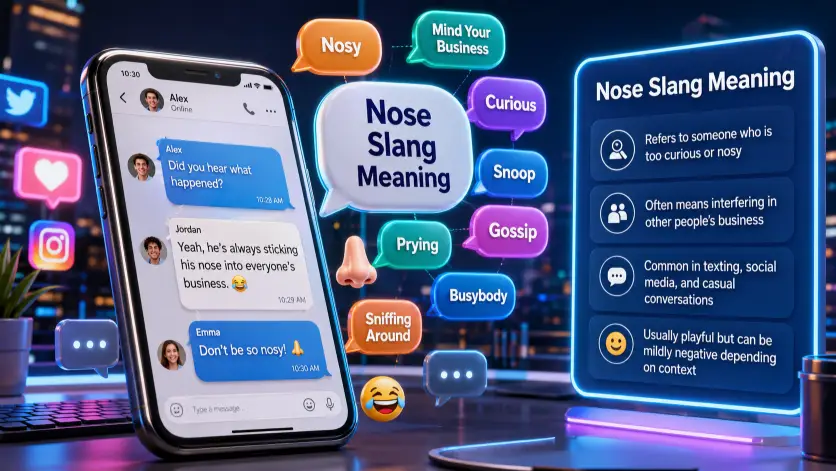
Nose slang is a phrase that can confuse people because its meaning changes depending on the situation, conversation, and the way it is used. While many people know “nose” as a body part, online conversations and casual speech sometimes use it as slang to describe a person’s behavior, personality, or actions.
People often search for the meaning of “nose” in text because they see it in messages, comments, social media posts, or casual conversations and want to understand if it is a joke, an insult, or simply a casual expression. The tone behind the word matters a lot. In some situations, it can be playful, while in others it may sound negative.
The meaning of slang is usually created by communities, and words can develop new meanings over time. Understanding the context helps you know if someone is being friendly, teasing, or criticizing another person.
Quick Answer:nose slang
In slang, “nose” usually refers to someone who is too curious or always involved in other people’s business. It can also describe a person with a strong sense of smell or, in some contexts, sniffing drugs, depending on the conversation.
What Does Nose Mean in Text Slang?
In text conversations, “nose” slang meaning usually describes a person who asks too many questions, gets involved in situations that do not concern them, or wants to know private details about others.
It is closely related to the word “nosy”, which means being overly curious about other people’s personal matters. When someone calls another person a “nose,” they are often suggesting that the person is interfering or being too curious.
However, the word does not always have a harsh meaning. Friends may use it jokingly when someone is naturally curious.
Examples:
- “Why are you being such a nose? 😂”
Meaning: Why are you asking so many questions? - “Ignore him, he’s a nose. He wants to know everything.”
Meaning: He is too curious about other people’s business. - “My little sister is such a nose, she checks everything.”
Meaning: She is playful but very curious. - The nose meaning slang usually describes someone who is very curious, asks too many personal questions, or gets involved in other people’s business. Depending on the context, it can be playful or negative.
Nose Slang Full Form / Definition
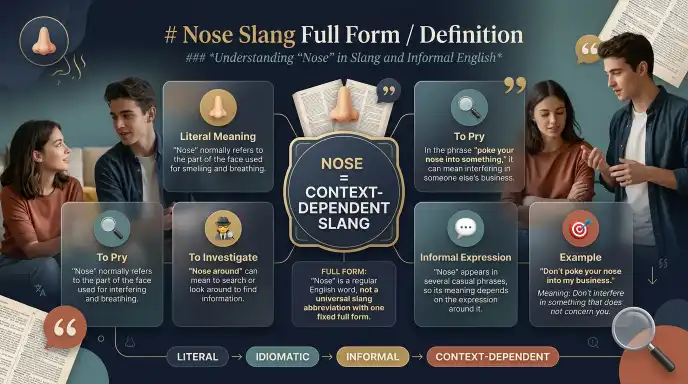
Unlike abbreviations such as “LOL” or “BRB,” nose does not have a full form in texting slang. It is a regular word that gained a slang meaning through everyday conversations.
The slang definition of “nose” can be explained as:
Nose (slang): A person who is overly curious, interferes in other people’s matters, or tries to discover information that is not their concern.
The meaning is similar to words like:
- Nosy person
- Busybody
- Meddler
- Gossip
- Information seeker
The exact meaning depends on the speaker’s intention. A close friend saying “you’re such a nose” may be teasing, while a stranger using it may sound insulting.
Is Nose Slang Rude, Offensive, or Neutral?
The word “nose” in slang is usually considered mild and informal, but its meaning depends on the situation.
When It Is Playful
Among friends and family, “nose” can be a harmless joke.
Example:
“You’re such a nose! You always want to know everyone’s secrets.”
Here, the speaker is teasing rather than attacking.
When It Can Sound Negative
If someone uses it during an argument, it may suggest that the person is annoying or interfering.
Example:
“Stop being a nose and mind your own business.”
In this context, it sounds like criticism.
When to Be Careful
Avoid calling someone a “nose” if you do not know them well. They may interpret it as an insult because it suggests they do not respect privacy.
A safer choice in professional conversations is to use words like:
- Curious
- Interested
- Inquisitive
Where Is Nose Slang Commonly Used?
The slang use of “nose” is mostly found in casual communication rather than formal writing. It can appear in:
Text Messages
People may use it when joking with friends or family.
Example:
“You’re a nose 😂 Why do you need all the details?”
Social Media Comments
On platforms like Instagram, TikTok, Snapchat, and Facebook, users may use “nose” to describe someone who comments on everything or asks personal questions.
Example:
“Everyone has that one nose friend who knows all the drama.”
Online Communities and Forums
On platforms such as Reddit or Discord, users may use similar slang when discussing someone who gets involved in conversations unnecessarily.
Example:
“Don’t be a nose. Let them handle their own problem.”
Gaming Chats
In gaming communities, “nose” is less common but may appear when players joke about someone asking too many questions or interfering with team decisions.
Example:
“Bro, stop being a nose and just play.”
Origin and Background of Nose Slang
The slang use of “nose” comes from the older expression “nosy”, which has been used in English for many years to describe someone who is too interested in other people’s private lives.
The connection comes from the idea of someone “sticking their nose” into other people’s affairs. The phrase “stick your nose into something” means to interfere in a situation that does not involve you.
Over time, casual speakers shortened this idea and started using words like “nose” to describe a person who is curious, intrusive, or always looking for information.
Today, the slang meaning appears mostly in informal conversations. It is not usually used in official writing, workplace communication, or serious discussions. Instead, it belongs to everyday speech, jokes, and online conversations.
The popularity of social media has also helped slang words spread faster. People often create shorter, funnier, or more expressive ways to describe personalities, and “nose” can be used as a quick way to describe someone who loves knowing everything.
Why Do People Use Nose Slang?
People use nose slang because it quickly describes a certain personality type without needing a long explanation.
Instead of saying:
“This person always asks questions about everyone’s personal life and wants to know every detail.”
Someone might simply say:
“He’s such a nose.”
The word works because most people understand the idea immediately.
Common reasons people use this slang include:
1. To Tease Friends
Friends often use “nose” as a playful nickname for someone who is naturally curious.
Example:
“You’re such a nose. You already know the news before everyone else.”
Here, the speaker is not angry. They are joking about the person’s curiosity.
2. To Describe Gossiping Behavior

Sometimes the word is used for someone who enjoys hearing rumors or private information.
Example:
“Don’t tell Sarah, she’s a nose. The whole group will know tomorrow.”
In this situation, it suggests that the person may share information with others.
3. To Express Annoyance
People may use it when someone asks too many questions or interferes.
Example:
“Why are you being such a nose? This has nothing to do with you.”
Here, the word has a negative tone.
Impact of Using Nose Slang in Communication
Like many slang words, the effect of saying “nose” depends on the relationship between people and the situation.
Positive Impact
When used among friends, slang can make conversations feel relaxed and personal. Calling someone a “nose” can create a humorous moment.
Example:
“My cousin is a total nose, but we love him.”
This shows affection rather than criticism.
Negative Impact
In the wrong situation, the same word can make someone feel judged or insulted.
Example:
“You’re a nose. Stop asking questions.”
This may sound disrespectful, especially if the speaker and listener do not know each other well.
Online Communication Effects
On social media, people often use slang without hearing the speaker’s voice. Because of this, tone can be misunderstood.
For example:
“You’re such a nose 😂”
The laughing emoji suggests a joke.
But:
“You’re such a nose.”
Without any extra context, it may sound rude.
When using slang online, emojis, punctuation, and relationship context can change the meaning.
Real Life Examples of Nose Slang Usage
Understanding examples is the easiest way to learn how this slang works.
Friendly Conversation
Person 1:
“Who told you about my surprise party?”
Person 2:
“I have my sources. I’m a nose 😂”
Meaning: The person jokes that they always find out information.
Casual Conversation
Friend 1:
“Why do you want to know where everyone is going?”
2:
“Because I’m curious.”
Friend 1:
“You’re such a nose.”
Meaning: A playful comment about being too curious.
Argumentative Situation
Person 1:
“Why are you checking my messages?”
2:
“I was just looking.”
Person 1:
“Don’t be a nose. Respect my privacy.”
Meaning: The person feels someone is interfering.
Social Media Example
Comment:
“Everyone has one nose friend who knows all the drama before it happens.”
Meaning: A humorous post about someone who always knows the latest news.
Gaming Chat Example
Player 1:
“Why are you asking about everyone’s strategy?”
Player 2:
“I’m just trying to understand.”
Player 1:
“Stop being a nose and focus on the game.”
Meaning: The player thinks someone is asking unnecessary questions.
Nose Slang Compared With Similar Terms
| Slang/Term | Meaning | Tone |
| Nose | Someone overly curious or involved in others’ business | Mild, depends on context |
| Nosy | Someone who asks too many personal questions | Usually negative |
| Busybody | A person who interferes in other people’s matters | More negative |
| Gossip | Someone who spreads information about others | Often negative |
| Curious | Someone who wants to learn or understand things | Usually positive |
| Inquisitive | Someone who asks thoughtful questions | Positive/formal |
Nose vs Nosy: What Is the Difference?
Although they are related, “nose” and “nosy” are used slightly differently.
Nosy
“Nosy” is the more common English word.
Example:
“My neighbor is very nosy.”
Meaning: The neighbor tries to learn too much about other people’s lives.
Nose (Slang)
“Nose” is more informal and often used as a nickname or teasing expression.
Example:
“You’re a nose! How did you find that out?”
Meaning: You are someone who always discovers information.
The difference is mainly about style. “Nosy” is a standard adjective, while “nose” as slang is more casual and conversational.
If you are looking for a nose synonym slang, common alternatives include nosy, busybody, meddler, gossip, and snooper. The best synonym depends on whether the tone is playful, neutral, or negative.
When to Avoid Using Nose Slang
Although nose slang is usually mild, there are situations where using it may create confusion or make someone feel uncomfortable. Slang depends heavily on the relationship between people, so it is important to understand when it fits and when it does not.
1. Professional Conversations
Avoid using “nose” in workplace emails, meetings, or formal discussions. Professional communication usually requires clearer and more respectful language.
Instead of:
“You are being a nose. Why do you need this information?”
Use:
“I think this information may not be relevant to your role.”
or:
“I appreciate your curiosity, but this is a private matter.”
2. Talking to Strangers
Using slang with someone you do not know well can easily be misunderstood. A friend may understand that you are joking, but a stranger may think you are insulting them.
For example:
“You’re such a nose.”
A close friend may laugh, but another person may see it as a criticism.
3. Sensitive Situations
Avoid using “nose” when someone is asking about serious personal matters, such as family problems, finances, relationships, or private issues.
In these cases, calling someone a “nose” may sound disrespectful instead of playful.
Polite Alternatives to Nose Slang
If you want to describe someone’s curiosity without sounding rude, you can use softer alternatives.
Positive Alternatives
These words focus on curiosity in a good way:
- Curious
- Interested
- Inquisitive
- Observant
- Thoughtful
- Interested in learning
Example:
Instead of:
“You’re such a nose.”
You can say:
“You’re really curious about everything.”
Neutral Alternatives
These describe someone without being too negative:
- Information seeker
- Question asker
- Someone who likes details
- Very curious person
Example:
“He likes knowing all the details.”
Negative Alternatives
If someone is truly interfering, stronger words may be more accurate:
- Intrusive
- Meddling
- Interfering
- Busybody
Example:
“He keeps getting involved in things that do not concern him.”
Is Nose Slang Safe for Social Media?
Yes, nose slang is generally safe for social media because it is not considered a harmful or offensive term by itself. However, the way it is used matters.
Platforms such as TikTok, Instagram, Snapchat, Reddit, and Discord are full of informal language, jokes, and personality-based slang. In these environments, “nose” may appear as a playful description of someone who loves information or drama.
Examples:
Safe and Friendly:
“My best friend is such a nose 😂 She knows everything before me.”
This sounds humorous.
Less Friendly:
“Everyone knows you’re a nose. Stay out of people’s business.”
This sounds like an insult.
The safest approach is to consider:
- Who you are talking to
- The topic of conversation
- if the person understands your humor
- if your comment could embarrass someone
Frequently Asked Questions
1. What does nose mean in slang?
In slang, nose usually means a person who is overly curious, asks many questions, or gets involved in other people’s business. The meaning can be playful or negative depending on the context.
2. Is nose a rude word?
“Nose” is not usually a very rude word, but it can sound insulting if used to criticize someone for interfering or asking personal questions.
3. What does nose mean in texting?
In texting, “nose” is often used as a casual way to describe someone who wants to know everything or is curious about other people’s activities.
Example:
“You’re such a nose 😂”
Meaning:
“You’re always trying to find out what is happening.”
4. Is nose the same as nosy?
They have similar meanings, but they are used differently. Nosy is the standard English adjective, while nose is a more informal slang expression often used jokingly.
5. Can I use nose slang on social media?
Yes, you can use it on social media, especially in casual conversations. However, make sure the person understands your tone because it may sound negative without context.
6. What are better words than nose slang?
Depending on the meaning you want, you can use:
- Curious
- Inquisitive
- Interested
- Nosy
- Busybody
- Intrusive
Choose the word based on if you want a positive, neutral, or negative meaning.
Q7. What are Gen Z slang words?
Gen Z slang words are modern expressions like “rizz,” “delulu,” “cap,” “bet,” and “slay.”
They are popular on TikTok, Instagram, Snapchat, and in everyday online conversations.
Q8. What are the nicknames for nose?
Common nicknames for the nose include schnoz, sniffer, snoot, beak, and honker.
Some are playful, while others are humorous or based on the nose’s shape or size.
Q9. What is funny slang for nose?
Funny slang for a nose includes honker, schnoz, beak, snoot, and sniffer.
These words are usually used jokingly among friends and are not always meant as insults.
Conclusion:
Nose slang meaning in text is mainly connected to a person who is very curious, wants to know other people’s information, or sometimes interferes in situations that do not involve them. While it can sound negative, many people use it in a friendly and joking way with friends and family.
The most important thing to remember is that slang depends on context. A message like “You’re such a nose 😂” may be playful, while “Stop being a nose” may be a complaint.
When using slang online or in conversations, always consider your relationship with the other person and the tone of the discussion. If you are unsure, using words like “curious” or “interested” is usually a safer choice.
Understanding slang helps people communicate better, avoid misunderstandings, and recognize the difference between a joke and an insult. if you see nose slang on social media, in texts, or in everyday conversations, the meaning comes from how and where it is used.