GPI Spanish slang is a casual internet expression that means “Why wasn’t I invited?” or “Include me too.” People use it in chats and social media comments when they jokingly wish they had been invited to an event or activity.
If you searched for gpi spanish slang, you probably saw it in a TikTok comment, an Instagram post, or a WhatsApp chat. At first, the letters GPI may look like a regular abbreviation. However, in Spanish internet slang, they have a playful meaning. People use GPI to react when friends post photos or videos of a plan without inviting them.
In this guide, you’ll learn what GPI Spanish slang means, where it is used, if it is rude, how people use it in real conversations, and where the expression came from. You’ll also discover examples that make the meaning easy to understand.
Quick Answer: GPI Spanish Slang
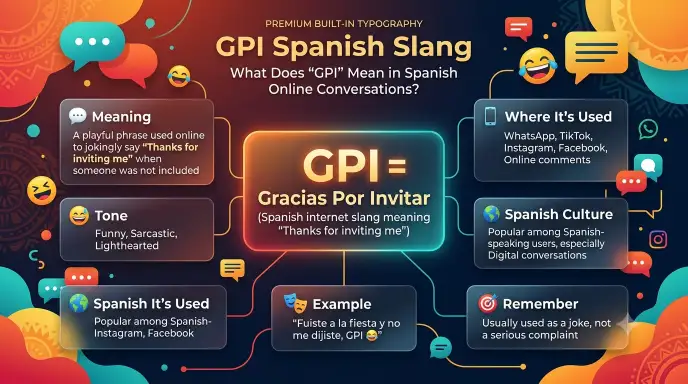
GPI is a Spanish internet slang abbreviation that means “Gracias Por Invitar” (“Thanks for inviting me”). Most of the time, people use it sarcastically to mean “You didn’t invite me” or “I wish I had been included.”
What Does GPI Mean in Text?
In text messages and social media, GPI is a playful way to react when someone shares an activity that you were not invited to.
The phrase is usually humorous rather than angry.
For example:
- “You all went to the beach? GPI 😂”
- “I just saw your party photos… GPI!”
- “Movie night without me? GPI.”
In each example, the person is joking about being left out.
Literal Meaning vs. Intended Meaning
Although GPI literally stands for “Gracias Por Invitar,” the speaker usually means the opposite.
They are not genuinely thanking someone.
Instead, they are saying:
- “You forgot to invite me.”
- “Next time, include me.”
- “I wish I had gone too.”
The sarcastic tone is what gives the expression its meaning.
GPI Full Form or Definition
GPI stands for “Gracias Por Invitar.”
In English, this translates to “Thanks for inviting me.”
However, the slang meaning is different from the literal translation.
People use it to express:
- Feeling left out
- Wanting to join an activity
- Friendly disappointment
- Playful sarcasm
The expression is short, easy to type, and widely understood among Spanish speaking social media users.
Is GPI Rude, Offensive, or Neutral?
Most of the time, GPI is neutral and playful.
Friends often use it to tease each other after seeing photos or videos from an event.
Friendly Example
“You all went for tacos? GPI 😂”
The message sounds lighthearted.
Casual Example
“I just saw your concert pictures. GPI!”
The speaker wishes they had been invited.
Can It Sound Rude?
Yes, sometimes.
If two people are already arguing, GPI may sound passive aggressive instead of funny.
Because of this, context and tone matter.
Where Is GPI Commonly Used?
GPI is popular in casual online conversations.
People commonly use it on:
- TikTok
- X (formerly Twitter)
- Snapchat
- Discord
- Telegram
It also appears in:
- Group chats
- Family chats
- School conversations
- Friendship groups
- Meme pages
The slang is much less common in formal writing or professional communication.
Who Uses GPI?
You will mostly see GPI among Spanish speaking internet users.
It is especially common among:
- Teenagers
- College students
- Young adults
- Friends chatting online
- Social media creators
Although people of different ages understand the phrase, younger users tend to use it more often in everyday conversations.
Different Ways People Use GPI
The meaning stays similar, but the tone can change depending on the conversation.
Friendly Joke
Someone posts vacation photos.
Reply:
“GPI 😂”
The message is playful.
Feeling Left Out
Friends meet for dinner without inviting someone.
Reply:
“GPI next time.”
The speaker hopes to be included in the future.
Social Media Reaction
Someone uploads concert videos.
Comment:
“GPI 😭”
The crying emoji shows playful disappointment rather than real anger.
Light Sarcasm
A friend shares photos from a birthday party.
Reply:
“Nice party… GPI.”
The speaker is joking about not receiving an invitation.
Origin and Background of GPI Slang
The slang GPI comes from the Spanish phrase “Gracias Por Invitar,” which means “Thanks for inviting me.”
People first began using it in online chats and text messages as a sarcastic reply. Instead of sincerely thanking someone, they used it to point out that they were not invited.
The exact origin is unclear, and there is no official record showing who created the abbreviation first. Like many internet slang terms, it spread naturally through social media and messaging apps.
Today, GPI is widely recognized in many Spanish-speaking online communities, especially in countries such as Mexico. However, usage may vary by country, and some Spanish speakers may not use or recognize the abbreviation.
Why Did GPI Become Popular?
The slang became popular because it is:
- Short
- Easy to type
- Funny
- Relatable
- Perfect for social media comments
Many people use it after seeing friends post pictures from parties, concerts, vacations, or family gatherings.
Real Life Examples of GPI Spanish Slang
These examples show how GPI is used in different situations.
Friendly Conversation
Carlos: “We went bowling yesterday.”
Sofia: “GPI 😂”
She is joking that she wanted an invitation.
Casual Text Message
“I just saw your beach photos. GPI!”
The speaker wishes they had gone too.
Instagram Comment
“That trip looks amazing. GPI 😭”
The crying emoji adds a playful tone.
Group Chat
“You all ordered pizza without me? GPI.”
The message sounds humorous instead of serious.
Social Media Post
Friend: “Best concert ever!”
Comment: “GPI. Next time I’m coming!”
The speaker hopes to be included in the future.
Comparison With Similar Spanish Slang
Several Spanish expressions communicate similar feelings.
| Slang | Meaning | Tone |
| GPI | Thanks for inviting me (sarcastic) | Playful |
| Qué mala onda | That’s not nice | Mild disappointment |
| Me dejaron fuera | They left me out | Direct |
| Invítame | Invite me | Friendly request |
| Yo también quiero ir | I want to go too | Neutral |
Although these expressions are related, GPI is shorter and more common in online conversations.
When Should You Avoid Using GPI?
GPI works best in casual conversations.
Avoid using it when you are:
- Writing business emails
- Talking to clients
- Sending professional messages
- Writing academic papers
- Speaking with people who may not understand Spanish slang
Also avoid using it if someone has intentionally excluded you from a serious event. In that situation, a respectful conversation is usually better than sarcasm.
Polite Alternatives
If you want to sound more direct or formal, try one of these alternatives.
- “I wish I could have joined.”
- “Please invite me next time.”
- “That looks like fun.”
- “I would love to come next time.”
- “Looks like everyone had a great time.”
These expressions clearly communicate your feelings without using slang.
Why Do People Use GPI?
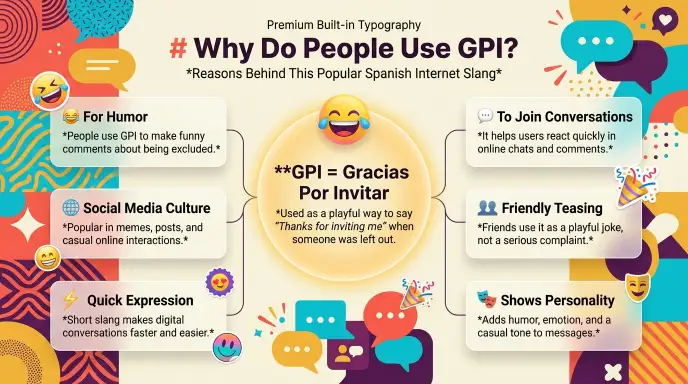
People use GPI because it expresses disappointment in a lighthearted way.
The slang can:
- Show playful jealousy
- Make friends laugh
- Encourage future invitations
- Create friendly conversations
- React quickly to social media posts
Most users do not expect an apology. They simply want to join the conversation in a fun way.
Impact of Using GPI in Communication
Slang helps people build closer relationships in casual conversations.
Using GPI can make messages feel:
- More relaxed
- More humorous
- More personal
- More engaging
However, sarcasm does not always translate well. If the other person does not understand the joke, the message may seem rude or confusing.
Think about your audience before using the expression.
Is GPI Safe for Social Media?
Yes. GPI is generally safe for social media.
People regularly use it on:
- TikTok
- X (formerly Twitter)
- Discord
- Snapchat
The abbreviation does not contain offensive language. It is usually understood as a playful comment between friends.
Even so, avoid using it repeatedly on every post. Too much sarcasm may create the wrong impression.
Frequently Asked Questions
Q1. What does GPI mean in Spanish slang?
GPI stands for “Gracias Por Invitar.” People usually use it sarcastically to mean “You didn’t invite me.”
Q2. Is GPI rude?
No. In most situations, it is playful and friendly. However, it can sound passive-aggressive if people are already arguing.
Q3. What does GPI stand for?
It stands for “Gracias Por Invitar,” which literally means “Thanks for inviting me.”
Q4. Where is GPI commonly used?
You will often see it on WhatsApp, TikTok, Instagram, Facebook, X, Snapchat, Discord, and in group chats.
Q5. Is GPI used in every Spanish-speaking country?
Not always. It is especially popular in some online communities, particularly in Mexico, but its use varies by region.
Q6. Can I use GPI in formal conversations?
No. It is better to use polite and direct language in professional or formal situations.
Q7. Why do people comment on GPI on social media?
They use it to jokingly say they wish they had been invited to the event shown in the post.
Q8. Is GPI still popular?
Yes. It remains a common abbreviation in Spanish speaking social media communities and messaging apps.
Conclusion:
GPI Spanish slang is a fun and widely used internet abbreviation that stands for “Gracias Por Invitar.” Although the literal translation is “Thanks for inviting me,” people usually use it sarcastically to say they were not invited or wish they had been included.
The expression is most common in casual chats and social media comments. It works best among friends who understand the joke. By knowing the meaning, tone, and context, you can recognize GPI and use it naturally in Spanish online conversations.