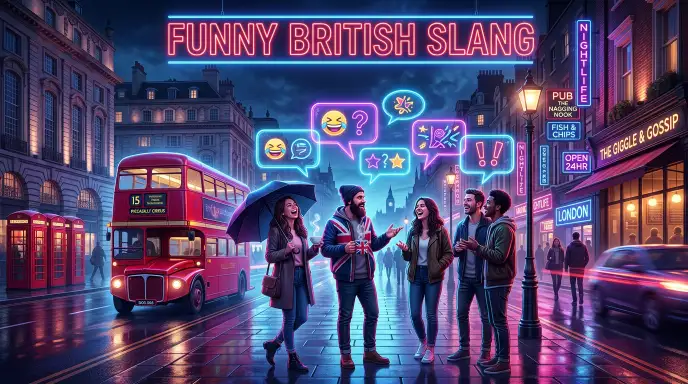
Funny British slang refers to humorous words and phrases commonly used in the United Kingdom to describe people, situations, or everyday events in a playful way.
Many people search for funny British slang after hearing unusual expressions in British TV shows, movies, social media videos, or while chatting with friends online.
Some British slang sounds confusing at first because the words often mean something completely different from their literal definition. Learning these expressions can help you better understand British conversations, memes, and internet culture while making your English sound more natural.
if you’re a student, traveler, or simply curious about British English, this guide explains the most popular funny British slang terms, when to use them, and when to avoid them.
Quick Answer: Funny British Slang
Funny British slang consists of informal UK expressions used to add humor, personality, or exaggeration to conversations. Most are friendly, harmless, and commonly heard in everyday speech, social media, and British entertainment.
What Does Funny British Slang Mean in Text?
Funny British slang in text messages refers to humorous informal words that British people use while chatting online or by phone.
Unlike internet abbreviations such as “LOL,” these are actual British English words with unique meanings.
Examples include:
| British Slang | Meaning |
| Knackered | Very tired |
| Gobsmacked | Extremely surprised |
| Dodgy | Suspicious or unreliable |
| Chuffed | Very pleased |
| Blimey | An expression of surprise |
| Skint | Having no money |
| Cheeky | Playfully bold |
These expressions also appear on TikTok, Instagram, Reddit, YouTube comments, and British TV shows.
Full Form or Definition
Funny British slang does not have one full form because it is not an abbreviation.
Instead, it describes informal British words or phrases that:
- Sound amusing
- Have unexpected meanings
- Add humor to conversations
- Reflect British culture
- Make everyday speech more colorful
Many have been used for decades, while others became popular through social media.
Different Types of Funny British Slang
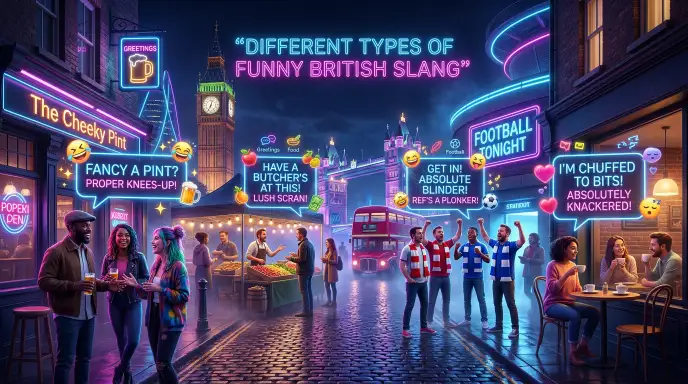
Funny greetings
- Oi!
- Alright?
- Cheers
Funny insults
- Numpty
- Wally
- Muppet
- Plonker
These are usually lighthearted among friends.
Funny descriptions
- Knackered
- Gobsmacked
- Chuffed
- Peckish
Funny reactions
- Blimey!
- Bloody hell!
- Crikey!
Tone matters. Some are friendly, while others can sound rude depending on how they are used.
Where Is Funny British Slang Commonly Used?
Funny British slang appears in many places.
- Everyday conversations
- Text messages
- TikTok videos
- Instagram captions
- Reddit discussions
- YouTube comments
- British TV series
- Comedy shows
- Podcasts
- Casual workplace chats among friends
It is much less common in formal writing or business emails.
Are These Words Rude, Offensive, or Neutral?
Most funny British slang is completely harmless.
| Type | Safe? |
| Friendly slang | ✅ Yes |
| Playful jokes | ✅ Yes |
| Mild teasing | Usually |
| Strong insults | Sometimes No |
Words like “muppet” or “numpty” are usually playful.
However, stronger slang can offend someone if used with strangers or in arguments.
Comparison Table
| British Slang | Meaning | Tone | Common Use |
| Gobsmacked | Very surprised | Friendly | Daily speech |
| Chuffed | Very pleased | Positive | Conversations |
| Knackered | Very tired | Casual | Texting |
| Skint | Broke | Casual | Friends |
| Muppet | Silly person | Playful | Jokes |
| Dodgy | Suspicious | Neutral | Daily speech |
Origin and Background
British slang has developed over hundreds of years across England, Scotland, Wales, and Northern Ireland.
Many expressions began in working class communities before spreading across the country through newspapers, television, music, and comedy.
Today, social media platforms like TikTok and YouTube introduce British slang to millions of people worldwide, making many funny expressions internationally recognizable.
Similar Slang Around the World
| British | American Equivalent |
| Knackered | Exhausted |
| Gobsmacked | Shocked |
| Chuffed | Happy |
| Skint | Broke |
| Dodgy | Sketchy |
Some meanings overlap, while others are unique to British English.
When Should You Avoid These Expressions?
Avoid using funny British slang:
- During job interviews
- In academic writing
- With people who may not understand it
- In formal emails
- During serious business presentations
Some playful words can sound disrespectful outside casual conversations.
Polite Alternatives
| British Slang | Formal Alternative |
| Knackered | Very tired |
| Skint | Short of money |
| Dodgy | Suspicious |
| Muppet | Silly |
| Bloody hell | Oh my goodness |
These alternatives are better for professional settings.
Why Do People Use These Expressions?
People enjoy funny British slang because it:
- Makes conversations entertaining
- Adds personality
- Expresses emotions quickly
- Creates shared cultural identity
- Makes jokes more memorable
- Sounds natural among British speakers
Many expressions also become popular through comedy and viral videos.
Impact of Using These Expressions
Using British slang can:
Positive
- Make conversations feel relaxed.
- Help you understand British culture.
- Add humor.
- Improve informal communication.
Negative
- Confuse people outside the UK.
- Sound inappropriate in formal situations.
- Be misunderstood if the listener is unfamiliar with the expression.
Are These Expressions Appropriate for Social Media?
Yes.
Funny British slang is generally safe for:
- TikTok
- Snapchat
- Discord
- X (Twitter)
Most expressions are family friendly, although stronger slang or insults should be used carefully depending on the audience.
Real Life Conversation Examples
Friends
A: “Fancy going out tonight?”
B: “Can’t. I’m absolutely knackered.”
Gaming
“That ending left everyone gobsmacked.”
School
“Our teacher was chuffed with our project.”
Social Media
“This meme is brilliant. Cheers for sharing!”
Casual Argument
“Stop acting like a muppet.”
Usually playful, but it can sound rude if said angrily.
Frequently Asked Questions
Q1. Understanding British Expressions and Their Meanings
Funny British slang refers to humorous informal words and expressions commonly used in the UK to make conversations more entertaining and expressive.
Q2. Are These Words Considered Rude?
Most funny British slang is not rude. However, some expressions can sound insulting if they are said in an angry tone or to someone you do not know well.
Q3. Where Do People Use These Terms?
You can hear it in everyday conversations, text messages, British TV shows, movies, TikTok, Instagram, Reddit, Discord, YouTube, and casual workplace chats.
Q4. Should You Use These Terms at Work?
Yes, but only in casual conversations with coworkers. It is better to avoid slang in formal meetings, business emails, or professional presentations.
Q5. Most Popular Terms and Their Meanings
Popular examples include “knackered,” “gobsmacked,” “chuffed,” “dodgy,” “muppet,” “numpty,” “blimey,” “cheers,” “skint,” and “plonker.”
Q6. Is It Popular on Social Media Platforms?
Yes. Many British slang words appear regularly on TikTok, Instagram, Snapchat, Reddit, Discord, Facebook, and YouTube because they make posts sound more natural and entertaining.
Q7. Do These Words Have Different Meanings?
Some words do. Their meaning can change depending on the conversation, region, or tone of voice, so context is always important.
Q8. Is British slang difficult for beginners?
Not usually. Once you learn the most common expressions and see how they are used in real conversations, they become much easier to understand.
Conclusion:
Funny British slang makes everyday English more entertaining, expressive, and memorable. Words like “knackered,” “gobsmacked,” “chuffed,” and “muppet” are widely used across the UK in casual conversations, text messages, social media, and television. While most of these expressions are friendly and harmless, their meaning depends on the context and the people you are talking to.
If you are learning British English, start with common slang used by native speakers and pay attention to tone. Avoid using slang in formal situations such as business emails, job interviews, or academic writing unless you know it is appropriate. Understanding funny British slang will help you enjoy British culture, communicate more naturally, and better understand online conversations.
I’m Emily Carter, and I enjoy writing about slang, internet language, and modern English expressions. My goal is to explain word meanings in a simple, clear, and easy-to-understand way so anyone can learn with confidence.