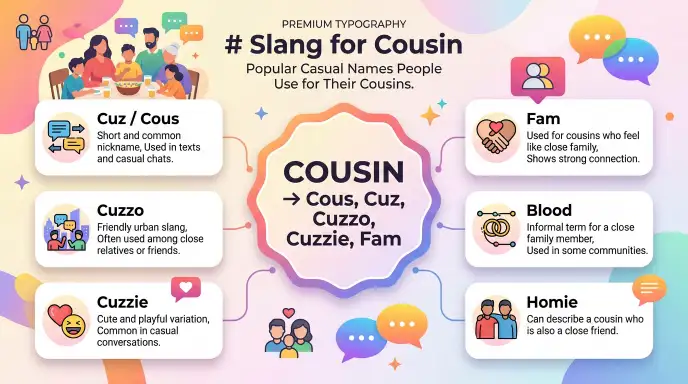
Slang for cousin refers to casual words, nicknames, and friendly expressions people use instead of the word “cousin.” Common examples include cuz, cuzzo, cous, and cousin related nicknames used in texts, social media, and everyday conversations.
People search for slang for cousin because they want a shorter, cooler, or more personal way to talk about family members online. These terms are common in texting, social media posts, music, and casual conversations. The meaning and tone can change depending on the person, culture, and community using the word.
This guide explains popular slang for cousin, where these terms are used, if they are appropriate, their meanings, examples, and when you should avoid using certain nicknames.
Quick Answer: Slang for Cousin
Slang for cousin includes informal words like “cuz,” “cuzzo,” and “cous.” People use these terms in texts, social media, and casual conversations to refer to a cousin or sometimes a close friend who feels like family.
What Does Slang for Cousin Mean?
Slang for cousin means a casual or shortened way of referring to a cousin. Instead of using the full word “cousin,” people often use shorter versions that sound more relaxed and friendly.
The most common cousin slang terms are:
| Slang Term | Meaning | Tone |
| Cuz | Short form of cousin | Casual and friendly |
| Cuzzo | Playful version of cousin | Close and informal |
| Cous | Shortened form of cousin | Relaxed |
| Fam | Someone treated like family | Very casual |
| Bro | Close male friend or family like person | Friendly |
Not every slang term means an actual family cousin. Some words, especially “fam” or “bro,” can describe someone who is not related but feels close.
Popular Slang Words for Cousin
Cuz
“Cuz” is one of the most common slang words for cousin. It is a shortened form of the word cousin and is widely used in casual speech and online conversations.
People often use “cuz” when talking to or about a cousin they are close with.
Examples:
“Happy birthday, cuz! Hope you have an amazing day.”
“My cuz came over for the weekend.”
The term is friendly and usually has a warm family connection.
Cuzzo
“Cuzzo” is a more playful and expressive version of cousin. It is often used between people who have a close relationship.
The word appears frequently in casual conversations, music, and some online communities.
Example:
“Yo, cuzzo, how have you been?”
“Me and my cuzzo grew up together.”
The tone is usually positive, but it may sound too informal in serious situations.
Cous
“Cous” is another shortened version of cousin. It is simple, casual, and often used in texts or social media captions.
Example:
“My cous is visiting tomorrow.”
“Me and my cous watched the game last night.”
This term is easy to understand because it stays close to the original word.
Where Is Slang for Cousin Commonly Used?
Slang for cousin appears mostly in informal communication where people want to sound relaxed and personal.
Texting and Messaging
In private chats, people often shorten words to make messages faster. Terms like “cuz” and “cous” are common because they are quick to type.
Example:
“Hey cuz, are you coming tonight?”
TikTok and Instagram
On platforms like TikTok and Instagram, cousin slang appears in captions, comments, and family-related posts.
Example:
“Weekend with my cuz ❤️”
Users often choose these words because they make posts feel more personal.
Snapchat
Snapchat conversations often use short slang terms because messages are usually quick and casual.
A person may write “cuz” instead of “cousin” when sending snaps or chats.
Gaming and Discord
Some online groups use family like slang for close friends. A person may call a trusted gaming friend “cuz” even if they are not related.
This use depends on the community and relationship.
Is Slang for Cousin Rude, Offensive, or Harmless?
Slang for cousin is generally harmless and friendly. Words like “cuz,” “cuzzo,” and “cous” are usually used to show closeness, respect, or a family connection.
These terms are not normally offensive. However, the meaning can depend on who uses them and how they are used.
For example, calling a real cousin “cuz” is usually natural:
“Thanks for helping me move, cuz.”
But using cousin slang with someone you barely know may feel too familiar or forced.
The tone of the conversation matters more than the word itself.
Different Meanings of Cousin Slang
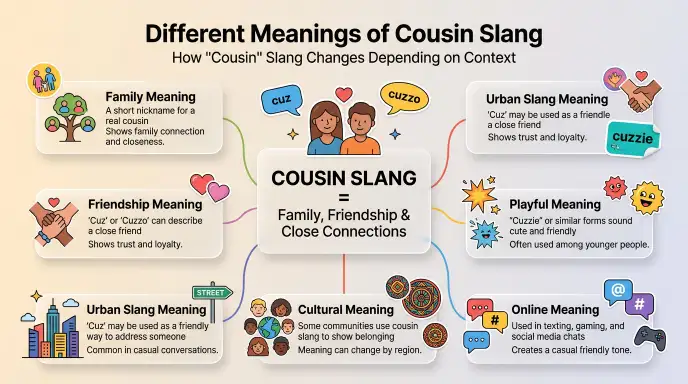
Cousin slang does not always refer to a biological family member. In some communities, these words can have broader meanings.
Cuz as an actual cousin
The most common meaning of “cuz” is a shortened form of cousin.
Example:
“My cuz is coming to the family party.”
Here, the speaker is talking about a real family member.
Cuz as a close friend
In some informal communities, “cuz” can describe someone who feels like family even without a blood relationship.
Example:
“That’s my cuz. We have known each other for years.”
Here, the speaker is showing closeness and trust.
Fam as family like slang
The word “fam” is related to cousin slang because people sometimes use it for close friends or relatives.
Example:
“My fam always supports me.”
This does not always mean actual family. It can mean a trusted group of people.
Origin and History of Cousin Slang
The slang forms of cousin developed naturally from everyday speech. Shortening longer words is common in informal English, especially in conversations between friends and family.
The word “cuz” became popular as a shortened form of “cousin” and has been used in casual speech for many years. It is especially common in communities where people use family terms to show friendship and respect.
Some uses of cousin slang have been influenced by music, local speech styles, and online culture. However, there is no single person or exact date responsible for creating these terms.
The meaning of “cuz” may also vary by region and community. In some groups, it refers only to family. In others, it can describe a close person who feels like family.
Slang for Cousin on Different Platforms
The way people use cousin slang can change depending on the platform.
| Platform | Common Usage | Tone |
| Text messages | Short form like cuz or cous | Friendly |
| TikTok | Captions and comments | Casual |
| Family posts and photos | Warm | |
| Snapchat | Quick messages | Informal |
| Discord | Friends treated like family | Community based |
| Workplace chat | Rarely used | Usually too casual |
In professional spaces, people usually use “cousin” instead of slang because it sounds clearer and more appropriate.
Real Life Examples of Slang for Cousin
Family conversation
Example:
“Hey cuz, are you coming to grandma’s house this weekend?”
Meaning: The speaker is talking to an actual cousin.
Text message
Example:
“Cuz, don’t forget about the party tonight.”
Meaning: A casual way to address a cousin.
Social media caption
Example:
“Best memories with my cuz ❤️”
Meaning: A friendly caption about spending time with a cousin.
Gaming chat
Example:
“Good game, cuz. That was a great match.”
Meaning: The speaker is using “cuz” as a friendly term, not necessarily for a family member.
Close friend example
Example:
“That’s my cuz. We’ve been friends since school.”
Meaning: The person feels like family.
Similar Slang and Related Terms
Several informal words can have a similar feeling to cousin slang.
| Term | Meaning | Usage |
| Fam | Close people who feel like family | Friends and relatives |
| Bro | Close male friend or family like person | Casual conversations |
| Sis | Close female friend or family like person | Friendly use |
| Homie | Close friend | Informal speech |
| Bestie | Best friend | Social media and texting |
These terms are related because they express connection, trust, and closeness.
When Should You Avoid Using Cousin Slang?
Cousin slang is friendly, but it is not suitable for every situation.
Avoid using terms like “cuz” or “cuzzo” when:
- Writing formal emails
- Speaking with clients
- Communicating with teachers or officials
- Writing professional documents
- Talking to someone who may not understand the slang
For example, a work message like:
“Hey cuz, I finished the report.”
may sound unprofessional unless you are speaking with someone you already know well.
A better option would be:
“I finished the report. Please review it when you have time.”
Why Do People Use Slang for Cousin?
People use slang for cousin because it makes conversations feel more personal, relaxed, and friendly. Short words like “cuz” are easier to type and can show a close relationship.
Common reasons people use cousin slang include:
- To sound more casual with family members
- To show affection and closeness
- To create a friendly tone in conversations
- To make social media captions shorter
- To show that someone feels like family
Online communication often uses shorter words because people want messages to feel quick and natural. Cousin slang fits well in texts, comments, and casual chats.
Common Misunderstandings About Cousin Slang
Many people misunderstand cousin slang because these terms can have different meanings in different communities.
“Cuz” does not always mean a family cousin
Some people use “cuz” only for relatives, while others use it for close friends.
Example:
“That’s my cuz from school.”
This could mean a real cousin or someone who feels like family.
“Cuzzo” is not a formal word
Cuzzo is a casual slang term. It is mainly used in relaxed conversations and may not be understood in every English speaking community.
Cousin slang is not the same everywhere
Different regions and cultures may use different words for family members. A term that feels normal in one group may sound unfamiliar in another.
Understanding the relationship and situation helps you know the real meaning.
Polite Alternatives to Slang for Cousin
If you want a clearer or more formal way to refer to a cousin, use:
- Cousin
- My relative
- My family member
- My aunt or uncle’s child (when explaining the relationship)
For friendly conversations, you can also use:
- My family
- My close one
- My childhood friend (if they are not actually related)
The best choice depends on the situation and the person you are talking about.
Can You Use Cousin Slang at Work or School?
Cousin slang is usually not the best choice in formal settings.
At school, using “cuz” with friends is normal, but writing it in an assignment or speaking during a formal presentation may not be appropriate.
At work, it is better to use standard words like “cousin” or “family member.”
Examples:
Casual:
“My cuz is visiting this weekend.”
Formal:
“My cousin is visiting this weekend.”
The meaning is the same, but the tone is different.
Frequently Asked Questions About Slang for Cousin
Q1. What is the most common slang for cousin?
The most common slang for cousin is “cuz.” It is a shortened form of cousin and is widely used in texts, casual conversations, and social media posts.
Q2. What does “cuz” mean in texting?
In texting, “cuz” usually means cousin. It can also be used for a close friend who feels like family, depending on the relationship between the people chatting.
Q3. Is “cuzzo” another word for cousin?
Yes, “cuzzo” is a playful slang version of cousin. It is more informal than “cuz” and is often used between people who have a close relationship.
Q4. Is cousin slang used on TikTok?
Yes, cousin slang appears on TikTok in captions, comments, and family related videos. People often use terms like “cuz” because they sound casual and friendly.
Q5. Is “cuz” rude to say?
No, “cuz” is generally not rude. It is usually a friendly and casual term. However, it may sound too informal in professional or serious situations.
Q6. Can I call my friend “cuz”?
Yes, some people call close friends “cuz” because they feel like family. This depends on the friendship and the community they are part of.
Q7. What does “my cuz” mean?
“My cuz” usually means “my cousin.” In some conversations, it can also mean a close person who the speaker considers family like.
Q8. Is “cous” the same as “cuz”?
Yes, “cous” and “cuz” are both shortened forms of cousin. The choice depends on personal preference and the community using the slang.
Conclusion:
Slang for cousin includes casual terms like “cuz,” “cuzzo,” and “cous” that people use to make conversations shorter and more personal. These words are common in texting, social media, gaming chats, and everyday speech.
Most cousin slang is friendly and harmless, but the meaning depends on context. Some people use these words only for real cousins, while others use them for close friends who feel like family.
When choosing a cousin slang term, think about the person, platform, and situation. Casual slang works well with friends and family, but standard words are better for professional or formal communication.