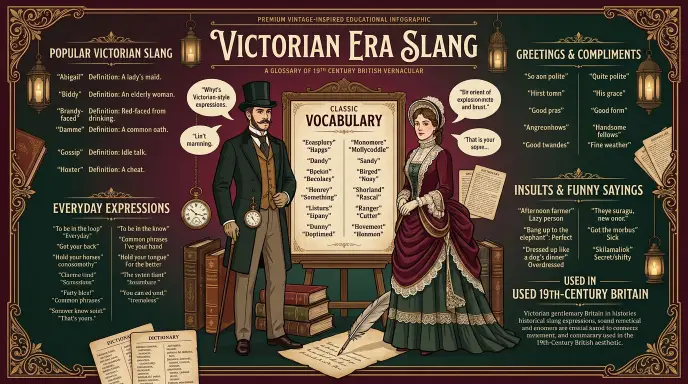
Victorian era slang refers to the informal words and expressions commonly used in Britain during the reign of Queen Victoria (1837,1901).
These slang terms appeared in everyday conversations, newspapers, literature, theaters, and working class communities. Some Victorian era slang has disappeared, while a few expressions have survived and are still recognized today.
People search for Victorian era slang to understand old books, historical dramas, family records, and classic novels. Learning these expressions also gives a fascinating look at how people joked, insulted, praised, and described everyday life during the 19th century.
In this guide, you’ll discover the meaning of Victorian era slang, where it came from, how it was used, and many authentic examples.
Quick Answer: Victorian Era Slang
Victorian era slang is the collection of informal words and phrases used in Britain between 1837 and 1901. It reflected everyday life, social class, occupations, fashion, crime, entertainment, and humor. While many terms are now outdated, they remain valuable for understanding Victorian history and literature.
What Does Victorian Era Slang Mean?
Victorian era slang means the casual language that people used instead of formal English during the Victorian period. Like modern slang, these expressions often changed quickly and varied between cities, professions, and social groups.
Unlike standard English found in official documents, Victorian slang added personality, humor, and emotion to everyday conversations.
People used it to:
- Describe people in funny ways.
- Make conversations shorter and livelier.
- Hide meanings from outsiders.
- Show membership in a particular social group.
- Add humor or sarcasm.
Although Britain was becoming more industrial and educated during this period, slang remained a natural part of daily speech among many different classes.
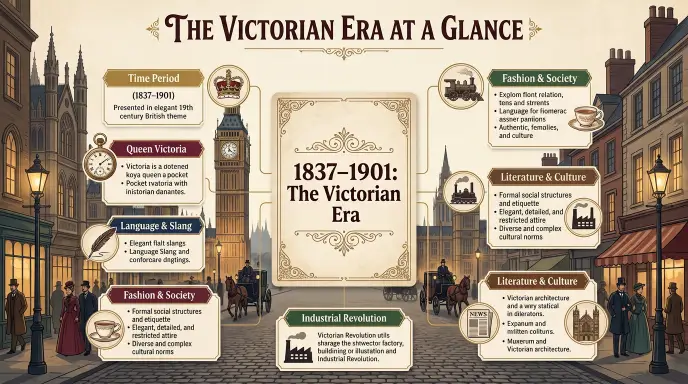
The Victorian Era at a Glance
What Was the Victorian Era?
The Victorian Era lasted from 1837 until 1901, during the reign of Queen Victoria. It was a time of major social, economic, and technological change in Britain.
Important developments included:
- Rapid industrial growth
- Expansion of the British Empire
- Growth of cities
- New inventions
- Rising literacy
- Popular newspapers and magazines
These changes helped spread new words and slang throughout society.
Who Used Victorian Era Slang?
Victorian slang was not limited to one group. Different communities created their own expressions.
Common users included:
- Factory workers
- Market traders
- Sailors
- Soldiers
- Criminal groups
- Students
- Actors
- Journalists
- Working class families
Some slang eventually became popular across all social classes, while other terms remained local or profession specific.
Where Was Victorian Era Slang Commonly Used?
Victorian era slang appeared in many places throughout daily life.
Everyday Conversations
Friends, neighbors, and family members often used slang instead of formal language.
Example:
“I met a proper toff at the station today.”
Markets and Streets
Busy markets were full of colorful expressions used by sellers and buyers.
Example:
“Watch your pockets around that bloke.”
Music Halls and Theaters
Performers used slang to entertain audiences and make jokes feel more realistic.
Newspapers
Some Victorian newspapers included slang, especially when reporting crime or describing life in London’s poorer neighborhoods.
Literature
Writers sometimes included slang to make characters sound authentic.
Many Victorian novels use informal expressions to reflect different social backgrounds.
Was Victorian Era Slang Offensive?
Most Victorian era slang was harmless and simply added color to everyday speech. However, some expressions were used as insults, while others came from criminal communities or reflected attitudes that would now be considered outdated.
Because language changes over time, a few Victorian expressions may sound rude or inappropriate today.
Before using historical slang, consider:
- If the audience understands the historical context.
- If the term was originally insulting.
- If the expression has changed meaning in modern English.
Using Victorian slang in historical discussions, literature, or educational settings is generally appropriate, but it is usually not suitable for formal business communication.
Common Victorian Era Slang Terms
| Slang Term | Meaning | Tone |
| Bloke | A man | Informal |
| Toff | A wealthy or upper class person | Informal |
| Cove | A fellow or man | Friendly |
| Barmy | Foolish or shocking | Informal |
| Bob | A shilling (old British coin) | Everyday |
| Crikey | Expression of surprise | Mild |
| Swell | Fashionable or impressive person | Positive |
| Mutton Shunter | Policeman | Informal |
| Gigglemug | A smiling face | Humorous |
| Donkey’s Years | A very long time | Informal |
These examples show how creative Victorian slang could be. Some words disappeared after the Victorian period, while others continued into modern British English.
Origin and History of Victorian Era Slang
Victorian era slang did not appear overnight. It developed naturally as Britain changed during the 19th century. The Industrial Revolution brought millions of people into growing cities, where workers from different regions mixed together. This helped new words spread quickly.
At the same time, increased literacy, affordable newspapers, theaters, and popular novels introduced slang to a wider audience. Some expressions started in London’s streets before becoming known across Britain.
Although many Victorian slang words faded after the early 1900s, historians and linguists still study them because they reveal how ordinary people spoke, joked, and interacted.
Influences on Victorian Slang
Several factors shaped the slang of the time.
- London’s working class neighborhoods
- Market traders and street vendors
- Criminal communities and thieves’ cant
- Music hall performers
- Sailors and soldiers
- Regional British dialects
- Popular newspapers and magazines
These influences created a rich and colorful vocabulary that reflected everyday Victorian life.
Different Types of Victorian Era Slang
Victorian slang covered many parts of daily life. Different groups often had their own favorite expressions.
Everyday Conversation
Many slang words simply made casual conversations more interesting.
Examples:
- “He’s a decent bloke.”
- “That was a swell evening.”
Money
Victorians often used slang instead of official names for coins and money.
Examples include:
- Bob one shilling
- Quid one pound (already in use by the late Victorian period)
Fashion and Appearance
People enjoyed describing clothing and personal style with colorful language.
Examples:
- Toff a fashionable or wealthy person
- Dandy a man known for elegant dress
Crime and Police
London’s criminal underworld developed many secret expressions.
Examples:
- Mutton Shunter policeman
- Fence a person who bought stolen goods
Humor and Insults
Victorians also used playful nicknames and funny insults.
Examples:
- chaotic or shocking
- Gigglemug someone with a smiling face
Real Life Examples of Victorian Era Slang
These examples show how Victorian slang sounded in everyday situations.
Friends Talking
Person A: “Who’s that bloke over there?”
Person B: “He’s a friendly cove.”
At the Market
Vendor: “That’ll cost you two bob.”
Customer: “That’s a fair price.”
Talking About Someone Wealthy
“Only a real toff could afford that carriage.”
Expressing Surprise
“Crikey! I didn’t expect to see you here.”
Describing Someone Happy
“She walked in with a proper gigglemug.”
These conversations sound old fashioned today, but they reflected natural speech during the Victorian period.
Similar Slang or Related Terms
Many Victorian expressions have modern equivalents. While the wording has changed, the ideas often remain the same.
| Victorian Slang | Modern Equivalent |
| Bloke | Guy, man |
| Toff | Rich person, elite |
| Cove | Fellow, guy |
| Barmy | shocking, silly |
| Crikey | Wow, gosh |
| Bob | Money, cash |
| Swell | Great, stylish |
| Gigglemug | Smiley face |
| Donkey’s Years | Ages, a long time |
Some of these older expressions are still heard in parts of the United Kingdom, though they are much less common than they once were.
Why Do People Still Learn Victorian Era Slang?
Even though these expressions are more than a century old, they remain useful for many readers and researchers.
People often study Victorian slang to:
- Understand classic British novels.
- Enjoy historical TV shows and films.
- Read old newspapers and letters.
- Learn about British cultural history.
- Improve historical fiction writing.
- Explore how English has changed over time.
Knowing these words also makes it easier to understand the humor and personalities found in Victorian literature.
Common Misunderstandings About Victorian Era Slang
Some myths about Victorian slang continue to appear online. Here are the facts.
It Was Used by Everyone
Not exactly. Different regions, occupations, and social classes had their own slang. A word common in London might have been unfamiliar elsewhere.
Every Victorian Slang Word Is Still Used Today
No. Most Victorian slang disappeared during the 20th century. Only a small number of expressions survived into modern British English.
Victorian People Always Spoke Formally
This is a common misconception. Formal language was expected in many public situations, but everyday conversations often included humor, nicknames, and slang just as they do today.
When Should You Avoid Using Victorian Era Slang?
Victorian era slang is interesting and entertaining, but it is not suitable for every situation. Since many expressions are old fashioned, modern audiences may not understand them.
Avoid using Victorian slang when:
- Writing professional emails or business documents.
- Speaking in formal academic or workplace settings.
- Communicating with people unfamiliar with historical English.
- Using words that were originally insulting or have changed meaning over time.
If your goal is clear communication, modern English is usually the better choice. Victorian slang works best in historical discussions, creative writing, reenactments, or when reading classic literature.
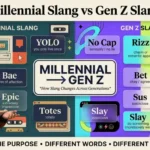
Victorian Era Slang vs. Modern Slang
Although both types of slang make conversations more expressive, they reflect very different time periods.
| Feature | Victorian Era Slang | Modern Slang |
| Time Period | 1837 1901 | Present day |
| Main Use | Everyday speech, literature, markets | Texting, social media, gaming, daily conversation |
| How It Spread | Newspapers, theaters, word of mouth | Internet, TikTok, Reddit, Discord, Instagram, Snapchat |
| Popular Users | Workers, traders, students, performers | People of all ages, especially online communities |
| Current Status | Mostly historical | Constantly changing |
Modern slang changes quickly because of social media, while Victorian slang evolved more gradually through everyday life and print culture.
Frequently Asked Questions
Q1. What is Victorian era slang?
Victorian era slang is the informal language used in Britain during Queen Victoria’s reign from 1837 to 1901. It includes everyday words, humorous expressions, and nicknames used by different social groups.
Q2. Is Victorian era slang still used today?
A few expressions, such as “bloke,” “crikey,” and “donkey’s years,” are still recognized, especially in British English. However, most Victorian slang has become outdated.
Q3. Why did people use Victorian slang?
People used it to make conversations more lively, humorous, and expressive. Some groups also used slang to show identity or keep conversations private from outsiders.
Q4. Was Victorian era slang only used in London?
No. London was an important source of slang, but different regions across Britain developed their own local expressions.
Q5. Is Victorian era slang offensive?
Most Victorian slang is harmless. However, some historical terms were used as insults or reflected attitudes of their time. It is best to understand the context before using older expressions.
Q6. Can I use Victorian era slang today?
Yes, but it is most appropriate for historical writing, literature, theater, role playing, or casual conversations about history. It is generally not suitable for formal or professional communication.
Q7. What are some Victorian slang words?
Popular Victorian slang words include bluestocking (educated woman), mutton shunter (police officer), gigglemug (smiling face), and bang up (excellent).
Q8. How do you say “I love you” in Victorian era?
Victorians usually expressed love with formal phrases like “I hold you in the highest affection” or “You have my deepest devotion.”
Q9. What is the Victorian slang for pretty woman?
A pretty woman in Victorian slang might be called a donah (girl or woman) or described as bang up, meaning very attractive or excellent.
Q10. What is the Victorian slang for kissing?
A common Victorian slang term for kissing was bus, as in “to bus someone,” meaning to give them a kiss.
Conclusion:
Victorian era slang offers a fascinating look into everyday life in 19th century Britain. These informal expressions reveal how people joked, described one another, talked about money, and reacted to the world around them.
While many of these words have disappeared from modern speech, they remain valuable for understanding history, classic novels, newspapers, and historical dramas.
If you’re reading Victorian literature, writing historical fiction, or simply curious about old English expressions, learning Victorian era slang adds depth and authenticity to your understanding. Just remember that many of these terms are now historical rather than contemporary, so they are best used in the right context.