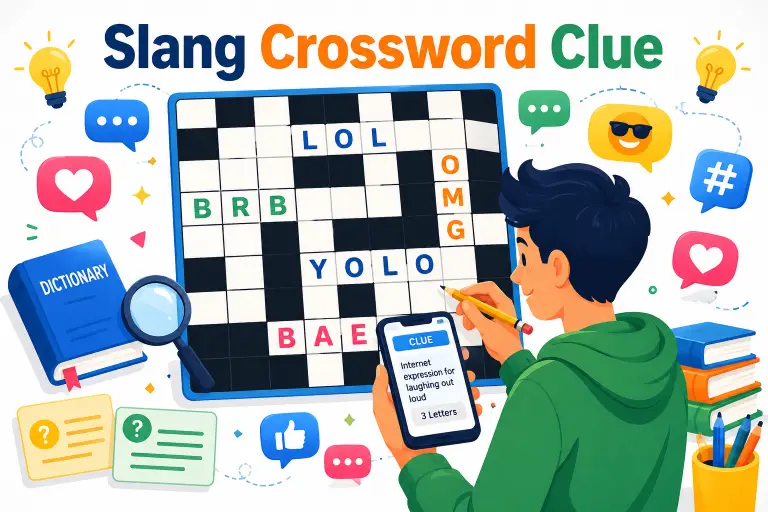
Slang crossword clue is a search term people use when they need help solving a crossword puzzle that includes the word “slang” or refers to informal language.
In most puzzles, the answer is a short word such as LINGO, ARGOT, JIVE, or another term that describes casual speech. The correct answer depends on the number of letters and the intersecting words.
Many crossword clues have more than one possible answer, which is why people search for slang crossword clue online. if you’re solving a newspaper crossword, an app puzzle, or a cryptic crossword, understanding what the clue is asking makes finding the right answer much easier.
In this guide, you’ll learn the most common answers, what they mean, where they appear, and how to solve similar clues faster.
Quick Answer: Slang Crossword Clue
A slang crossword clue usually asks for a word that means informal language or casual speech. Common crossword answers include:
- LINGO (5 letters)
- ARGOT (5 letters)
- JIVE (4 letters)
- CANT (4 letters)
- SLANG (5 letters)
The right answer depends on the puzzle’s letter count and the letters already filled in.
What Does Slang Crossword Clue Mean?
In crossword puzzles, the clue “slang” is not always asking for a specific slang word. Instead, it often asks for another word that means informal language or the special vocabulary used by a group of people.
For example, a crossword may use clues like:
- Informal language
- Street talk
- Casual speech
- Hip language
- Special vocabulary
All of these clues could point to words like LINGO or ARGOT, depending on the puzzle.
Unlike internet slang such as “LOL” or “BRB,” these crossword answers usually describe slang as a type of language rather than a single expression.
Common Answers for Slang Crossword Clue
The table below lists the answers most often seen in crossword puzzles.
| Answer | Letters | Meaning |
| LINGO | 5 | Informal language used by a group |
| ARGOT | 5 | Specialized vocabulary of a particular group |
| JIVE | 4 | Informal or hip talk |
| CANT | 4 | Secret or specialized language |
| SLANG | 5 | Informal words and expressions |
| PATTER | 6 | Fast, practiced style of speaking |
These answers appear in many popular crossword puzzles because they are short and fit common grid patterns.
Why Does This Clue Have Different Answers?
One reason crossword clues can be confusing is that they often have multiple correct words that share the same meaning.
For example:
Clue: Informal language
Possible answers:
- LINGO
- ARGOT
- SLANG
Each word is correct in general English, but only one will match the crossword grid.
This is why experienced solvers always check:
- Number of letters
- Crossing words
- Puzzle theme
- Difficulty level
Using all these clues together helps you find the correct answer.
Difference Between Lingo, Argot, and Slang
Although these words are similar, they are not exactly the same.
Lingo
Lingo means the informal language or vocabulary used by a particular group.
Example:
Medical professionals have their own lingo.
It is the most common crossword answer because it is short and widely understood.
Argot
Argot refers to specialized language used by a specific group, especially one that wants outsiders not to understand.
Example:
Detectives learned the criminals’ argot.
This word appears frequently in crosswords because it contains useful letter combinations.
Slang
Slang is informal vocabulary used in everyday conversations.
Examples include:
- Cool
- Awesome
- Chill
- Dude
Unlike lingo, slang usually refers to individual informal words rather than an entire vocabulary.
How Crossword Constructors Use This Clue
Puzzle creators rarely repeat the exact same clue every time.
Instead, they may write:
- Casual speech
- Informal talk
- Street language
- Group vocabulary
- Hip talk
- Everyday language
Even though the wording changes, the answer is often one of the same few words.
Understanding these clue patterns helps you solve puzzles much faster.
Real Crossword Examples
Here are a few realistic examples.
Clue: Informal language (5)
Answer: LINGO
Clue: Criminals’ language (5)
Answer: ARGOT
Clue: Hip talk (4)
Answer: JIVE
Clue: Secret language (4)
Answer: CANT
These clues appear regularly in newspaper and online crossword puzzles.
Where Is “Slang Crossword Clue” Commonly Used?
You are most likely to see a slang crossword clue in:
- Daily newspaper crosswords
- Online crossword websites
- Mobile crossword apps
- Quick crosswords
- Cryptic crosswords
- Crossword puzzle books
Although the clue may look simple, the answer changes depending on the puzzle’s design and letter pattern.
Popular Crossword Puzzles That Use Slang Clues
Many well known crossword publishers include clues related to slang or informal language.
| Crossword | Common Answers |
| New York Times | LINGO, ARGOT |
| LA Times | LINGO, SLANG |
| USA Today | LINGO, JIVE |
| The Guardian | ARGOT, CANT |
| Universal Crossword | SLANG, LINGO |
Different crossword editors prefer different vocabulary, so the same clue may have a different answer from one puzzle to another.
How to Solve a Slang Crossword Clue Faster
If you’re stuck, follow these simple steps.
1. Check the Letter Count
The number of boxes is your biggest clue.
For example:
- 4 letters JIVE, CANT
- 5 letters LINGO, ARGOT, SLANG
- 6 letters PATTER
Always match the answer length before trying a word.
2. Look at Crossing Letters
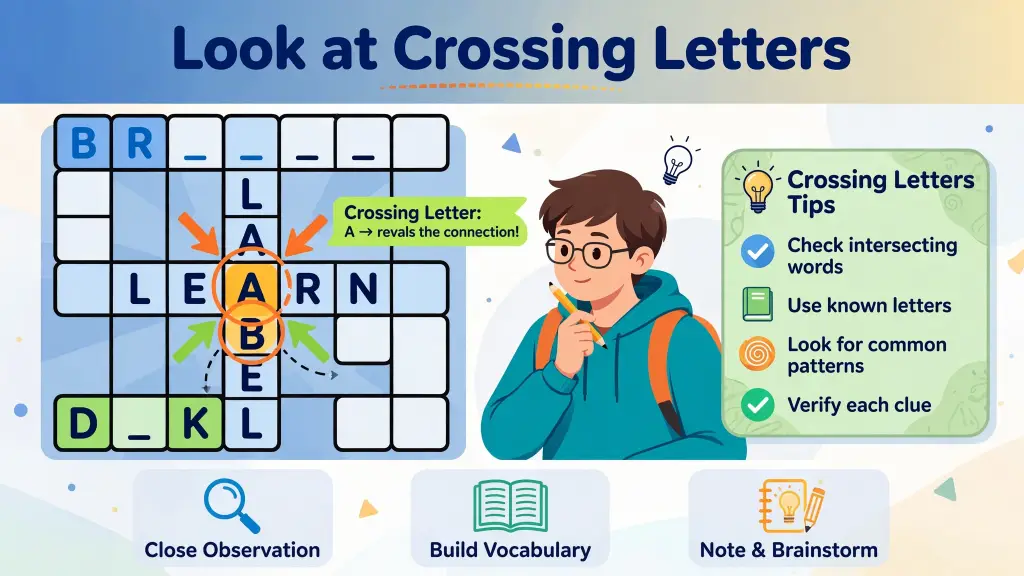
Crossing words help eliminate incorrect answers.
For example:
Pattern:
L N G O
The answer is clearly LINGO.
If the pattern is:
A R G O T
Then ARGOT is the correct solution.
3. Read the Clue Carefully
Sometimes a single extra word changes everything.
For example:
- Informal language LINGO
- Criminal language ARGOT
- Hip talk JIVE
Tiny wording differences often point to different answers.
4. Think About the Puzzle Theme
Some crossword puzzles have themes.
If the puzzle is about:
- Music
- Crime
- Internet culture
- Teen language
- Historical vocabulary
the answer may match that topic rather than the most common synonym.
Internet Slang in Modern Crosswords
Modern crossword puzzles increasingly include internet slang because it has become part of everyday communication.
Common examples include:
| Clue | Answer |
| Laugh online | LOL |
| Be right back | BRB |
| In my opinion | IMO |
| Oh my God | OMG |
| Text shorthand | ABBR |
These answers are especially common in newer crossword apps and modern newspaper puzzles.
Is “Slang” Ever the Actual Answer?
Yes.
Sometimes the clue is:
- Informal language
- Casual vocabulary
- Everyday expressions
The answer may simply be:
SLANG
This happens most often when the puzzle needs exactly five letters.
Common Mistakes People Make
Many crossword solvers make the same mistakes when solving slang clues.
Choosing the First Word That Fits
Just because a word has the right number of letters doesn’t mean it’s correct.
Always verify it with the crossing letters.
Confusing Lingo with Jargon
These words are similar but not identical.
- Lingo usually means informal vocabulary.
- Jargon often refers to technical language used by professionals.
Crossword writers may use either, depending on the clue.
Ignoring the Context
For example:
Clue: Thieves’ language
Correct answer:
ARGOT
Not LINGO, even though both relate to language.
Reading every word in the clue carefully helps avoid mistakes.
Similar Crossword Clues
If you’re solving many crossword puzzles, you’ll often see clues related to slang.
Examples include:
- Informal speech
- Street talk
- Everyday language
- Casual expression
- Local dialect
- Group vocabulary
- Secret language
- Hip expression
- Modern saying
- Popular phrase
Learning these clue styles makes future puzzles much easier.
Why Crossword Editors Like These Words
Words like LINGO, ARGOT, and JIVE appear frequently because they:
- Have useful letter combinations.
- Fit common crossword grids.
- Are recognizable to experienced solvers.
- Have clear dictionary meanings.
- Work well in puzzles of different difficulty levels.
That’s why you may see the same answers in different crossword publications.
Can “Slang Crossword Clue” Have More Than One Correct Answer?
Yes.
Many crossword clues are intentionally broad.
For example, the clue “Slang” could match:
- LINGO
- ARGOT
- SLANG
- JIVE
- CANT
The only way to know the correct answer is by checking:
- Letter count
- Crossing words
- Puzzle theme
- Editor’s style
These clues work together to point to a single solution.
Frequently Asked Questions
What is the most common answer for a slang crossword clue?
The most common answer is LINGO because it means informal language and fits many five letter crossword grids. Other frequent answers include ARGOT, SLANG, JIVE, and CANT.
What does ARGOT mean in a crossword?
ARGOT is the specialized language or vocabulary used by a particular group. It is often associated with criminals, professions, or subcultures. Crossword editors frequently use it as a synonym for informal or group specific language.
Is LINGO the same as slang?
Not exactly.
Slang refers to informal words and expressions used in everyday conversation. Lingo is the vocabulary or style of language used by a particular group. While the meanings overlap, they are not always interchangeable.
Why does the answer change from one crossword to another?
Crossword clues are designed to have only one answer that fits the puzzle. Even if several words have similar meanings, the correct answer depends on:
- The number of letters
- The crossing words
- The crossword’s theme
- The editor’s preferred vocabulary
Are internet abbreviations considered slang in crosswords?
Yes. Modern crossword puzzles sometimes include internet slang and texting abbreviations such as:
- LOL
- BRB
- IMO
- OMG
- IDK
These answers are becoming more common as online communication continues to influence everyday language.
Are slang crossword clues difficult?
Most slang crossword clues are considered easy to medium difficulty. However, they can become challenging when several words fit the same clue. Checking the crossing letters usually solves the problem.
Related Terms
If you’re solving crossword puzzles regularly, you may also come across these related language terms:
| Term | Meaning |
| Lingo | Informal language used by a group |
| Argot | Specialized vocabulary of a particular community |
| Jargon | Technical language used in a profession |
| Dialect | A regional variety of a language |
| Idiom | A phrase whose meaning differs from the literal words |
| Colloquialism | An informal everyday expression |
| Cant | Secret or specialized language |
| Jive | Informal or slang style speech |
Knowing the difference between these terms can help you solve language related crossword clues more quickly.
Expert Tips for Solving Crossword Clues
Experienced crossword solvers often use these strategies:
- Start with the clues you know first.
- Fill in crossing words before guessing.
- Pay close attention to the letter count.
- Look for repeated clue patterns from previous puzzles.
- Consider both common and less common synonyms.
- Don’t force an answer if the letters don’t match.
- Use a crossword dictionary only after trying to solve it yourself.
The more puzzles you complete, the easier it becomes to recognize frequently used crossword answers.
When Should You Avoid Guessing?
It’s tempting to enter the first word that seems correct, but guessing can create problems later in the puzzle.
Avoid guessing when:
- More than one synonym fits the clue.
- You have very few crossing letters.
- The puzzle has a special theme.
- The clue seems intentionally broad.
Instead, solve nearby clues first and return once more letters are revealed.
Conclusion:
A slang crossword clue usually points to a word that means informal language or casual speech. While LINGO is one of the most common answers, words like ARGOT, JIVE, CANT, and SLANG also appear regularly in crossword puzzles.
The key to finding the correct answer is not memorizing every possibility but using the puzzle’s letter count, crossing words, and context. With practice, you’ll quickly recognize these common crossword patterns and solve similar clues with confidence.
if you’re completing a newspaper crossword, an online puzzle, or a crossword app, understanding how slang related clues work will make the experience faster, easier, and more enjoyable.

I enjoy writing about English vocabulary and making difficult words easier to understand. I create simple guides on synonyms, word meanings, example sentences, quizzes, and everyday English to help students, ESL learners, and writers improve their vocabulary. Before publishing any article, I research trusted dictionaries and language resources to keep the information clear and accurate. My goal is to make learning English simple, practical, and enjoyable for everyone.