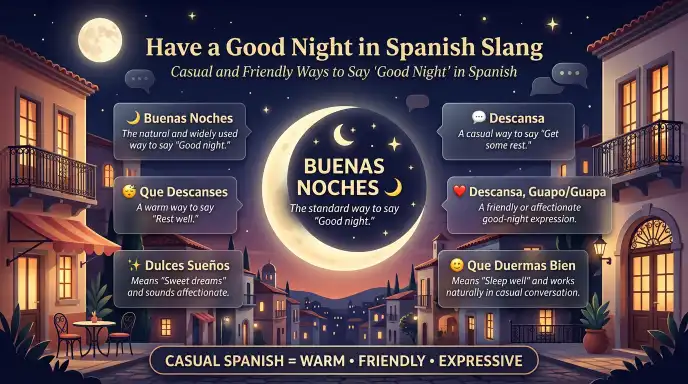
Have a Good Night in Spanish Slang means using a casual, friendly Spanish phrase to wish someone a pleasant night or good sleep. Common choices include “Buenas noches,” “Que descanses,” and “Que duermas bien.”
People often search for have a good night in Spanish slang because they want a phrase that sounds natural in texts, chats, or social media. Spanish has several ways to say good night, and each one can give a slightly different feeling. Some sound simple and neutral, while others feel warmer or more affectionate.
In this guide, you will learn the most common Spanish phrases for saying good night, what they mean, how they sound, and when to use them. You will also see simple examples that make each phrase easy to understand.
Quick Answer: Have a Good Night in Spanish Slang
Have a good night in Spanish slang does not have one fixed slang translation. The most natural casual choices are “Buenas noches” for “good night,” “Que descanses” for “rest well,” and “Que duermas bien” for “sleep well.”
“Buenas noches” is the safest choice when you want a simple and natural phrase. For a warmer message, “Que descanses” or “Dulces sueños” can work better.
What Does Have a Good Night in Spanish Slang Mean?
Have a good night in Spanish slang refers to casual Spanish expressions used to wish someone a pleasant night or good sleep.
Spanish speakers can choose different phrases based on the situation and their relationship with the other person. For example, “Buenas noches” is simple and widely used, while “Que descanses” can sound more caring.
Here are some common options:
- Buenas noches : Good night
- Que descanses : Rest well
- Descansa : Rest up
- Que duermas bien: Sleep well
- Dulces sueños : Sweet dreams
These phrases are not all slang in the strict sense. Some are standard Spanish expressions that are commonly used in casual speech and texting.
Common Ways to Say Have a Good Night in Spanish
The best phrase depends on the tone you want.
| Spanish phrase | English meaning | Tone |
| Buenas noches | Good night | Neutral |
| Que descanses | Rest well | Warm |
| Descansa | Rest up | Casual |
| Que duermas bien | Sleep well | Friendly |
| Dulces sueños | Sweet dreams | Warm or affectionate |
If you are unsure which phrase to use, “Buenas noches” is the easiest option. It works in most everyday situations.
Buenas Noches
“Buenas noches” is the most common and direct way to say “good night” in Spanish.
It is not really slang. It is standard Spanish and can be used in both casual and more formal situations.
For example:
“Buenas noches, hablamos mañana.”
Good night, we’ll talk tomorrow.
You can also use it in a short text:
“Buenas noches 😴”
Good night 😴
Because it is simple and widely understood, “Buenas noches” is a good choice for friends, family, coworkers, teachers, and other people.
Que Descanses
“Que descanses” means “rest well” or “have a good rest.”
It often sounds warmer than simply saying “Buenas noches.” It is common when ending a conversation at night.
For example:
“Ya me voy a dormir. Que descanses.”
I’m going to sleep now. Rest well.
You can also use it with a friend:
“Fue un día largo. Que descanses.”
It was a long day. Get some rest.
This phrase feels friendly and caring without necessarily sounding romantic.
Descansa
“Descansa” is a short and casual way to tell someone to rest.
It can sound caring, especially when someone is tired or has had a busy day.
For example:
“Estás cansado. Descansa.”
You’re tired. Get some rest.
In a text, someone might simply write:
“Descansa 😴”
Rest up 😴
The short form makes it feel relaxed and personal. It is especially natural between people who already know each other.
Que Duermas Bien
“Que duermas bien” means “sleep well.”
It is another natural phrase for ending a conversation before going to bed.
For example:
“Me voy a dormir. Que duermas bien.”
I’m going to sleep. Sleep well.
You can also say:
“Que duermas bien, hablamos mañana.”
Sleep well, we’ll talk tomorrow.
This phrase is friendly and caring. It does not automatically sound romantic.
Dulces Sueños
“Dulces sueños” means “sweet dreams.”
It has a softer and more affectionate tone than “Buenas noches.”
For example:
“Dulces sueños ❤️”
Sweet dreams ❤️
It can be used with children, family members, close friends, or romantic partners. The relationship determines how affectionate it sounds.
For a romantic message, you might see:
“Buenas noches, amor. Dulces sueños ❤️”
Good night, love. Sweet dreams ❤️
Is Having a Good Night in Spanish Slang Rude or Offensive?
No. These expressions are generally harmless and polite.
“Buenas noches,” “Que descanses,” “Descansa,” and “Que duermas bien” are everyday expressions. They do not contain offensive language.
However, the tone can change depending on the phrase and relationship.
For example, “Dulces sueños ❤️” may sound romantic when sent to a partner. Sending the same message to a coworker could feel too personal.
The important thing is to match the phrase with the situation.
Quick Tone Guide
- “Buenas noches” → neutral and safe
- “Que descanses” → friendly and caring
- “Descansa” → casual and personal
- “Que duermas bien” → kind and friendly
- “Dulces sueños” → warm or affectionate
Where Is It Commonly Used?
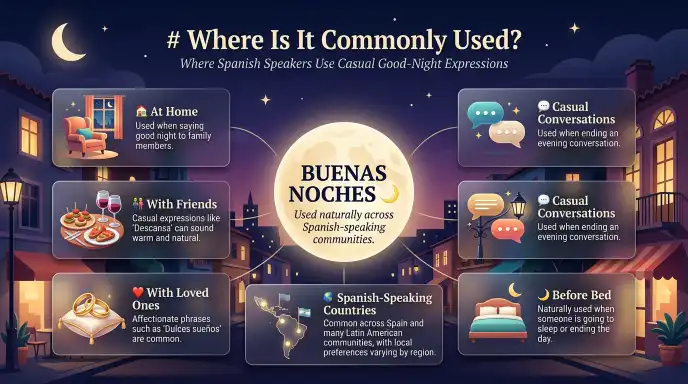
These phrases can appear in everyday Spanish conversations as well as online communication.
Texting
Short good-night messages are common in personal chats.
“Buenas noches 😴”
“Descansa.”
“Que duermas bien.”
Spanish speakers may use these phrases when ending a private conversation.
“Que descanses, hablamos mañana.”
This sounds natural and friendly.
People may use short phrases in direct messages, comments, or captions.
“Dulces sueños ✨”
“Buenas noches a todos.”
Snapchat
Short and casual expressions fit well in messages and snaps.
“Buenas noches 😴”
TikTok
Spanish-speaking users may use good-night phrases in comments, captions, or messages. The wording usually depends on the person’s style and audience.
Discord and Gaming
Players can use these expressions when leaving a group chat or ending a gaming session.
“Me voy. Buenas noches, chicos.”
I’m heading out. Good night, guys.
“Ya es tarde. Que descansen.”
It’s late. Rest up, everyone.
Real-Life Examples of Usage
Friendly Conversation
“Bueno, me voy a dormir. Buenas noches.”
“Okay, I’m going to sleep. Good night.”
This is a simple and natural message between friends.
Casual Text
“Estoy muy cansado. Descansa.”
“I’m really tired. Rest up.”
The short wording makes the message sound relaxed.
Caring Message
“Has tenido un día largo. Que descanses.”
“You’ve had a long day. Get some rest.”
This shows concern without sounding overly formal.
Romantic Message
“Buenas noches, amor. Dulces sueños.”
“Good night, love. Sweet dreams.”
Here, the affectionate tone comes from both the words and the relationship.
Origin and Background of Spanish Good-Night Expressions
The phrases used for saying “have a good night” in Spanish come from everyday Spanish, not from one specific internet slang trend.
“Buenas noches” is a standard Spanish expression used at night. It can work as both a greeting and a farewell.
“Que descanses” comes from the verb “descansar,” which means “to rest.” The phrase wishes the other person a good rest.
“Dulces sueños” combines “dulces,” meaning “sweet,” with “sueños,” meaning “dreams.” It gives the message a softer and warmer feeling.
These expressions existed long before social media. Today, people also use them in texting, messaging apps, and social platforms because short, friendly phrases work well in online conversations.
Formal vs. Casual Spanish Good-Night Phrases
Not every casual phrase is slang. Some are simply everyday Spanish expressions used in relaxed situations.
| Phrase | Meaning | Best use |
| Buenas noches | Good night | Almost any situation |
| Que descanses | Rest well | Friends, family, casual chats |
| Descansa | Rest up | Close or familiar relationships |
| Que duermas bien | Sleep well | Friendly conversations |
| Dulces sueños | Sweet dreams | Warm or affectionate chats |
“Buenas noches” is the most flexible choice. It works when speaking to someone you know and in situations where you need to remain polite.
Similar Spanish Expressions for Good Night
Spanish has several expressions that can carry a similar meaning.
Hasta mañana
“Hasta mañana” means “see you tomorrow.”
It is useful when you expect to speak to the person again the next day.
Example:
“Bueno, hasta mañana. Buenas noches.”
“Okay, see you tomorrow. Good night.”
Que descanses mucho
This means “get plenty of rest.”
It sounds caring and can be useful when someone has had a tiring day.
Example:
“Has trabajado mucho hoy. Que descanses mucho.”
“You worked a lot today. Get plenty of rest.”
Nos vemos mañana
This means “see you tomorrow.”
It is casual and often used when ending a conversation at night.
Example:
“Me voy a dormir. Nos vemos mañana.”
“I’m going to sleep. See you tomorrow.”
When Should You Avoid Using Casual Spanish Good-Night Phrases?
Most of these expressions are harmless, but the relationship still matters.
Avoid overly affectionate phrases when talking to someone you barely know. For example, “Dulces sueños, mi amor” can sound romantic because “mi amor” means “my love.”
That wording would not usually be suitable for a teacher, manager, or new coworker.
Instead, choose a neutral phrase such as:
“Buenas noches.”
In a professional setting, simple wording is usually better. You do not need slang to sound friendly.
Can You Use These Phrases at Work?
Yes, but choose the phrase carefully.
“Buenas noches” is suitable for most professional situations if you are ending a conversation at night.
For example:
“Gracias por tu ayuda. Buenas noches.”
“Thanks for your help. Good night.”
“Que descanses” can also be fine with a friendly coworker, especially in an informal workplace.
However, “Dulces sueños” may sound too personal in a professional message unless you already have a close relationship.
Can You Use Them With Teachers or Parents?
Yes. “Buenas noches” is polite and appropriate with teachers, parents, and older people.
For example:
“Buenas noches, profesora.”
“Good night, teacher.”
With family members, “Que descanses” or “Que duermas bien” can sound warm and natural.
The main difference is not if the phrase is “slang.” It is how personal or formal the expression feels.
Why Do People Use These Expressions?
People use Spanish good-night phrases for more than simply ending a conversation.
They can help show:
- Friendliness
- Care
- Respect
- Affection
- Warmth
- Closeness
A short phrase can also make a text feel more natural.
Compare:
“Bye.”
with:
“Que descanses.”
The second message feels more thoughtful because it wishes the other person well.
This is why phrases such as “Que descanses” are common in personal conversations.
How Tone Changes the Meaning
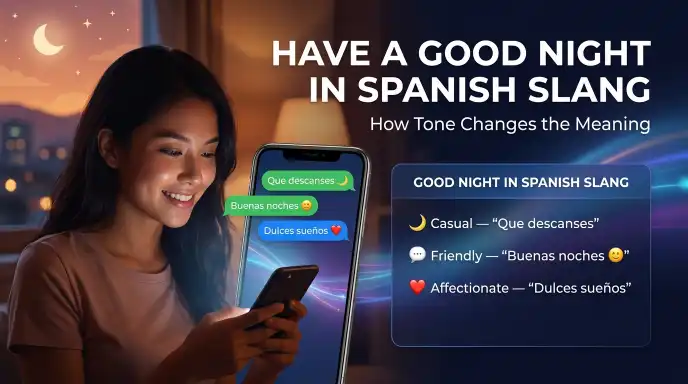
The same phrase can feel different depending on the relationship.
“Buenas noches.”
This sounds neutral.
“Buenas noches 😊”
The emoji makes it feel warmer.
“Que descanses.”
This sounds caring and friendly.
“Descansa ❤️”
This can sound more personal or affectionate.
“Dulces sueños ❤️”
This usually feels warm and may sound romantic in the right context.
The words matter, but the surrounding conversation matters too.
Is “Dulces Sueños” Always Romantic?
No. “Dulces sueños” does not automatically mean romantic interest.
Parents may say it to their children. Friends can use it in a warm conversation. Romantic partners can also use it.
The context decides the feeling.
For example:
“Dulces sueños, pequeña.”
“Sweet dreams, little one.”
This could be a caring family message.
But
“Dulces sueños, mi amor ❤️”
clearly has a more romantic tone.
So it is better to look at the complete message rather than judging one phrase alone.
Common Misunderstandings
“Buenas noches” Is Not Really Slang
One of the biggest misunderstandings is calling every casual Spanish phrase slang.
“Buenas noches” is standard Spanish. It is simply common in everyday speech and online chats.
“Que Descanses” Does Not Literally Mean “Good Night”
Its direct meaning is closer to “rest well.” However, Spanish speakers commonly use it when saying good night, so the practical meaning can be similar.
“Dulces Sueños” Does Not Always Mean Romance
It can be affectionate without being romantic. The relationship and surrounding words provide the real context.
Spanish Does Not Have One Universal Slang Phrase
Different Spanish-speaking communities may use different casual expressions. Country, age, relationship, and personal style can all affect word choice.
Spanish Good-Night Phrases by Situation
| Situation | Recommended phrase | Why |
| Friend | Que descanses | Warm and natural |
| Close friend | Descansa | Short and casual |
| Family | Que duermas bien | Caring |
| Romantic partner | Dulces sueños | Affectionate |
| Coworker | Buenas noches | Neutral |
| Teacher | Buenas noches | Polite |
| Group chat | Buenas noches, chicos | Casual |
| Someone you just met | Buenas noches | Safe and simple |
This makes it easier to choose a phrase without worrying about sounding too formal or too personal.
Is Having a Good Night in Spanish Slang Safe for Social Media?
Yes. These expressions are generally safe for social media because they are ordinary Spanish phrases without offensive or harmful meanings.
They can appear in:
- Instagram captions
- TikTok comments
- Snapchat messages
- WhatsApp chats
- Discord conversations
- Facebook posts
- Private messages
For example:
“Buenas noches, amigos 🌙”
“Good night, friends 🌙”
This is simple and suitable for a public post.
If you are posting publicly, neutral phrases such as “Buenas noches” are usually the safest choice because they do not imply unnecessary intimacy.
Examples for Social Media and Online Chats
Instagram Caption
“Buenas noches, amigos. Nos vemos mañana 🌙”
Good night, friends. See you tomorrow 🌙
TikTok Comment
“Dulces sueños 😴”
Sweet dreams 😴
WhatsApp Message
“Ya es tarde. Que descanses.”
“It’s late. Rest well.”
Discord Chat
“Me desconecto. Buenas noches, gente.”
“I’m logging off. Good night, everyone.”
Snapchat Message
“Descansa 😴 hablamos mañana.”
“Rest up 😴 we’ll talk tomorrow.”
These examples sound natural because they keep the wording short and match the platform.
Frequently Asked Questions
Q1. What is the most natural way to say “have a good night” in Spanish?
“Buenas noches” is the most common and natural choice. It simply means “good night” and works in both casual and polite situations.
Q2. What does “Que descanses” mean in English?
“Que descanses” means “rest well” or “have a good rest.” It is often used when saying good night to someone in a friendly or caring way.
Q3. Is “Buenas noches” Spanish slang?
No. “Buenas noches” is standard Spanish, not slang. It is widely used in everyday conversations, texts, and social media.
Q4. What is a cute way to say good night in Spanish?
“Dulces sueños” means “sweet dreams” and can sound cute or affectionate. “Que duermas bien” is another warm option.
Q5. Can I say “Descansa” to a friend?
Yes. “Descansa” means “rest” or “rest up.” It sounds casual and friendly, especially when talking to someone you know well.
Q6. Is “Dulces sueños” románticos?
Not always. It can be romantic, but it can also be used with family, children, or close friends. Context determines the tone.
Q7. What should I say to a Spanish-speaking coworker at night?
“Buenas noches” is the safest choice. It is polite, natural, and does not sound overly personal.
Q8. What Spanish phrase means “sleep well”?
“Que duermas bien” means “sleep well.” It is a friendly and caring phrase often used before someone goes to bed.
Q9. Can I use Spanish good-night phrases on Instagram or TikTok?
Yes. Phrases such as “Buenas noches” and “Dulces sueños” are safe and common for captions, comments, and messages.
Q10. Is there one slang phrase for “have a good night” in Spanish?
No. Spanish has several casual expressions rather than one universal slang phrase. “Buenas noches,” “Que descanses,” and “Que duermas bien” are among the most useful choices.
Conclusion:
Have a good night in Spanish slang can be expressed in several natural ways. “Buenas noches” is the simplest and most widely useful option, while “Que descanses” sounds warmer and “Descansa” feels more casual.
If you want an affectionate message, “Dulces sueños” can mean “sweet dreams,” while “Que duermas bien” is a friendly way to wish someone good sleep.
The key is to match the phrase with the situation. Use neutral wording with teachers, coworkers, and new contacts. Save warmer expressions for friends, family, or people you know well.
When you are unsure, “Buenas noches” is always a reliable choice.

I’m Emily Carter, and I enjoy writing about slang, internet language, and modern English expressions. My goal is to explain word meanings in a simple, clear, and easy-to-understand way so anyone can learn with confidence.