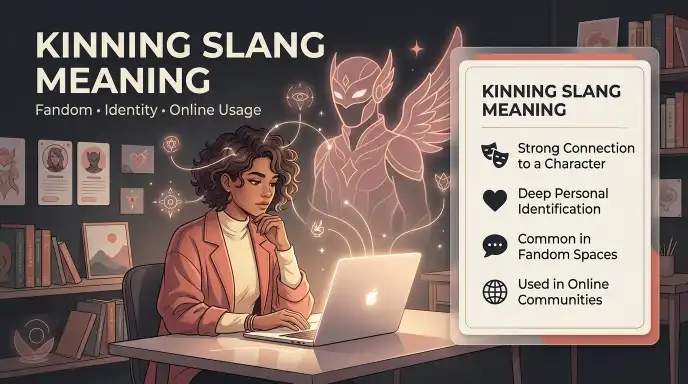
Kinning slang means strongly relating to or identifying with a fictional character. In simple words, kinning means seeing yourself in a character or feeling deeply connected to them.
Kinning slang is an internet and fandom term used when someone strongly relates to or identifies with a fictional character. If someone says, “I kin this character,” they may feel that the character shares their personality, experiences, emotions, or traits.
The meaning can vary between online communities, so kinning does not always mean exactly the same thing. You may see this slang on TikTok, Tumblr, Discord, Reddit, and other fandom spaces.
In this article, we will explain kinning meaning, examples, related terms, and how people use it online.
Quick Answer: What Does Kinning Mean in Slang?
Kinning slang means strongly relating to, identifying with, or seeing yourself in a fictional character. When someone says “I kin this character,” they may mean the character’s personality, feelings, experiences, or behavior feels very similar to their own.
The term is common in online fandom communities and can be used seriously, casually, or humorously. Its exact meaning can change depending on the community and context.
What Does Kinning Mean?
Kinning is internet and fandom slang for feeling a strong connection with a fictional character. A person may use the term when they see their own personality, emotions, experiences, or behavior reflected in that character.
For example, someone might say, “I kin this character because we both overthink everything.” They are saying that the character feels relatable to them in a strong or personal way.
People may use kinning in different ways. Some use it casually when talking about their favorite characters, while others use it to describe a deeper form of identification. The meaning often depends on the person and the online community they are part of.
You may come across kinning in anime, gaming, fanfiction, and other fandom spaces. It is also common in conversations on social media, Discord, Tumblr, and similar online communities.
What Does “Kin” Mean in Slang?
In slang, “kin” is used in fandom and online communities to describe a fictional character that someone strongly relates to or identifies with. It can also be used as a verb, such as “I kin this character.”
For example, someone might say, “She is my kin,” meaning they feel a strong connection with that character. Another person might say, “I really kin him,” to explain that they relate closely to his personality or experiences.
The slang meaning of “kin” is different from its traditional English meaning, where “kin” usually refers to family or relatives. In online conversations, the meaning is usually clear from the fandom context.
You may also see related phrases such as “my kin,” “kinning a character,” “who do you kin?” and “kin list.”
What Does “I Kin This Character” Mean?
“I kin this character” means that someone strongly relates to or identifies with a fictional character. They may see similarities between themselves and the character’s personality, emotions, experiences, habits, or way of thinking.
For example, someone might say, “I kin this character because she is shy but still cares deeply about her friends.” The speaker is pointing out a personal similarity rather than simply saying they like the character.
The phrase can also be used casually or humorously. Someone may say they “kin” a character because a funny scene, reaction, or personality trait reminds them of themselves. The exact meaning depends on the person and the community where the term is being used.
What Is a Kinnie?
A kinnie is a person who says they “kin” one or more fictional characters. The term is commonly used in online fandom spaces when someone feels a strong connection to a character’s personality, experiences, emotions, or behavior.
For example, someone might say, “I’m such a kinnie,” after noticing that they relate strongly to several characters from a favorite show or game.
The word kinnie is informal and can be used playfully. Its meaning may also vary between different fandom and online communities, so it is helpful to consider the context before assuming exactly what someone means.
Kinning vs. Relating to a Character
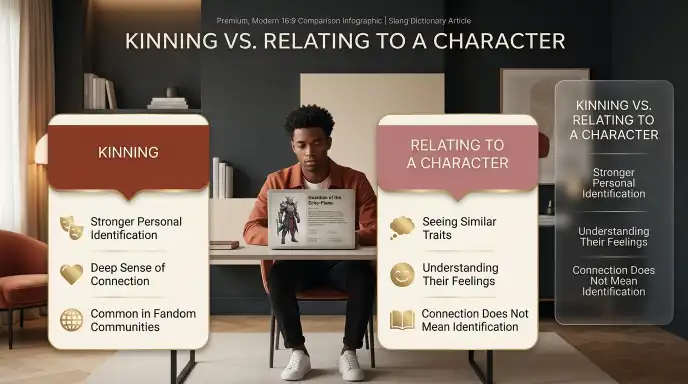
Kinning and simply relating to a character can sound similar, but people may use them with different levels of personal connection. Saying “I relate to this character” usually means you recognize similarities between yourself and the character.
Kinning can express a stronger connection. Someone who says “I kin this character” may feel that the character reflects their personality, emotions, experiences, or behavior in a more personal way.
For example:
- “I relate to this character because we are both shy.”
- “I like this character because their personality feels exactly like mine.”
- “I like this character” simply shows that someone enjoys the character.
These meanings are not strict rules. Online fandom communities can use “kin” differently, so the surrounding conversation is important.
Kinning vs. Otherkin
Kinning and otherkin are related terms, but they do not always describe the same idea. In fandom spaces, kinning often means strongly relating to or identifying with a fictional character.
By contrast, otherkin is a more specific identity-related term involving a person who describes themselves as having a non-human identity or experience.
For example, saying “I kin this character” can be casual fandom language. Calling oneself otherkin generally refers to a more specific personal identity.
Because online communities use these terms differently, context matters. It is better not to assume that everyone who uses “kinning” is describing another identity.
Kinning vs. Fictionkin
Kinning and fictionkin can overlap in online discussions, but they are not always used to mean the same thing. In fandom spaces, kinning often describes a strong connection with a fictional character.
By comparison, fictionkin is a more specific identity-related term involving a connection with a fictional character or fictional being. Because the terms can vary across communities, context is important when understanding how someone uses them.
For example, a fan might say, “I kin this character because we have the same personality.” Someone using the term fictionkin may be describing a more personal identity experience.
Online communities can have different definitions, so context is important when interpreting these terms.
Why Do People Kin Characters?
People may kin characters because they see strong similarities between themselves and the character. The connection can come from personality, emotions, experiences, behavior, or the way a character handles certain situations.
Common reasons include:
- Personality: The character acts or thinks in a similar way.
- Emotions: Their feelings or reactions seem familiar.
- Experiences: The character has gone through situations the person understands.
- Behavior: Their habits, humor, or reactions feel relatable.
- Values: They share similar beliefs, goals, or ways of treating others.
- Personal connection: The character may represent something meaningful to the person.
For some people, kinning is simply a fun way to talk about fandom. Others may use it to describe a deeper personal connection. The meaning depends on the individual and the community.
How Is Kinning Used in Fandom Culture?
Kinning is commonly used in fandom culture when fans talk about fictional characters they strongly relate to. People may discuss their “kins” while talking about anime, games, movies, TV shows, books, or fanfiction.
For example, a fan might create a list of characters they kin and share it with friends. They may also ask other fans, “Who do you kin?” This creates a simple way to compare character connections within a fandom.
Kinning can appear in fan posts, profiles, memes, discussions, and community chats. Some people use it seriously, while others use it as playful fandom slang.
The term can also have a more specific meaning in some communities. Therefore, the surrounding conversation is important when understanding what someone means by “kin” or “kinning.”
Kinning in Different Types of Fandoms
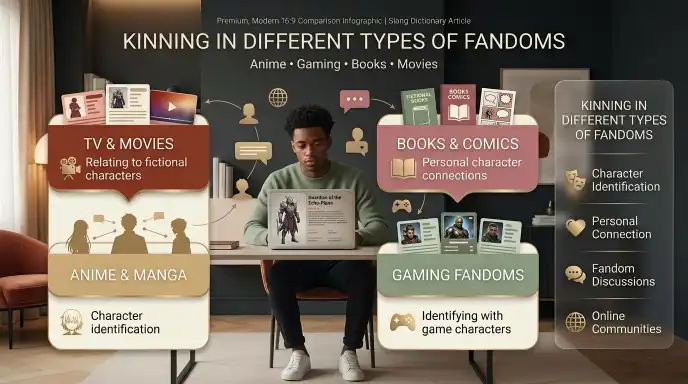
Kinning can appear in many fandoms, and the characters involved depend on what a person watches, reads, or plays. The basic idea stays similar, but the way fans discuss their kins can vary between communities.
Anime Fandoms
Anime fans may say they are kin characters because they share similar personalities, emotions, habits, or experiences. The term can appear in fan posts, discussions, and character-related memes.
Gaming Fandoms
Gamers may use kinning when talking about characters from video games. A player might connect with a character because of their personality, story, choices, or reactions.
TV and Movie Fandoms
Fans can also kin characters from television shows and movies. They may discuss which character matches their personality or feels most relatable.
Book and Fanfiction Communities
Readers may use kinning when they feel a strong connection to characters from novels, comics, or fanfiction. These conversations often appear alongside other fandom terms such as headcanon, canon, and character identification.
Overall, kinning can be used across many fandoms, but its exact meaning depends on the community and the person using the term.
Kinning on Social Media
Kinning is often used on social media when people share their favorite fictional characters or talk about characters they strongly relate to. The term can appear in posts, comments, videos, memes, profiles, and fandom discussions.
On platforms such as TikTok, Tumblr, Discord, Reddit, and Instagram, users may post character edits or lists and describe certain characters as their “kins.” They may also ask others which characters they know.
Common examples include:
- “I like this character so much.”
- “Who do you know from this series?”
- “This is definitely one of my kins.”
- “My top three kins are these characters.”
The tone can be serious, casual, or humorous. Since different fandom communities may use the term differently, the surrounding conversation helps explain what the speaker means.
Common Kinning Examples
Seeing real examples can make the meaning of kinning easier to understand. People usually use the term in casual conversations about fictional characters, fandoms, and personal similarities.
Example 1: “I like this character because we are both quiet around new people.”
Here, the speaker relates to the character’s personality.
Example 2: “She is one of my biggest kins.”
The person is saying they feel a strong connection with that character.
Example 3: “Who do you know from this anime?”
This asks another fan which character they strongly relate to.
Example 4: “I really kin him when he gets nervous in social situations.”
The speaker recognizes a personal similarity with the character.
Example 5: “That reaction was so me. I totally like her.”
Here, kinning is being used casually and humorously.
These examples show that kinning can describe different kinds of personal connections. The intended meaning depends on the context and the person using the term.
How to Use Kinning in a Sentence
Kinning is mainly used in informal conversations, especially when people are discussing fictional characters or fandoms. You can use it when you want to explain that a character feels strongly relatable or personally connected to you.
Here are some natural examples:
- “I like this character because we have similar personalities.”
- “She is one of my favorite kins.”
- “Who do you know from this show?”
- “I really like him because I understand his struggles.”
- “That character is totally my kin.”
- “I started kinning this character after watching the whole series.”
The word is usually better suited to casual chats, social media posts, and fandom discussions than formal writing. If your audience may not know the slang, saying “I relate to this character” can be clearer.
Is Kinning Serious or Just a Joke?
Kinning can be serious, casual, or humorous depending on the person and the community. Some people use it simply to say that a fictional character feels very relatable. Others may use the term to describe a stronger personal connection or identification.
For example, someone might jokingly say, “I like this character because we both love sleeping.” Another person may use the same phrase to describe a character whose experiences closely match their own.
There is no single way everyone uses the term. Context, community, and the speaker’s own explanation can help clarify what they mean. It is better not to assume that a person is joking or making a serious identity statement based only on the word “kinning.”
Can You Kin More Than One Character?
Yes, people can use the term kinning for more than one fictional character. In fandom conversations, someone may have several characters they feel strongly connected to for different reasons.
For example, a person might say, “My main kin are these three characters.” One character may share their personality, while another may remind them of their experiences or emotions.
People may also create a kin list containing several characters from the same fandom or from different shows, games, books, or movies.
The number of characters someone considers a kin is personal. There is no universal rule that limits how many characters a person can kin.
Can You Kin a Real Person?
The word kinning is most commonly used in online fandom spaces when someone talks about a fictional character. People usually use it to describe a strong connection with a character from a show, anime, game, book, or another fictional work.
When someone feels similar to a real person, clearer phrases such as “I relate to them,” “we have similar personalities,” or “I see myself in them” are usually easier to understand.
Some online communities may use “kin” more broadly, so the meaning can depend on context. If someone says they “kin” a real person, it is better to look at the surrounding conversation rather than assuming they mean the same thing as fictional-character kinning.
Is Kinning Only Used for Fictional Characters?
Kinning is most commonly seen in fandom conversations about fictional characters. People may use it when discussing characters from anime, movies, TV shows, video games, books, or other fictional works.
However, online communities do not always use the word in exactly the same way. Some people may use “kin” more broadly to describe a strong sense of similarity or identification.
It is also important to distinguish casual fandom use from more specific terms such as fictionkin and otherkin. These terms can describe different concepts within particular online communities.
Because the meaning can change with context, the safest way to understand “kinning” is to consider how the person and their community are using the term.
What Is a Kin List?
A kin list is a list of fictional characters that someone strongly relates to or identifies with. People may create these lists to keep track of their kins or share them with other fans online.
A kin list might include characters from one fandom or several different fandoms. For example, someone could list characters from an anime, video game, and TV series together.
People may also organize their list by how strongly they relate to each character. However, there is no universal format for a kin list. Some users keep it simple, while others add pictures, descriptions, or reasons for each character.
For example:
“My kin list includes Character A, Character B, and Character C because I relate to their personalities.”
The meaning of a kin list can vary between communities, so the person’s own explanation provides useful context.
Kinning and Fandom Identity
Kinning can become part of how people express themselves within online fandom communities. Someone may share their favorite kins in a profile, social-media post, fan account, or community discussion.
For some users, kinning is simply a fun way to describe characters they relate to. Others may feel that certain characters reflect important parts of their personality or personal experiences. The level of connection can therefore differ from person to person.
Kinning can also give fans a way to find others with similar interests. For example, two people discussing the same character may discover that they both consider that character a kin.
Because fandom communities are diverse, there is no single experience that applies to everyone who uses the term. Context and individual meaning are important when discussing fandom identity.
Kinning and Personality Tests or Character Comparisons
Kinning can sometimes appear alongside personality tests and character comparison posts. These posts ask users which fictional character matches their personality, behavior, or preferences.
For example, after taking a character quiz, someone might say, “I got this character, and I totally kin them.” In this context, kinning expresses a feeling of personal similarity with the character.
Character comparisons can focus on traits such as:
- Personality
- Sense of humor
- Emotional reactions
- Habits
- Values
- Social behavior
- Experiences
However, getting a character in a quiz does not automatically mean someone considers that character a kin. The person decides if the character feels personally relatable.
Common Misunderstandings About Kinning
Kinning can be confusing because different online communities may use the term in different ways. A few common misunderstandings are worth clearing up.
- Kinning does not always mean simply liking a character. Someone may like many characters without considering them a kin.
- Everyone uses “kin” differently. For some people, it is casual fandom slang, while others use it to describe a stronger personal connection.
- Kinning is not automatically the same as otherkin. Otherkin is a more specific identity-related term.
- Kinning is not always a joke. Some people use it humorously, while others mean it seriously.
- Kinning does not have one universal definition. Community and context can affect what the speaker means.
Understanding these differences makes it easier to interpret kinning without making assumptions about someone’s personal experience.
Is Kinning a Slang Word?
Yes, kinning is commonly used as informal internet and fandom slang. In this context, it describes a person’s strong connection with or identification with a fictional character.
The term is different from the traditional English word kin, which usually refers to family members or relatives. Online fandom communities have developed their own use of “kin” as a verb, noun, and related forms such as “kinning” and “kinnie.”
The slang meaning is mainly found in casual online conversations, social media, fandom posts, and community discussions. Because different communities can use the term differently, its exact meaning should be understood from the surrounding context.
Is Kinning Still Used Online?
Yes, kinning continues to appear in online fandom conversations and social-media communities. People may use it when discussing characters they relate to, sharing character lists, or talking about their fandom interests.
You may encounter the term in posts, comments, memes, videos, profiles, and group conversations. It can appear in communities focused on anime, gaming, books, movies, television, and other forms of fandom.
However, the frequency and meaning of the term can vary between platforms and communities. Some users may use “kin” casually, while others may use related terms such as fictionkin or otherkin with more specific meanings.
If you see someone using “kinning” online, the surrounding conversation is usually the best way to understand what they mean.
When Should You Use the Word Kinning?
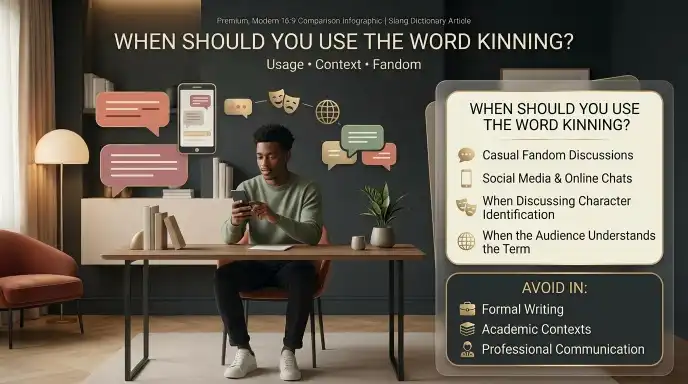
Kinning is best used in informal conversations where people understand fandom or internet slang. It can work naturally in social-media posts, chats, Discord communities, fandom discussions, and conversations about fictional characters.
For example, you might say:
- “I really like this character.”
- “Who do you know from this series?”
- “She is one of my favorite kind.”
In formal writing or professional communication, simpler wording may be clearer. Instead of “I kin this character,” you could say, “I strongly relate to this character.”
It is also helpful to consider the community you are speaking with. If someone is unfamiliar with fandom slang, briefly explaining what you mean can prevent confusion.
Related Fandom Terms
Kinning is connected to several other terms used in online fandom and identity communities. Knowing these words can make fandom conversations easier to understand.
- Kinnie: A person who uses the term “kin” for characters they strongly relate to.
- Fictionkin: A more specific identity-related term involving a connection with a fictional character or fictional being.
- Otherkin: A term used by people who describe themselves as having a non-human identity or experience.
- Headcanon: A personal idea about a character or fictional world that is not officially confirmed.
- Canon: Information officially established within a fictional work.
- Fanon: An idea widely accepted by fans but not officially established in the original work.
- OC: Short for “original character,” meaning a character created by a fan or other creator.
- Comfort character: A fictional character someone finds especially comforting or emotionally meaningful.
- Self-insert: A character created to represent the creator within a fictional setting.
These terms can overlap in fandom conversations, but they do not all mean the same thing. Their exact use can also vary between different online communities.
Kinning vs. Similar Fandom Terms
Several fandom terms can appear alongside kinning, but each one describes a different idea. Understanding the differences can help readers avoid confusing casual character identification with other fandom or identity terms.
| Term | Basic Meaning | Common Context |
| Kinning | Strongly relating to or identifying with a fictional character | Fandom and social media |
| Kinnie | A person who uses “kin” for characters they strongly relate to | Online fandom |
| Fictionkin | A more specific identity-related connection to a fictional character or being | Identity communities |
| Otherkin | A term associated with non-human identity or experiences | Otherkin communities |
| Headcanon | A personal idea about a fictional character or world | Fandom |
| Fanon | An idea accepted by fans but not officially confirmed | Fandom |
| Comfort character | A character someone finds especially comforting or meaningful | Fandom |
| Self-insert | A character representing the creator within a fictional setting | Fan communities |
These terms can sometimes appear together, but they should not automatically be treated as synonyms. The meaning of kinning can also vary depending on the community and context.
Kinning Slang in Different Online Contexts
The meaning and tone of kinning slang can change slightly depending on where you encounter it. Different online communities may have their own ways of using fandom vocabulary.
Kinning on TikTok
TikTok users may use “kin” in videos, captions, memes, and character edits. A creator might say they kin a character because they relate to the character’s personality or a particular scene.
Kinning on Tumblr
Tumblr has a long history of fandom discussions, so users may encounter terms such as kin, kinnie, and kin list in character-focused posts and community conversations.
Kinning on Discord
In Discord servers, people may casually ask, “Who do you kin?” when discussing characters from a shared fandom. The meaning is usually understood by members who already know the community’s terminology.
Kinning on Reddit
Reddit users may discuss kinning in fandom-specific communities. The meaning can depend on the subreddit and its community rules or terminology.
Kinning in Anime Communities
Anime fans may use kinning to describe characters whose personalities, experiences, or reactions feel familiar to them.
Overall, the same word can carry slightly different meanings across platforms. Looking at the surrounding conversation is the best way to understand how someone is using it.
Kinning Slang in Texting
Kinning slang can also appear in text messages, DMs, and casual online chats. People may use short phrases such as “I kin them” or “that’s my kin” when talking about a fictional character they strongly relate to.
For example:
- “I totally kin her 😭”
- “Who do you know in this show?”
- “That character is literally my kin.”
- “I started kinning him after episode three.”
In texting, the term is usually informal and depends on the people involved in the conversation. Friends who are familiar with fandom slang may understand “kin” immediately, while someone unfamiliar with the term may need a short explanation.
The surrounding message can also show if the person is using kinning seriously, casually, or as a joke.
What Emojis Can Go With Kinning?
There is no official emoji that specifically means kinning. People may choose emojis based on the character, emotion, or tone of the conversation.
Some common choices can include:
- 😂 : when kinning is meant as a joke
- 😭 : for an emotional or relatable character
- 🥲 : for bittersweet or personal connections
- ❤️ : to show affection for a character
- 🤝 : to show a strong sense of similarity
- ✨ : for excitement about a favorite character
For example, someone might write, “I kin this character so much 😭.” The emoji adds emotion to the message but does not change the meaning of kinning.
Kinning Slang: Common Questions
Q1. What does kinning mean in slang?
Kinning means strongly relating to or identifying with a fictional character. It is commonly used as informal fandom slang.
Q2. What does it mean to kin a character?
To kin a character means you feel a strong personal connection with that character’s personality, experiences, emotions, or behavior.
Q3. What does “I kin this character” mean?
It usually means, “I strongly relate to this character” or “I see a lot of myself in this character.”
Q4. What is a kinnie?
A kinnie is someone who uses the term “kin” for characters they strongly relate to or identify with.
Q5. Is kinning the same as relating to a character?
They can be similar, but “kinning” may express a stronger or more personal connection. The exact distinction depends on the community.
Q6. Can you kin more than one character?
Yes. People may have several kins from the same fandom or from different fictional worlds.
Q7. What is the difference between kinning and otherkin?
Kinning is often casual fandom slang for relating to a fictional character, while otherkin is a more specific identity-related term.
Q8. What is fictionkin?
Fictionkin is a specific identity-related term involving a connection with a fictional character or fictional being. It is not automatically the same as casual character kinning.
Q9. Is kinning only used in fandoms?
It is most commonly associated with fandom and online communities, although people may use the word more broadly depending on context.
Conclusion:
Kinning slang is an informal fandom term used to describe a strong connection with or identification with a fictional character. People may use it when a character’s personality, emotions, experiences, or behavior feels especially familiar to them.
The term can be used casually, humorously, or more personally, depending on the individual and community. Related words such as kinnie, fictionkin, and otherkin have their own meanings and should not automatically be treated as synonyms.
If you see someone say “I kin this character,” the simplest interpretation is that they strongly relate to that character, while the surrounding context can explain the exact meaning.

I’m Emily Carter, and I enjoy writing about slang, internet language, and modern English expressions. My goal is to explain word meanings in a simple, clear, and easy-to-understand way so anyone can learn with confidence.