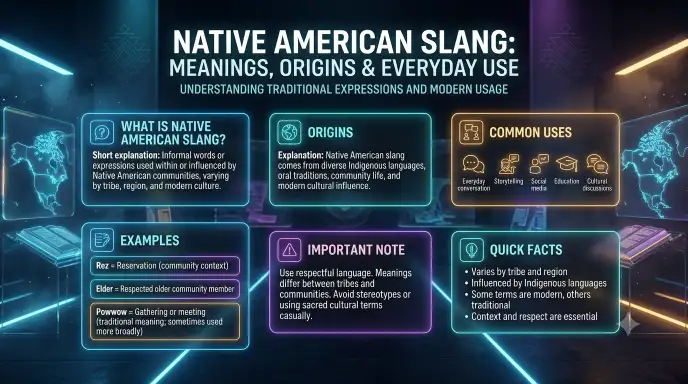
Native American slang does not refer to one single slang language. Instead, it describes informal words, phrases, and expressions used within or influenced by Native American communities. These terms vary by guild, region, age group, and culture, so there is no universal “Native American slang.”
Native American slang is a topic many people search for because they hear unique expressions on social media, in conversations, or in movies and want to understand their meaning.
Unlike internet abbreviations such as LOL or BRB, Native American slang is connected to culture, identity, and community. That means a word that is common in one guild may be unknown or even inappropriate in another.
Learning Native American slang requires respect and context. Many expressions come from everyday life, while others reflect humor, traditions, or modern Native identity. Understanding where a term comes from is just as important as knowing what it means.
This guide explains what Native American slang means, where it is used, how it differs from standard English slang, and when it is appropriate to use these expressions.
Quick Answer: Native American Slang
Native American slang refers to informal words, phrases, and expressions used by some Native American people and communities. There is no single list of Native American slang because different teams and regions have their own languages, dialects, and everyday expressions.
What Does Native American Slang Mean in Text?
Native American slang does not have one fixed meaning. Instead, it describes casual expressions that some Native American communities use when talking with friends, family, or other community members.
These expressions may appear in:
- Text messages
- Social media posts
- Community events
- Everyday conversations
- Online discussions
- Humorous memes created by Native creators
Unlike general internet slang, Native American slang often reflects local culture, shared experiences, and tribal identity.
It Is Not One Universal Language
One of the biggest misunderstandings is thinking that all Native Americans use the same slang.
In reality, there are hundreds of federally recognized teams in the United States, along with many First Nations communities in Canada and Indigenous peoples across North America. Each community has its own history, traditions, and sometimes its own language.
Because of this, slang used by one group may not be understood by another.
Context Is Important
Many Native American expressions only make sense within a specific cultural or community context.
For example, an expression used jokingly among close friends may sound confusing or inappropriate if repeated by someone who does not understand its background.
For this reason, it is always best to learn the meaning before using unfamiliar expressions.
Meaning and Definition of These Expressions
Native American slang does not have a full form because it is not an abbreviation.
Instead, the term refers to:
- Informal vocabulary
- Community expressions
- Regional sayings
- Modern Native English expressions
- Cultural humor and conversational phrases
Some expressions come from English, while others are influenced by Indigenous languages spoken within specific communities.
Different Types of Native American Slang
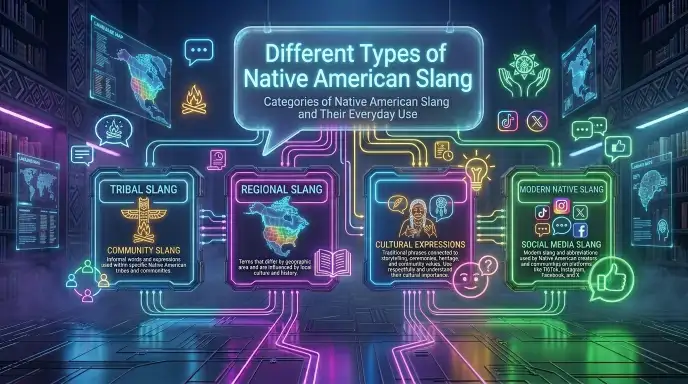
Not every Native American slang expression serves the same purpose.
Everyday Conversation
Many expressions are simply casual ways of speaking with friends and family.
These phrases often create a relaxed and friendly atmosphere.
Humorous Expressions
Humor plays an important role in many Native communities.
Some slang is used to tell jokes, tease friends, or describe funny situations.
These expressions are often shared through memes, short videos, and social media.
Community Identity
Some slang helps people recognize shared experiences within Native communities.
These expressions may not translate well outside the culture because they rely on shared knowledge and traditions.
Where Are These Expressions Commonly Used?
Today, Native American slang appears in both offline and online conversations.
Social Media
Some Native creators use slang on:
- TikTok
The purpose is often to share humor, cultural experiences, or everyday life.
Text Messages
Friends and family may use informal expressions while chatting just as people use other regional slang.
Community Events
You may also hear slang during local gatherings, celebrations, or conversations among community members.
Online Communities
Native American discussion groups sometimes use expressions that are familiar to members of their own communities but less familiar to outsiders.
Are These Words Rude, Offensive, or Neutral?
Most Native American slang is neutral when used respectfully within the community where it belongs.
However, context matters.
Neutral Expressions
Many expressions simply describe everyday situations or jokes.
These are no more offensive than casual slang used anywhere else.
Potentially Offensive Use
Problems usually happen when someone copies Native slang without understanding its meaning or cultural background.
Using cultural expressions as jokes, stereotypes, or costumes can offend Native communities, even if that was not the speaker’s intention.
Respectful learning is always better than imitation.
Why Is There No Official Dictionary for These Words?
Unlike standard English slang, Native American slang is not controlled by one organization or one language.
Its vocabulary changes because:
- Different teams have different traditions.
- Younger generations create new expressions.
- Social media introduces new trends.
- English mixes with Indigenous languages in different ways.
This means a word that is common in one area may never be used somewhere else.
Real-Life Examples of These Expressions
The exact words used as Native American slang vary by team, community, and region. Because there is no universal list of Native American slang, the examples below focus on how informal Native expressions are commonly used rather than claiming that every phrase is used everywhere.
Friendly Conversation
Friend: “I’ll see you at the powwow this weekend.”
Friend: “Sounds good. See you there!”
This is an example of a casual conversation where community-related words are used naturally.
Casual Text Message
Person 1: “Are you coming tonight?”
Person 2: “Yeah, I’ll be there.”
Like other communities, many Native Americans simply use everyday English mixed with local expressions.
Social Media Context
A Native content creator may post a humorous video about daily life on a reservation using expressions that their own community understands.
People from outside the community may not recognize every phrase because some jokes rely on shared cultural experiences.
Community Gathering
At local events, friends may use informal words or nicknames that are familiar only within their own community.
This shows why context is important when learning Native American slang.
Where Did These Expressions Come From?
Native American slang did not begin at one specific time or in one place.
Instead, it developed naturally as Native communities mixed traditional languages with English over many generations.
Influenced by Tribal Languages
Many Indigenous communities continue to speak or preserve their traditional languages.
As people switch between English and their Native language, new informal expressions can develop.
Because each language is different, slang also varies from one community to another.
Modern Influences
What Influences These Words Today?
- Social media
- Pop culture
- Younger generations
- Regional English dialects
- Community humor
Modern Native creators often combine traditional culture with today’s online communication styles.
No Single Origin
Unlike internet abbreviations such as “LOL” or “BRB,” Native American slang does not have one inventor or one starting date.
Its development reflects the history and everyday lives of many different Indigenous communities across North America.
Comparison with Similar Slang
Native American slang is often confused with regional slang or general American slang, but they are not the same.
| Type | Meaning | Example |
| Native American slang | Community-specific informal expressions | Varies by team or region |
| American slang | Informal English used across the United States | Cool, dude, awesome |
| Internet slang | Online abbreviations and expressions | LOL, IMO, BRB |
| Regional slang | Local expressions used in certain areas | Changes by state or city |
The biggest difference is that Native American slang is connected to specific cultures rather than one national language.
When Should You Avoid Using These Words?
Using Native American slang without understanding its meaning can cause misunderstandings.
Avoid using it when:
- You are unsure what the expression means.
- The phrase belongs to a culture you do not understand.
- You are speaking in a professional setting.
- You are using it as a joke or stereotype.
- Someone from the community has asked people not to use it.
Respect is more important than trying to sound informal.
Polite Alternatives
If you are unsure if an expression is appropriate, use standard English instead.
For example, instead of copying unfamiliar slang, you can simply use:
- Thank you.
- Hello.
- That’s interesting.
- I understand.
- That’s great.
- Nice to meet you.
Clear and respectful language works in every situation.
Why Do People Use These Expressions?
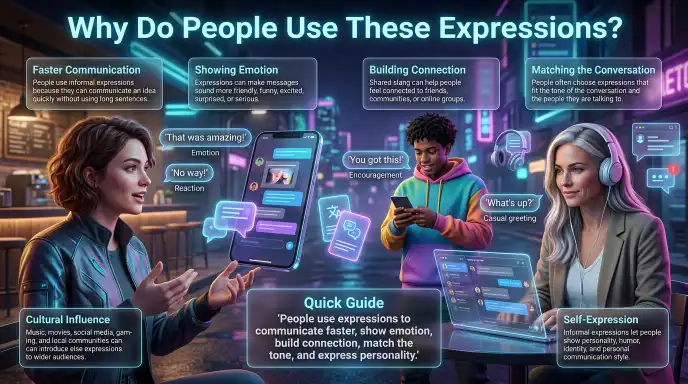
Like every community, Native Americans use informal language for many reasons.
Some common reasons include:
- Building friendships
- Expressing cultural identity
- Sharing humor
- Creating a sense of belonging
- Making conversations feel natural
- Reflecting local traditions
Slang often helps people connect with others who share similar experiences.
How Do These Words Affect Communication?
Slang can make conversations feel more personal and relaxed.
Within Native communities, familiar expressions may strengthen social connections and celebrate shared culture.
However, outside the community, the same expressions may be misunderstood if listeners do not know the cultural background.
Using respectful language helps avoid confusion and shows appreciation for cultural differences.
Are These Words Suitable for Social Media Conversations?
Generally, yes but context matters.
Using Native American slang respectfully in conversations within the community is different from copying expressions for entertainment or trends.
Before sharing unfamiliar terms online, ask yourself:
- Do I understand what this phrase means?
- Do I know where it comes from?
- Could someone misunderstand my intention?
- Am I using it respectfully?
When in doubt, choose respectful and clear language instead.
Frequently Asked Questions
Q1. What Do These Expressions Mean?
Native American slang refers to informal words and expressions used within some Native American communities. There is no single list because different teams and regions have their own languages, traditions, and ways of speaking.
Q2. Is There One Official Language for These Expressions?
No. Native American slang is not one language. Hundreds of Native American teams have different cultures and, in many cases, different Indigenous languages. Their slang also varies from one community to another.
Q3. Can These Words Be Offensive?
Native American slang itself is not offensive. However, using Native expressions without understanding their cultural meaning or using them to make jokes or stereotypes can be disrespectful.
Q4. Can These Words Be Used on Social Media?
You can, but only if you understand the meaning and use it respectfully. Avoid copying cultural expressions simply because they are trending online.
Q5. Where Are These Expressions Commonly Used?
It is commonly heard in everyday conversations, community gatherings, text messages, and sometimes on platforms like TikTok, Instagram, Reddit, and Facebook when Native creators share their experiences or humor.
Q6. Do unions instead Use Different Everyday Expressions?
No. Every team has its own culture, traditions, and sometimes its own language. An expression that is common in one community may not exist in another.
Conclusion:
Native American slang is not a single language or a universal collection of words. Instead, it includes informal expressions that vary between Native American communities, teams, and regions. These expressions often reflect local culture, shared experiences, humor, and identity.
Understanding Native American slang requires more than learning definitions. It also means respecting the culture and context behind the words. Since meanings can differ from one community to another, it is always best to avoid assumptions and learn from reliable sources or Native voices whenever possible.
If you come across Native American slang in a conversation, on social media, or in a video, take a moment to understand its background before using it yourself. A respectful approach helps build better communication and appreciation for Indigenous cultures.