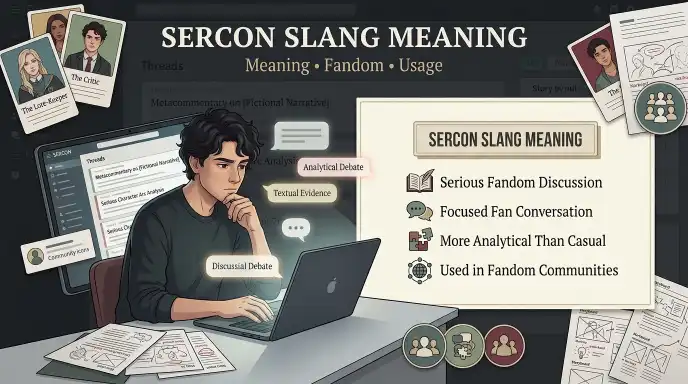
Sercon slang is a specialized fandom term used for something serious and constructive, especially in science fiction fandom. It can describe thoughtful discussion, criticism, activities, or a fan who takes a more serious approach to the subject.
The word is mainly found in older or niche fandom vocabulary rather than everyday texting. If you come across sercon in a fan discussion, fanzine, or science fiction community, understanding its fandom context makes the meaning much easier to recognize.
Quick Answer: What Does Sercon Slang Mean?
Sercon slang means serious and constructive, especially in the context of science fiction fandom and fan culture. It can describe a thoughtful approach to a subject, a serious discussion, a fandom activity, or a fan interested in deeper topics.
Unlike common texting slang, sercon is a specialized fandom term. You may see it in older fanzines, science fiction discussions, and fandom vocabulary.
In simple words, sercon means taking a serious and constructive approach to a fandom or subject.
What Does Sercon Mean?
Sercon is a specialized fandom term that means serious and constructive. It describes a thoughtful or intellectually focused approach to a subject, especially within science fiction fandom.
The word can describe different things depending on context. It may refer to a sercon fan, a sercon discussion, a sercon activity, or a serious approach to science fiction and fandom.
What Does Sercon Stand For?
The term sercon is commonly understood as a shortened form of “serious and constructive.” Fandom communities used this kind of shorthand to describe activities and discussions centered on thoughtful ideas rather than casual interaction.
For example, a detailed discussion about science fiction themes or fandom history could be described as sercon.
Sercon in Simple English
In simple English, sercon means serious and constructive.
It usually describes thoughtful discussion, analysis, criticism, or serious fandom activity rather than casual conversation or simple entertainment.
Is Sercon a Slang Word?
Yes, sercon can be considered a specialized form of fandom slang or fandom vocabulary. It is not common slang used in everyday conversations or ordinary texting.
The term is closely associated with science fiction fandom and is mainly useful for describing serious, thoughtful, and constructive forms of fan activity or discussion.
Is Sercon Fandom Slang?
Within fandom, sercon works as a specialized term for a particular style of participation. Older science fiction fandom developed many words for activities, ideas, publications, and community roles.
Rather than functioning like popular internet slang, the word is more likely to appear in fanzines, fandom archives, fan discussions, and historical science fiction material.
For that reason, modern readers may recognize the meaning only after seeing the surrounding fandom context.
What Does Sercon Mean in Fandom?
In fandom, sercon describes a serious and constructive approach to a subject. Fans may use it for thoughtful discussion, analysis, criticism, or other activities that go beyond casual fan conversation.
The term is especially connected with science fiction fandom, where specialized vocabulary developed to describe different kinds of fan activity. A sercon discussion might examine a story’s ideas, explore science fiction themes, or look at the history and culture of fandom.
Sercon in Science Fiction Fandom
Science fiction fandom is one of the main settings in which the term appears. Fans may use sercon when discussing literature, themes, authors, ideas, or the development of fandom itself.
A detailed review of the social themes in a science fiction novel, for example, could take a sercon approach. The focus is on serious and constructive discussion rather than quick reactions.
Sercon and Fan Culture
Within fan culture, the term can describe activities that involve deeper thought or detailed discussion. Examples include literary criticism, fandom history, serious reviews, essays, and discussions about science fiction ideas.
The conversation does not have to sound formal or academic. Even a relaxed chat can be sercon when participants are exploring a topic thoughtfully.
Sercon and Fandom Vocabulary
The word belongs to the wider vocabulary developed by fan communities. Terms such as fanspeak help describe the specialized language fans use when discussing their interests, activities, and communities.
Learning this vocabulary can make older fanzines, fan discussions, and science fiction fandom material easier to understand.
What Is a Sercon Conversation?
A sercon conversation is a discussion that takes a serious and constructive approach to a topic. In fandom, it often focuses on ideas, analysis, criticism, history, or other subjects that deserve more than a quick reaction.
Nothing about the term requires a formal setting. Fans can speak casually while still having a sercon discussion about a book, story, character, fandom issue, or science fiction theme.
Examples of Sercon Topics
A discussion about science fiction themes may be sercon when participants examine ideas about technology, society, or human behavior.
Another example would be fandom history, where fans explore the development of communities, fanzines, conventions, or older fan practices.
Detailed literary or media analysis can also fit. A reader might examine a character’s development, the meaning of a story, or the way an author presents a particular idea.
Even discussions about fan culture and community issues may be sercon when participants approach them thoughtfully and constructively.
Sercon Examples
The word sercon can describe several kinds of serious and constructive activity within fandom. Its exact use depends on the subject and the surrounding context.
Science Fiction Example
“The group had a sercon discussion about the themes in the new science fiction novel.”
Here, sercon describes a thoughtful conversation focused on ideas and themes.
Fandom History Example
“She enjoys sercon conversations about the history of science fiction fandom.”
This example focuses on fandom history instead of casual fan chat.
Fan Culture Example
“The article takes a sercon look at how fan communities developed.”
The word highlights a serious and constructive approach to fan culture.
Online Fandom Example
“The forum thread became quite sercon after members started analyzing the story.”
In this case, the discussion moved toward deeper analysis.
Book or Media Fandom Example
“Their sercon discussion focused on the characters, themes, and social ideas in the series.”
The term here refers to detailed media analysis rather than simple reactions or jokes.
What Does Sercon Mean in a Sentence?
Here are some natural examples of sercon in fandom-related sentences:
- “The fans had a sercon discussion about the novel’s main themes.”
- “She enjoys reading sercon articles about science fiction history.”
- “The forum became more sercon when members started analyzing the story.”
- “His essay takes a sercon approach to fan culture.”
- “They were having a sercon conversation about the future of science fiction.”
- “The fanzine included several sercon pieces on fandom history.”
- “That group is known for its sercon discussions and detailed reviews.”
- “We started with jokes, but the conversation quickly became sercon.”
These examples show that the term can describe a serious and constructive discussion, article, approach, activity, or piece of fandom writing.
What Is a Sercon Fan?
A sercon fan is someone who takes a serious and constructive approach to a particular subject, especially within science fiction fandom. Such a fan may enjoy deeper discussion, analysis, criticism, or thoughtful fandom activities.
Being a sercon fan does not necessarily mean being formal or academic. Someone can enjoy casual fan conversations and still participate in detailed discussions when the subject calls for them.
Sercon Fan vs. Casual Fan
A sercon fan may spend more time examining themes, ideas, stories, fandom history, or community topics. By comparison, a casual fan may focus more on entertainment, reactions, jokes, characters, or everyday fan conversation.
The distinction is mainly about the approach to fandom, not the amount of interest a person has. One fan can enjoy both styles depending on the situation.
Sercon and Fandom Discussions
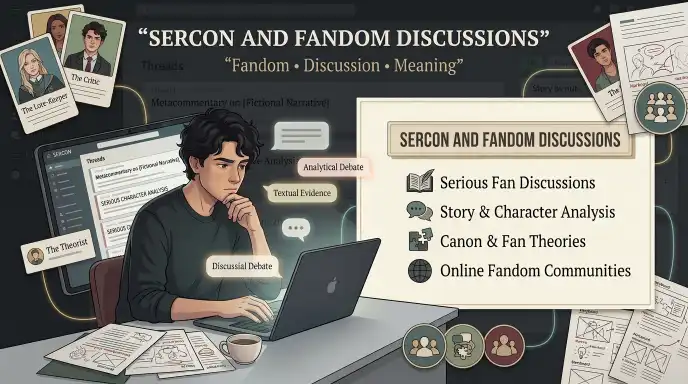
Sercon can describe fandom discussions that focus on serious, detailed, or constructive ideas. These conversations may explore a story, fandom history, community culture, or broader questions within science fiction.
Serious Discussion of Science Fiction
Fans may take a sercon approach when examining themes, characters, ideas, or social questions in science fiction. The purpose is usually to explore the subject in greater depth rather than simply react to it.
Fandom History
A discussion about the development of science fiction fandom, fan organizations, conventions, or older fan publications can also be sercon. Such conversations may involve research, detailed knowledge, and historical context.
Media Criticism
Thoughtful criticism of books, films, television shows, or other media can fit the term as well. Fans might examine writing, themes, characterization, worldbuilding, or the ideas presented by a work.
Fan Culture and Community
Some sercon discussions focus directly on fan culture. Topics can include community development, communication between fans, or changes in fandom traditions.
The main feature is the serious and constructive approach, not the subject itself.
Sercon vs. Casual Fandom Conversation
Sercon and casual fandom conversation can happen within the same community, but the two usually differ in focus and depth.
A sercon discussion takes a serious and constructive approach to a topic. Fans may analyze a story, explore fandom history, examine themes, or discuss ideas in detail.
Casual fandom conversation tends to be more relaxed. Fans might share quick reactions, jokes, favorite characters, memes, opinions, or simple updates.
| Feature | Sercon Discussion | Casual Fandom Conversation |
| Main focus | Serious and constructive discussion | Relaxed fan interaction |
| Tone | Thoughtful and detailed | Informal and playful |
| Topics | Analysis, criticism, history, ideas | Reactions, jokes, favorites, updates |
| Depth | Often more detailed | Usually lighter |
| Setting | Articles, forums, discussions, fanzines | Chats, social media, casual groups |
The difference is mainly about how the subject is discussed, not if the fans care about it. A person can enjoy casual conversations and still join sercon discussions when deeper attention is useful.
Sercon vs. Serious Conversation
Sercon and serious conversation are related expressions, but they do not have exactly the same scope.
The fandom term sercon describes a serious and constructive approach and is especially associated with science fiction fandom. It can refer to a discussion, activity, article, or general approach.
By contrast, serious conversation is a broad everyday expression. People can use it for thoughtful discussions about personal, social, academic, professional, or family matters.
| Term | Meaning |
| Sercon | Serious and constructive approach, especially in fandom |
| Serious conversation | Thoughtful discussion about any subject |
For instance, a detailed discussion about science fiction fandom history could be called sercon. A serious conversation about work or family would normally use the broader expression instead.
Context therefore makes the difference clear.
Sercon vs. Fanspeak
Sercon and fanspeak are both connected with fandom language, but they describe different things.
Fanspeak is a broad term for the specialized words, expressions, abbreviations, and terminology used within fan communities. That vocabulary can cover people, activities, publications, events, and fandom culture.
Sercon has a more specific meaning. It describes something serious and constructive, particularly a discussion, activity, or approach within fandom.
| Term | Meaning |
| Sercon | Serious and constructive fandom activity or discussion |
| Fanspeak | Specialized language and terminology used by fans |
A useful way to think about the relationship is that sercon can be part of fanspeak. Not every piece of fanspeak, however, carries a sercon meaning.
Sercon vs. Fanzine
Sercon and fanzine are both fandom terms, yet they refer to different things.
A sercon discussion or activity has a serious and constructive character. The word may describe an article, conversation, approach, or other type of fan participation.
A fanzine, on the other hand, is a fan-created publication. It can contain stories, artwork, reviews, essays, letters, or other contributions.
| Term | Meaning |
| Sercon | Serious and constructive fandom activity or discussion |
| Fanzine | Fan-created or independently produced publication |
A fanzine can include sercon material. One issue might publish a detailed analysis of a science fiction novel or an article about fandom history.
The two terms are therefore not synonyms. Sercon describes the nature of an activity or approach, while fanzine identifies a type of publication.
Sercon vs. Fanfic
Sercon and fanfic may appear in the same fandom discussions, but their meanings are different.
The term sercon describes a serious and constructive approach to a fandom topic. It can apply to a discussion, article, activity, or analysis.
Fanfic, short for fanfiction, refers to fictional writing created by fans using characters, settings, or ideas from an existing work.
| Term | Meaning |
| Sercon | Serious and constructive fandom discussion, activity, or approach |
| Fanfic | Fictional writing created by fans |
A fanfic can become the subject of a sercon discussion. Readers might examine its themes, writing style, characters, or connection to the source material.
The concepts should still be kept separate. One describes the nature of a fandom activity, while the other names a form of fan-created fiction.
Sercon vs. Fanart
Sercon and fanart both belong to fandom culture, but they describe different forms of participation.
The word sercon can describe a serious and constructive discussion, article, analysis, or activity.
Fanart refers to artwork created by fans based on a character, story, fictional universe, celebrity, or other fandom subject.
| Term | Meaning |
| Sercon | Serious and constructive fandom activity or discussion |
| Fanart | Artwork created by fans |
A piece of fanart could become the subject of a sercon discussion. Fans might examine its artistic choices, themes, symbolism, or interpretation.
That does not make fanart itself “sercon.” The first term describes an approach or activity, while the second refers to fan-created artwork.
Sercon vs. Fan Publication
Sercon and fan publication are both connected with fandom, although they identify different concepts.
A sercon approach involves serious and constructive engagement with a fandom subject. It may appear in a discussion, article, review, essay, or other activity.
A fan publication is a medium created for or by fans. Such a publication might contain articles, reviews, fanfiction, fanart, interviews, news, essays, or community discussions.
| Term | Meaning |
| Sercon | Serious and constructive fandom activity or approach |
| Fan publication | Publication created for or by fans |
A fan publication can carry sercon material. For example, a fanzine could publish a detailed piece about science fiction themes or the history of a fan community.
The distinction is simple: sercon describes the nature of the content or activity, while fan publication describes the medium used to share it.
Sercon and Older Fandom Culture
Sercon is closely connected with the older vocabulary of organized fandom, especially science fiction fandom. Earlier fan communities developed specialized terms for different activities, discussions, publications, and ways of participating.
Within this culture, the word helped describe a more serious and constructive approach to a subject. Fans could use it when discussing science fiction ideas, criticism, fandom history, or other topics that required deeper thought.
Sercon and Science Fiction Fandom History
The connection between sercon and science fiction fandom is important because much of its older use belongs to that community.
Science fiction fans discussed books, stories, authors, ideas, and the development of fandom itself. Some conversations remained casual, while others took a much more detailed and analytical approach.
A sercon discussion could therefore focus on serious examination of science fiction or fan culture rather than simple reactions.
Sercon and Amateur Publishing
Older fandom also relied on fanzines and other fan publications to exchange ideas. These publications could contain reviews, essays, criticism, letters, and discussions about science fiction and fandom.
Some of that material could have a sercon character because the purpose was thoughtful and constructive discussion.
Sercon and Specialized Fandom Vocabulary
Words such as sercon demonstrate how fan communities developed specialized language for activities that mattered to them.
That vocabulary allowed fans to describe different types of participation and to discuss the culture of fandom in more precise ways.
Is Sercon Still Used Today?
Sercon is still understandable within fandom contexts, but it is a relatively specialized term. Modern readers are more likely to encounter it in older science fiction fandom material, fan archives, or discussions about fandom history than in everyday online conversation.
Modern communities have developed many other ways to describe serious discussion. People may simply say serious discussion, in-depth analysis, or fandom discourse instead.
Sercon in Modern Fandom
The idea behind sercon has not disappeared. Fans continue to discuss science fiction, books, movies, characters, fandom history, and community culture in detailed ways.
What has changed is the vocabulary and the platforms used for those conversations. Forums, social media, blogs, and chat groups now provide spaces where fans can communicate quickly.
Why Some People Do Not Recognize Sercon
Many modern internet users have never encountered older science fiction fandom vocabulary. As a result, the word may seem unusual when it appears in an old fanzine, archive, or specialized fandom discussion.
Understanding its connection with serious and constructive fandom activity makes the term much easier to recognize.
Where Can You See Sercon Today?
Although sercon is not common everyday slang, it can still appear in places connected with fandom history and science fiction culture.
Older Fanzines
Old fanzines may use the term when discussing serious topics, literary criticism, science fiction ideas, or fandom issues. These publications can show how earlier fan communities used specialized vocabulary.
Fandom Archives
Digital archives that preserve older fandom material may also contain sercon. Researchers can encounter the word in archived articles, fan writing, and historical discussions.
Science Fiction Discussions
Specialized science fiction communities may still use the term when discussing books, stories, authors, or fandom itself.
Online Fandom Communities
The word may occasionally appear in forums, blogs, social media discussions, or other online fan spaces. In those settings, context generally shows that it refers to a more serious or thoughtful type of fandom activity.
How to Understand Sercon From Context
The meaning of sercon becomes easier to recognize when you examine the words around it. Because this is a specialized fandom term, context can show if it describes a discussion, activity, article, or person.
Look at the Topic
Start by checking the subject of the conversation. When the discussion involves science fiction, fandom, fan culture, or fan history, the specialized meaning is more likely.
Look at the Tone
A thoughtful or analytical tone can provide another clue. If people are examining ideas, themes, criticism, or history, the discussion may be described as sercon.
Look at Nearby Words
Terms such as analysis, criticism, discussion, history, ideas, literature, and fandom can help confirm the meaning.
For example:
“The panel became very sercon when they started discussing the history of science fiction fandom.”
The surrounding language makes the intended meaning easier to understand.
Look at the Time Period
Older fanzines, archived fan writing, and historical science fiction material are especially useful clues. Such sources may use sercon as part of traditional fandom vocabulary.
Common Misunderstandings About Sercon
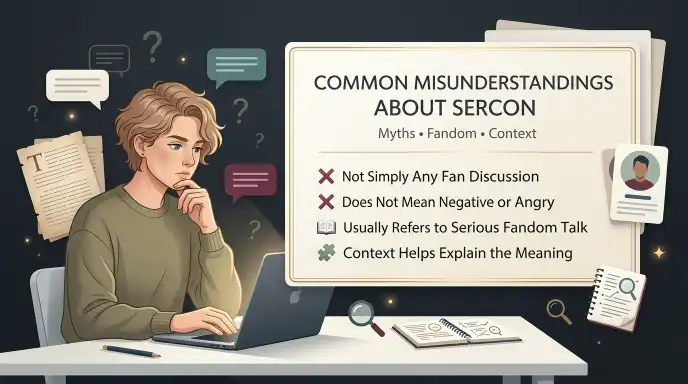
Because sercon is an older and specialized term, readers may misunderstand it at first.
Sercon Does Not Mean Formal
A sercon discussion can still have a relaxed tone. The word describes the approach to the subject rather than the setting.
Sercon Does Not Always Mean Academic
A discussion can be serious and constructive without being scholarly. Ordinary fans can have sercon conversations in forums, chats, or community spaces.
Sercon Does Not Mean an Argument
The term does not automatically imply disagreement. People can have a calm and constructive discussion while remaining sercon.
Sercon Is Not a Common Texting Abbreviation
Unlike terms such as LOL or BRB, sercon belongs mainly to specialized fandom vocabulary. Its use in everyday messaging is uncommon.
Sercon Is Not the Same as Fanfic
Fanfic means fiction created by fans. In contrast, sercon describes a serious and constructive approach to a fandom subject.
Sercon Is Not the Same as Fanzine
A fanzine is a fan-created publication, while sercon refers to the serious and constructive character of an activity, discussion, or approach.
Sercon Is Not Limited to One Activity
Depending on context, the word can describe a discussion, article, activity, approach, or fan. Its central idea remains serious and constructive engagement with a subject.
Is Sercon Positive, Negative, or Neutral?
Sercon is generally a neutral descriptive term. It identifies a serious and constructive approach without automatically saying that the subject is good or bad.
Context can change the tone. Someone may use the word simply to describe a thoughtful discussion, while another person might use it critically if they think a conversation has become overly serious.
Overall, the basic meaning remains descriptive. Sercon mainly tells the reader something about the style or approach of fandom activity.
Is Sercon Appropriate in Formal Writing?
Sercon can work in formal writing when the audience understands fandom vocabulary, especially in material about science fiction fandom or fan culture.
In Academic Writing
Researchers discussing science fiction fandom, fan history, or fandom terminology may use the term when it is relevant to their subject. Defining it on first use can help readers who are unfamiliar with specialized language.
For example:
“The article examines sercon approaches to science fiction fandom.”
In Professional Writing
For a general professional audience, phrases such as serious discussion, constructive discussion, or in-depth analysis may be easier to understand.
Those alternatives are especially useful when the audience is unlikely to know specialized fandom terminology.
In Fandom Writing
Within a fandom community, sercon can sound natural. Readers familiar with the vocabulary may understand it immediately.
The main issue is audience familiarity. A specialized word works best when readers know what it means or when the writer provides a short definition.
Sercon in Texting and Chat
Sercon is not a common texting abbreviation like LOL, BRB, or IDK. It is mainly a specialized fandom term, so it is more likely to appear in discussions about science fiction, fan culture, or fandom history.
An online fandom chat might use sercon to describe a conversation that has become more serious or detailed.
For example:
“Are we joking about the episode, or are we going sercon?”
Here, the word suggests a shift toward serious and constructive discussion.
Another example is:
“This thread started casually but became pretty second.”
The speaker means that participants moved from quick reactions to more thoughtful discussion.
Sercon in Online Fandom
Modern fan communities still have the same kinds of serious discussions associated with the term. Fans may explore story themes, character development, science fiction ideas, fandom history, or community issues.
Many users, however, may choose phrases such as serious discussion, deep dive, or in-depth analysis instead of using the older term.
Sercon Synonyms and Related Expressions
Several expressions can help explain sermon to readers who are unfamiliar with fandom vocabulary. Most of these are related rather than exact synonyms.
Direct or Near Synonyms
- Serious discussion : a conversation focused on important or detailed ideas.
- Constructive discussion : an exchange intended to explore ideas or provide useful criticism.
- In-depth discussion : a detailed conversation about a subject.
- Thoughtful discussion : a conversation that gives careful attention to ideas.
- Substantive discussion : discussion that deals with meaningful or significant content.
These phrases communicate the general idea without requiring specialized fandom vocabulary.
Related Fandom Terms
Fanspeak refers to specialized language used inside fan communities. A fanzine is a fan-created publication, while fan publication is a broader term for material produced for or by fans.
All of these concepts belong to the wider world of fandom vocabulary, but their meanings remain different.
For example, a fanzine could contain a second article, while fanspeak can include the word sercon itself.
The simplest explanation is:
Sercon = serious and constructive discussion or activity, especially in fandom.
Sercon Meaning in Different Contexts
The central idea behind sercon remains serious and constructive, although the exact application can change with the context.
Sercon in Science Fiction
Within science fiction fandom, the term can describe serious discussion about books, stories, authors, themes, ideas, or community history.
For example:
“The panel became sercon when the fans started discussing the social themes of science fiction.”
Here, the word highlights a deeper and more thoughtful approach.
Sercon in General Fandom
Other fan communities can also use the concept for detailed discussion. Fans might examine characters, stories, media criticism, or the development of their fandom.
The main idea remains a serious and constructive approach rather than casual conversation.
Sercon in Online Communities
An online thread can become sercon when participants move beyond jokes and quick reactions.
For example:
“The discussion started with memes but became sercon after people began analyzing the story.”
The word highlights that change toward more detailed discussion.
Sercon in Historical Fandom
When sercon appears in older fanzines, fandom archives, or historical fan writing, it may reflect the specialized vocabulary of earlier science fiction fandom.
Recognizing this setting helps modern readers understand why the term may appear alongside other older fandom expressions.
Sercon: Simple Meaning for Beginners
For beginners, sercon means serious and constructive. It is a specialized fandom term, especially connected with science fiction fandom.
The word can describe a thoughtful discussion, activity, article, or approach to a fandom subject. It usually suggests that people are focusing on ideas, analysis, criticism, or meaningful discussion rather than only casual reactions.
For example:
“The conversation became sercon when they started discussing the history of science fiction fandom.”
In simple words:
Sercon = serious and constructive, especially in fandom.
FAQs About Sercon Slang
Q1. What does sercon slang mean?
Sercon slang means serious and constructive, especially in fandom and science fiction communities.
Q2. What does sercon stand for?
Sercon is commonly understood as a shortened form of “serious and constructive.”
Q3. Is sercon a slang word?
Yes. Sercon is a specialized form of fandom slang or fandom vocabulary, rather than common everyday slang.
Q4. What does sercon mean in fandom?
In fandom, sercon describes a serious and constructive approach to discussion, criticism, analysis, or other fan activities.
Q5. What is a sercon conversation?
A sercon conversation is a thoughtful discussion that focuses on meaningful ideas, analysis, criticism, history, or other serious fandom topics.
Q6. What is a sercon fan?
A sercon fan is someone who takes a serious and constructive approach to a fandom, often enjoying deeper discussion, analysis, or criticism.
Q7. Is sercon related to science fiction fandom?
Yes. Sercon is strongly associated with science fiction fandom and older fandom vocabulary.
Q8. Is sercon still used today?
Yes, but sercon is a specialized and less common term. It is more likely to appear in fandom history, older fan material, or specialized online discussions.
Q9. Can sercon be used in texting?
It can appear in fandom chats and online discussions, but it is not a common texting abbreviation like LOL, BRB, or IDK.
Conclusion:
Sercon slang is a specialized fandom term that means serious and constructive. It is especially connected with science fiction fandom and can describe thoughtful discussions, criticism, activities, or approaches to a fandom subject.
The term is less common in everyday language today, but it can still appear in fanzines, fandom archives, historical fan writing, and online fandom discussions. Understanding its context makes it easier to recognize when reading older or specialized fandom material.

I’m Emily Carter, and I enjoy writing about slang, internet language, and modern English expressions. My goal is to explain word meanings in a simple, clear, and easy-to-understand way so anyone can learn with confidence.