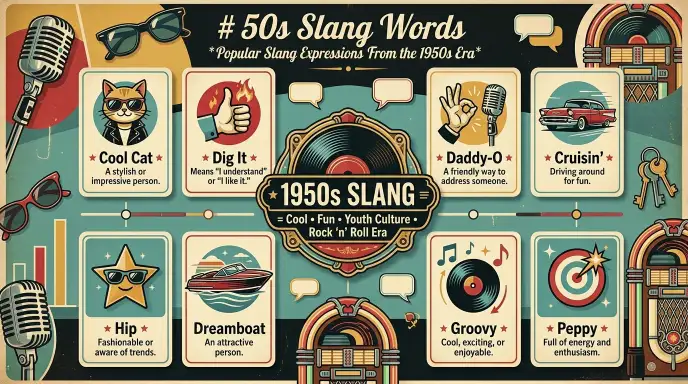
50s slang words are informal words and phrases that became popular during the 1950s. People used them in everyday conversations to talk about friends, music, fashion, cars, and daily life in a fun and casual way.
If you are searching for 50s slang words, you probably want to understand old movies, classic TV shows, vintage books, or songs from the 1950s. Some of these expressions are no longer common, but many are still recognized today. A few, like “cool,” remain part of everyday English.
In this guide, you will learn what 50s slang words mean, where they came from, how people used them, and which ones are still familiar today. You will also find real life examples, common phrases, and tips on when these classic expressions are appropriate to use.
Quick Answer: 50s Slang Words
50s slang words are informal expressions that became popular during the 1950s. They reflected youth culture, rock and roll, cars, fashion, and everyday life. While many are now old fashioned, they remain an important part of American culture and are still heard in classic movies, books, and retro events.
What Do 50s Slang Words Mean?
50s slang words are casual words and phrases that people used instead of formal English during the 1950s. They helped conversations sound more friendly, relaxed, and exciting.
Many of these expressions describe everyday experiences. Others showed approval, surprise, or humor.
People often used them when talking about:
- Friends
- School
- Dating
- Music
- Dancing
- Cars
- Clothes
- Parties
Unlike today’s internet slang, these words spread through radio, television, movies, magazines, and face to face conversations.
Why Did People Use So Much Slang?
Teenagers wanted their own style of speaking. Slang helped them feel different from older generations.
Rock and roll also played a big role. Popular singers, actors, and radio hosts introduced new words that quickly became part of daily conversations.
1950s Slang: The Most Iconic Words and Phrases
The table below explains some of the best known expressions from the 1950s.
| Slang Word | Meaning | Tone |
| Cool | Excellent or stylish | Positive |
| Daddy O | Friendly way to address someone | Friendly |
| Dig | To understand or enjoy | Positive |
| Square | Someone who is old fashioned | Mildly Negative |
| Cat | A cool person, often a man | Friendly |
| Hep | Fashionable or informed | Positive |
| Threads | Clothes | Neutral |
| Pad | Home or apartment | Neutral |
| Sharp | Well dressed | Positive |
| Bash | Party | Casual |
| Cruisin’ | Driving around for fun | Casual |
| Doll | Attractive young woman | Friendly (dated) |
The meanings above match the way these words were commonly used during the 1950s. Some could vary slightly depending on the region or the speaker.
Different Types of 50s Slang Words
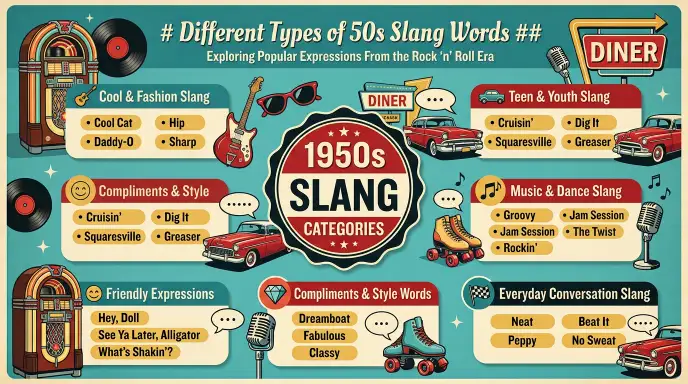
Not every slang word meant the same thing. People used different expressions for different situations.
Fashion Slang
Fashion mattered to many teenagers during the 1950s.
Common examples include:
- Threads
- Sharp
- Doll
- Greaser
These words often describe clothes, hairstyles, or personal style.
Music Slang
Music shaped much of the slang from this decade.
Popular examples include:
- Daddy O
- Dig
- Cat
- Hep
Many musicians and music fans used these expressions in everyday conversations.
Car Slang
Cars became symbols of freedom for young people.
Popular expressions included:
- Cruisin’
- Hot rod
- Wheels
These phrases often appeared when friends talked about weekend plans.
Everyday Slang
Some words fit almost any conversation.
Examples include:
- Cool
- Bash
- Pad
- Square
Several of these words stayed popular for many years. Others slowly disappeared as new slang became popular.
Where Were 50s Slang Words Commonly Used?
Most 50s slang words appeared in casual conversations. People rarely used them in formal writing or professional settings.
You could often hear them in:
- High schools
- Diners
- Dance halls
- Drive in theaters
- Family gatherings
- Neighborhoods
- Music venues
Today, these expressions appear in many places.
They are common in:
- Classic movies
- Vintage television shows
- Historical novels
- Retro festivals
- Museum exhibits
- Social media posts about the 1950s
Writers also use them when creating stories set during that decade.
Are 50s Slang Words Still Used Today?
Some are still common. Others sound old fashioned.
For example, people still say “cool” to show approval. However, words like “Daddy O” or “hep” usually appear only in historical stories or retro themed events.
Knowing these expressions makes it easier to understand older films, songs, and books. It also helps you recognize how English has changed over time.
Origin and History of 50s Slang Words
The most popular 50s slang words spread across the United States during the 1950s. Many were influenced by jazz culture from the 1930s and 1940s, while others grew with the rise of teenagers, rock and roll, television, and Hollywood.
Young people quickly adopted new words because they wanted a fresh way to express themselves. Radio stations, movies, diners, schools, and music performances helped these expressions reach millions of people.
Not every slang word was created in the 1950s. Some existed earlier but became widely used during this decade. Others disappeared after the 1960s. A few, such as “cool,” are still part of everyday English today.
What Influenced 1950s Slang?
Several parts of American culture helped shape 50s slang words.
- Rock and roll music
- Jazz musicians
- Hollywood movies
- Television shows
- High school culture
- Classic cars
- Drive in restaurants
- Youth fashion
These influences gave the decade its own unique style of speaking.
Real Life Examples of 50s Slang Words
These examples show how people naturally used 50s slang words.
Friends Talking
Tom: “Those new threads look sharp.”
Jack: “Thanks! I bought them yesterday.”
Planning the Weekend
“Let’s go cruisin’ after dinner.”
Talking About Music
“I really dig that new rock and roll band.”
At a Party
“That bash was cool. Everyone had a great time.”
Describing Someone
“Don’t be such a square. Come dance with us.”
These conversations sound natural for the 1950s. Today, most people use them only when talking about that era or enjoying retro culture.
Similar Slang Words From Other Decades
Every generation creates its own slang. The table below compares a few popular expressions.
| Decade | Example | Meaning |
| 1950s | Cool | Excellent |
| 1950s | Dig | Understand or enjoy |
| 1950s | Square | Old fashioned person |
| 1960s | Groovy | Great or fashionable |
| 1970s | Far out | Amazing |
| 1980s | Rad | Excellent |
| 1990s | Whatever | I don’t care much |
| 2000s | Awesome | Very good |
| Today | Fire | Extremely good |
| Today | GOAT | The greatest |
This comparison shows how slang changes over time. Some expressions disappear, while others stay popular for many years.
When Should You Avoid Using 50s Slang Words?
Most 50s slang words are friendly, but they are not right for every situation.
Avoid using them when you are:
- Writing business emails
- Giving formal presentations
- Speaking during job interviews
- Writing school reports
- Communicating with clients
Some older expressions may also confuse younger listeners because they are no longer common.
However, these words work well in historical writing, retro events, vintage fashion discussions, and conversations about classic movies or music.
Why Do People Still Use 50s Slang Words?
People still enjoy these expressions for many reasons.
- They create a nostalgic feeling.
- They fit retro themed events.
- They make historical stories sound authentic.
- They help people understand classic films and songs.
- They celebrate 1950s culture.
Many collectors, writers, and movie fans continue to use these classic expressions today.
Common Misunderstandings About 50s Slang Words
Some people believe every old fashioned word belongs to the 1950s. That is not correct.
Here are a few common misunderstandings:
- Some famous slang words existed before the 1950s.
- Not every American used the same slang.
- Meanings sometimes change from one region to another.
- A few expressions survived and remain popular today.
- Many classic words are now considered dated rather than trendy.
Understanding the time and place helps you use these expressions correctly.
Frequently Asked Questions
Q1. What are 50s slang words?
50s slang words are informal expressions that became popular during the 1950s. People used them in everyday conversations about music, fashion, friends, and daily life.
Q2. What is the most famous 50s slang word?
“Cool” is one of the most famous 50s slang words because it is still widely used today.
Q3. Are 50s slang words still used?
Yes. Some words remain common, while many others are mainly used in retro events, classic movies, and historical stories.
Q4. Were all 50s slang words American?
Most well known examples came from the United States, but other English speaking countries also had their own slang during the 1950s.
Q5. Are 50s slang words rude?
Most are harmless. However, a few words, such as “square,” may sound mildly insulting depending on the situation.
Q6. Can I use 50s slang at work?
It is better to avoid these expressions in formal workplaces because some people may not understand them.
Q7. Why did teenagers create so much slang in the 1950s?
Teenagers used slang to express their identity, connect with friends, and follow new trends in music, fashion, and entertainment.
Q8. Where can I hear 50s slang today?
You can hear it in classic movies, old TV shows, vintage music, historical documentaries, retro festivals, and period dramas.
Conclusion:
50s slang words capture the style and spirit of the 1950s. They reflect the influence of rock and roll, classic cars, youth culture, and everyday life. While many expressions have become old-fashioned, they still help readers and viewers understand the language of the era.
Learning these classic phrases makes it easier to enjoy vintage movies, books, music, and historical stories. if you are researching the decade or simply curious about old expressions, understanding 50s slang words offers a fun look at how English has changed over time.