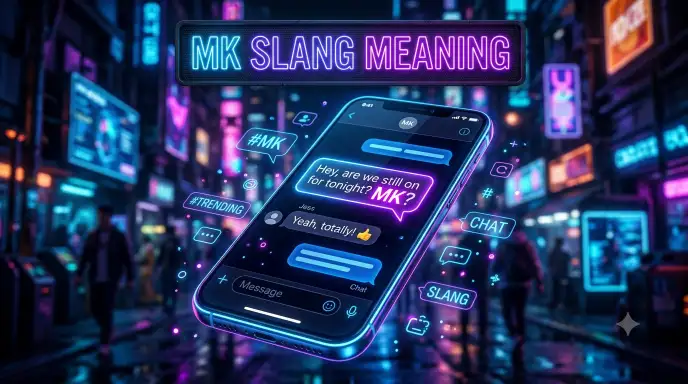
MK slang means “okay” or “alright” in texting and online conversations. It is a shortened form of “mm kay” or “okay” and is commonly used to show agreement, acceptance, or a quick response. However, the tone can change depending on the conversation, as MK may sometimes sound neutral, annoyed, or dismissive.
People search for mk slang because they see it in text messages, comments, gaming chats, or social media posts and want to understand if it means agreement or something else.
This guide explains the meaning of MK, where people use it, its tone, examples, and if it is appropriate in different situations.
Quick Answer: MK Slang Meaning
MK slang means “okay” or “alright.” People use it in texts and online chats as a short way to agree, confirm something, or reply quickly. The meaning is usually friendly or neutral, but the tone depends on the situation and the person using it.
What Does MK Slang Mean?
MK slang is a casual abbreviation for “okay.” It is often used in texting, social media messages, and online conversations when someone wants to give a short response instead of typing the full word.
For example:
- “Can you send me the file later?”
- “MK, I’ll send it tonight.”
Here, MK simply means “okay” or “sure.”
The meaning of MK slang is usually simple, but the feeling behind it can change. A person saying “MK” may sound relaxed, busy, uninterested, or slightly annoyed depending on the conversation.
Full Form or Complete Meaning of MK
What does MK stand for in texting?
In most online conversations, MK stands for:
- Okay
- Alright
- Sure
- Got it
The spelling comes from the way some people pronounce “okay” as “mm kay.” Over time, this sound became a casual written form.
MK is not usually treated as a formal abbreviation. It belongs to informal communication, especially texting and online chats.
Different Meanings of MK Slang
The meaning of MK slang can change based on context. It is important to look at the full conversation before understanding the intention.
MK Meaning as “Okay”
The most common meaning of MK is simply “okay.”
People use it when they agree with something or accept information.
Examples:
“Meet me at 7 PM.”
“MK, I’ll be there.”
“I finished the homework.”
“MK, thanks for letting me know.”
In these examples, MK has a normal and friendly meaning.
MK Meaning as a Short or Dry Reply
Sometimes MK can feel less friendly because it is very short.
A person may use MK when they do not want to continue a conversation or when they are busy.
Example:
“I told you already, please check the message.”
“MK.”
Here, MK may sound cold or annoyed because of the situation.
The word itself is not rude, but the surrounding message affects the tone.
Where Is MK Slang Commonly Used?
MK slang is mostly used in casual digital communication. It appears in places where people want fast replies.
Common platforms include:
| Platform | How MK Is Used |
| Text messages | Quick replies between friends and family |
| Snapchat | Short responses in chats |
| Instagram DMs | Casual conversations |
| TikTok comments | Brief reactions or agreement |
| Discord | Fast replies in communities and gaming chats |
| Online games | Quick confirmation during gameplay |
MK Slang in Text Messages
In texting, MK is usually used between friends, classmates, or people who already have a casual relationship.
Example:
“Don’t forget to bring your charger.”
“MK, I won’t forget.”
MK Slang on Snapchat and Instagram
On platforms like Snapchat and Instagram, people often prefer short replies because conversations move quickly.
Someone may send “MK” instead of “okay” when confirming plans.
Example:
“Are we still going out today?”
“MK, after 6.”
Is MK Slang Rude, Offensive, or Harmless?
MK slang is generally harmless. It is not considered offensive or inappropriate by itself.
However, the tone can depend on how it is used.
| Usage | Possible Meaning |
| “MK, sounds good!” | Friendly agreement |
| “MK.” | Could sound dry or uninterested |
| “MK thanks” | Normal confirmation |
MK is similar to other short replies like “k,” “sure,” or “ok.” Sometimes short answers can feel less warm because they do not show much emotion.
For professional conversations, it is better to write “okay,” “sure,” or “I understand” instead of MK.
Real Life Examples of MK Slang
Friendly Conversation
Person 1: “I’ll call you after dinner.”
Person 2: “MK, talk later.”
Meaning: Okay, talk later.
Text Message Example
Person 1: “Can you pick up some snacks?”
Person 2: “MK, I’ll grab them.”
Meaning: Sure, I will do it.
Gaming Example
Player 1: “Join the match in two minutes.”
Player 2: “MK.”
Meaning: Okay, I will join.
Discord Example
User 1: “The update starts at midnight.”
User 2: “MK, thanks for the info.”
Meaning: Got it, thanks.
School Conversation
Student 1: “Remember we have a test tomorrow.”
Student 2: “MK, I’ll study tonight.”
Meaning: Okay, I understand.
Origin and History of MK Slang
MK slang comes from the casual spoken version of “okay,” often written as “mm kay” or “mkay.” People have used “mm kay” in informal speech for many years, and the shortened written form “MK” became popular through online chats and text messaging.
The exact first person or platform that created MK is unclear. Unlike some internet slang terms that have a known origin, MK developed naturally from everyday conversation and online communication.
The growth of smartphones, texting, and social platforms helped short forms like MK become common. People began using shorter replies because quick messages were easier to type and understand.
Today, MK is mostly seen as casual internet language rather than a new trend. It is familiar to many users, but younger internet users may choose newer expressions depending on the platform.
MK Slang Usage Across Different Platforms
MK slang is used on different online platforms, including texting apps, social media, and gaming communities. The meaning usually stays the same, but the tone can change depending on the platform and conversation.
MK in Texting
In text messages, MK is mainly used as a quick way to say “okay” or “alright.” Friends and family often use it when they want a short reply.
Example:
“Can you call me later?”
“MK, I’ll call you tonight.”
MK on Snapchat
On Snapchat, users often send short replies because conversations are fast and casual.
MK may appear as a quick response to a message or snap.
Example:
“Sending the address now.”
“MK.”
The sender usually means “okay” or “got it.”
MK on TikTok and Instagram
On TikTok and Instagram, MK is less common in public comments compared with private messages.
When used, it usually shows agreement or acknowledgment.
Example:
Comment:
“This video is so funny.”
Reply:
“MK 😂”
The meaning depends on the conversation. Sometimes people use it playfully, while other times it can look like a dry response.
MK on Discord and Gaming
In gaming chats and Discord communities, speed matters. Players often use short words and abbreviations during conversations.
MK can mean:
- Okay
- Ready
- Understood
Example:
“Meet at the starting point.”
“MK, joining now.”
It helps users reply quickly without stopping the conversation.
Is MK Appropriate for Work or School?
MK slang is mostly informal, so it is not the best choice for professional communication.
In workplaces, emails, or messages with teachers, clearer words are better.
Instead of:
“MK, I’ll finish it.”
Use:
“Okay, I’ll finish it.”
“Understood, I’ll complete it.”
“Sure, I will take care of it.”
Using MK with close friends is usually fine, but it may look too casual in formal situations.
| Situation | Is MK Suitable? |
| Chatting with friends | Yes |
| Family messages | Usually yes |
| Gaming chats | Yes |
| Social media DMs | Yes |
| School assignments | Better to avoid |
| Workplace emails | No |
Similar Slang Terms Related to MK
Several other short replies have a similar meaning to MK.
| Slang | Meaning | Tone |
| OK | Agreement | Neutral |
| K | Okay | Can sound very short |
| KK | Okay, okay | Friendly or casual |
| Sure | Agreement | More polite |
| Gotcha | I understand | Casual |
| Bet | Okay, sounds good | Modern casual slang |
Although these words can have similar meanings, their tone is different.
For example:
- “MK” often feels simple and neutral.
- “Bet” can sound more energetic.
- “K” may sometimes feel colder.
When Should You Avoid Using MK?
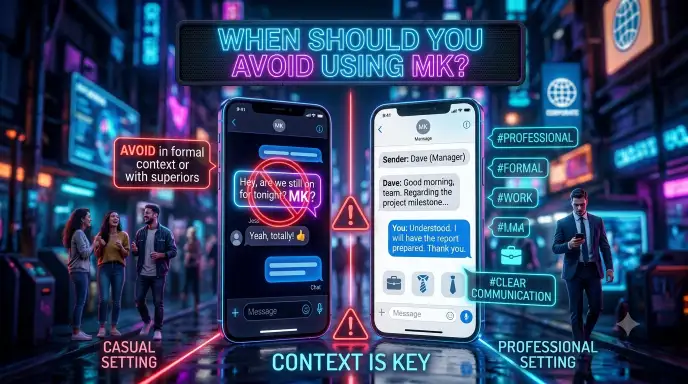
MK is harmless, but there are situations where it may not be the best choice.
Avoid using MK when:
- You are writing a formal email.
- You are speaking with a teacher or manager.
- You need to show respect or professionalism.
- The message could be misunderstood.
A short reply like MK may accidentally sound like you do not care, especially during serious conversations.
Example:
Someone explains a problem:
“I’m upset because you forgot our meeting.”
Replying:
“MK.”
This may sound dismissive.
A better response would be:
“I understand. Sorry about that.”
The meaning of a short slang reply depends heavily on the situation.
Polite Alternatives to MK
If you want to sound clearer or more respectful, you can use:
- Okay
- Alright
- Sounds good
- I understand
- Got it
- Sure
- No problem
- Thanks, I understand
These alternatives work better in professional or serious conversations.
Why Do People Use MK Slang?
People use MK slang because it is quick, simple, and easy to type.
Online communication often moves quickly, so users create shorter ways to respond.
Common reasons people use MK include:
- Saving time while texting
- Giving a fast confirmation
- Keeping conversations casual
- Matching the style of friends or online communities
Short replies are common in digital communication because people often prefer speed over complete sentences.
Common Misunderstandings About MK Slang
One common misunderstanding is that MK always means someone is angry or uninterested. This is not true.
MK can be friendly, neutral, or slightly cold depending on the situation.
For example:
“MK, thanks for helping!”
sounds friendly.
But:
“MK.”
after an argument may sound annoyed.
Another misunderstanding is that MK has one fixed meaning everywhere. Like many slang terms, the meaning comes from the conversation around it.
Always consider:
- Who wrote it
- What was said before
- The relationship between people
- The tone of the conversation
Frequently Asked Questions About MK Slang
Q1. What does MK slang mean?
MK slang usually means “okay” or “alright.” People use it in texts, chats, and online conversations as a short way to agree or confirm something.
Q2. What does MK stand for in texting?
In texting, MK usually stands for “okay.” It comes from the casual pronunciation “mm kay.”
Q3. Is MK slang rude?
MK is not rude by itself. However, a short reply like “MK” may sound cold depending on the conversation and tone.
Q4. Is MK used on Snapchat?
Yes, people may use MK on Snapchat as a quick reply meaning “okay” or “got it.”
Q5. What does MK mean on TikTok?
On TikTok, MK usually means “okay,” but it is less common in public comments than in private messages.
Q6. Can I use MK at work?
It is better to avoid MK at work because it may sound too casual. Use “okay” or “understood” for professional communication.
Q7. Is MK the same as OK?
Yes, MK and OK have similar meanings, but MK feels more like casual internet slang.
Q8. Why do people type MK instead of okay?
People type MK because it is shorter and faster than writing the full word “okay.”
Q9. Does MK have another meaning?
MK can have other meanings outside slang, depending on the topic. In texting and social media, it most commonly means “okay.”
Q10. Is MK still popular slang?
MK is still understood by many internet users, although some newer slang terms may be more popular among younger users.
Conclusion:
MK slang is a simple way to say “okay” in texting and online conversations. It is commonly used for quick agreement, confirmation, or acknowledgment.
The meaning of MK depends on context. With friends, it usually feels casual and normal. In serious or professional conversations, a clearer response like “I understand” or “okay” may work better.
Understanding the tone behind short replies helps you communicate better online and avoid misunderstandings.
I’m Emily Carter, and I enjoy writing about slang, internet language, and modern English expressions. My goal is to explain word meanings in a simple, clear, and easy-to-understand way so anyone can learn with confidence.