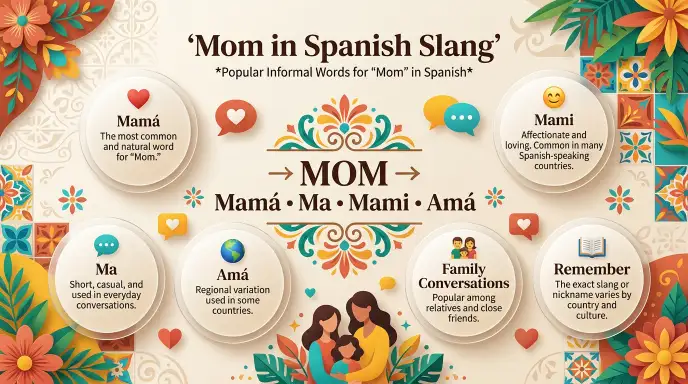
Mom in Spanish slang most commonly means “jefa,” “amá,” or “ma,” depending on the country and situation. While the standard Spanish word for mother is “mamá,” many Spanish-speaking communities use informal slang words to refer to their mom in everyday conversations.
People search for mom in Spanish slang because they hear these words in songs, movies, social media, or text messages and want to know what they really mean.
Spanish slang changes from one country to another. A word that sounds normal in Mexico may be uncommon in Spain or Argentina. That is why understanding the context is important.
In this guide, you’ll learn the meaning of mom in Spanish slang, the most popular slang terms, where they are used, if they are respectful or rude, and how native speakers use them in real conversations. You’ll also discover regional differences so you can choose the right word for the right situation.
Quick Answer: Mom in Spanish Slang
The most common slang for mom in Spanish slang includes words like amá, ma, jefa, vieja (in some regions), and mami. Most of these are affectionate and informal, but their meaning depends on the country, tone, and relationship between the speaker and their mother.
What Does Mom in Spanish Slang Mean?
There is no single slang word for “mom” in Spanish. Different Spanish-speaking countries use different informal words.
Here are the most common ones:
| Slang Word | Meaning | Common In | Tone |
| Amá | Mom | Mexico, Central America | Warm and casual |
| Ma | Mom | Many Spanish speaking countries | Very informal |
| Jefa | Mom (literally “boss”) | Mexico | Affectionate and playful |
| Mami | Mom or an affectionate nickname | Many countries | Loving and friendly |
| Vieja | Mom or wife in some regions | Mexico, Argentina, Chile (varies) | Context matters |
The safest and most widely understood word remains mamá, while these slang terms are mainly used in casual conversations.
Amá
“Amá” is a shortened form of “mamá.”
Many people in Mexico and Central America use it when talking to or about their mother.
Examples:
- “Amá, what’s for dinner?”
- “I’m going to visit my amá this weekend.”
Ma
“Ma” is an even shorter version of “mamá.”
It is common in text messages, phone calls, and everyday family conversations.
Examples:
- “Ma, I’ll be home soon.”
- “Thanks, Ma.”
Jefa
In Mexico, “jefa” literally means “female boss.”
Many sons and daughters jokingly call their mother “la jefa” because she runs the house or makes important decisions.
It is usually respectful and affectionate rather than insulting.
Examples:
- “My jefa makes the best tacos.”
- “I need to ask my jefa first.”
Mami
“Mami” is often used by young children, family members, or adults speaking affectionately.
It can also be a romantic nickname between partners, so the meaning depends entirely on the situation.
Examples:
- “Love you, Mami.”
- “Mami always knows what to do.”
Vieja
“Vieja” literally means “old woman.”
In some families, especially in parts of Mexico and South America, it can be used affectionately for a mother or spouse.
However, this word is highly regional. In other places, it may sound rude or disrespectful. If you are unsure, avoid using it.
Different Meanings of Mom in Spanish Slang
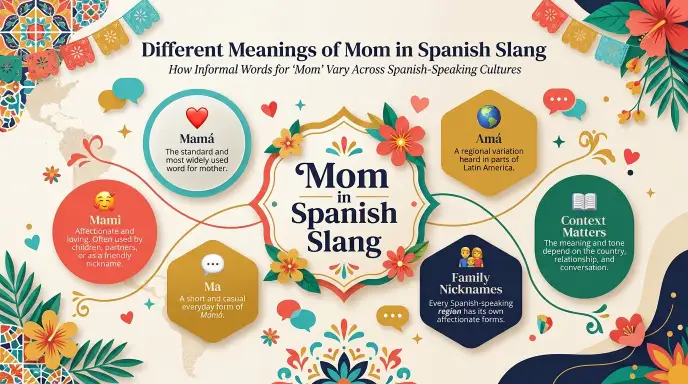
Some slang words for “mom” have more than one meaning. Understanding the context helps you avoid confusion.
Mom or Mother
Most often, words like amá, ma, and jefa simply refer to someone’s mother.
Example:
- “My jefa is picking me up.”
Loving Family Nickname
Words such as mami are often used as warm family nicknames.
Example:
- “Good morning, Mami.”
Romantic Nickname
“Mami” is also widely used between couples as a term of affection.
Example:
- “You look amazing, mami.”
This does not mean “mother.” It is simply a romantic or playful nickname.
Regional Expressions
Some families have their own traditions and may use words differently.
For example, “vieja” may be affectionate in one region but offensive in another. Always pay attention to local customs and tone.
Where Is Mom in Spanish Slang Commonly Used?
These slang words appear most often in relaxed conversations rather than formal writing.
Common places include:
- Family conversations
- Text messages
- WhatsApp chats
- TikTok videos
- Instagram captions
- YouTube vlogs
- Facebook comments
- Casual conversations with friends
- Movies and TV shows
- Spanish-language music
Platform Usage
| Platform | Common? | Notes |
| Text Messages | Yes | Very common with family |
| Yes | Frequently used in family chats | |
| TikTok | Yes | Often appears in comedy and lifestyle videos |
| Yes | Used in captions and comments | |
| Yes | Common on Mother’s Day posts | |
| Sometimes | Depends on the community | |
| Discord | Rare | Mostly in personal chats rather than gaming |
| Workplace Chat | No | Use “mamá” or “mother” in professional settings instead |
The best choice depends on where you are and who you are speaking with.
Is Mom in Spanish Slang Rude, Offensive, or Harmless?
Most words used for mom in Spanish slang are harmless and affectionate. However, the tone, country, and relationship between the speakers can change how a word is understood.
The table below gives a quick overview.
| Slang Word | Usually Respectful? | Can Sound Rude? | Notes |
| Amá | Yes | No | A warm and common family term. |
| Ma | Yes | No | Informal but respectful. |
| Jefa | Yes | Rarely | Often used playfully in Mexico. |
| Mami | Yes | No | Affectionate in families, but can also be romantic between adults. |
| Vieja | Sometimes | Yes | Highly regional. Friendly in some places but offensive in others. |
Which Word Is Safest?
If you are learning Spanish or speaking with people from different countries, these are the safest choices:
- Mamá
- Amá
- Ma
These words are widely understood and rarely cause confusion.
Which Word Needs More Care?
“Vieja” is the one to use carefully.
Some families use it with love, while others consider it disrespectful. If you are unsure how people around you use it, choose another word.
Real Life Examples of Mom in Spanish Slang
Here are examples from everyday situations.
Family Conversation
Carlos: Have you seen my backpack?
Sister: Ask Amá. She moved it.
Text Message
You: Ma, I’ll be home around seven.
Mom: Drive safely.
WhatsApp Family Chat
Brother: Is Jefa cooking tonight?
Sister: Yes. She said dinner is ready at eight.
Mother’s Day Social Media Post
“Happy Mother’s Day to the best Mami in the world. Thank you for everything.”
Conversation With Friends
“I’m leaving early today because my jefa asked me to help at home.”
Video Call
“Hi, Amá! I just wanted to check how you’re doing.”
At School
“My ma packed my lunch today.”
Casual Conversation
“I always call my mom ‘Amá’ because that’s what everyone in my family says.”
These examples show that the words are normally used in warm, everyday conversations.
Origin and History of Mom in Spanish Slang
Many slang words for “mom” did not begin on social media. They developed naturally over many years in different Spanish-speaking communities.
Amá and Ma
“Amá” and “Ma” are shortened forms of “mamá.”
People began using these shorter versions in everyday speech because they are quicker and feel more personal. Today, they remain common in many families across Mexico and parts of Central America.
Jefa
“Jefa” comes from the Spanish word “jefe,” meaning “boss” or “leader.”
In Mexican slang, many children began calling their mother “la jefa” as a playful way of saying she is the one in charge of the family.
Although the exact time this usage became popular is unclear, it has been part of Mexican everyday speech for decades and became even more visible through films, television, and online content.
Mami
“Mami” has long been used as an affectionate family nickname across the Spanish-speaking world.
Over time, it also became popular as a romantic nickname between adults, especially in music, social media, and everyday conversation. Because of this, context is important when hearing or using the word.
Vieja
“Vieja” originally means “old woman.”
In some regions, families began using it affectionately for a mother or spouse. However, this meaning is regional and does not exist everywhere. Because opinions differ, it is better not to assume it will always sound friendly.
Similar Slang or Related Terms
Spanish has many affectionate family words that are related to “mom.”
| Word | Meaning | Common Use |
| Mamá | Mother | Standard Spanish |
| Amá | Mom | Informal family speech |
| Ma | Mom | Everyday conversation |
| Mami | Mom or affectionate nickname | Family and close relationships |
| Jefa | Mom, “the boss” | Mostly Mexico |
| Madre | Mother | Neutral and formal |
| Mamita | Little mom / dear mom | Very affectionate |
Some of these words are regional, while others are understood almost everywhere.
When Should You Avoid Using Mom in Spanish Slang?
Not every slang word fits every situation.
Avoid slang when:
- Speaking with someone you do not know well.
- Writing formal emails or school assignments.
- Talking to teachers or employers.
- Speaking with people from another Spanish speaking country if you are unsure of local usage.
- Using “Vieja” unless you know it is acceptable in that family or region.
In formal situations, “mamá” or “madre” is usually the better choice.
Polite Alternatives
If you want to sound respectful, these words are safer than slang.
| Word | Best For |
| Mamá | Everyday respectful speech |
| Madre | Formal writing and formal conversation |
| Mi madre | Talking about your mother politely |
| Mamita | Warm family conversations |
| Señora | Speaking respectfully to someone else’s mother in some situations |
These alternatives work well across most Spanish-speaking countries.
Why Do People Use Mom in Spanish Slang?
People often choose slang because it feels more personal than formal language.
Common reasons include:
- It sounds warmer.
- It feels natural within the family.
- It shows affection.
- It reflects local culture.
- It creates a relaxed tone.
- It is shorter and easier to say.
- It matches how friends and relatives speak.
Many people continue using the same nickname they learned as children.
Common Misunderstandings
Several misunderstandings can confuse learners.
All Spanish Speakers Use the Same Word
This is not true.
Every country has its own slang, and even different families may prefer different words.
Jefa Always Means “Boss”
Not always.
In everyday Mexican slang, “jefa” can simply mean “mom.”
Mami Always Means Mother
No.
“Mami” can refer to a person’s mother, but it is also a common romantic nickname between adults.
Always look at the conversation before deciding what it means.
Vieja Is Always Offensive
Not necessarily.
Some families use it affectionately, while others dislike it. Regional culture makes a big difference.
Frequently Asked Questions
Q1. What is the most common word for mom in Spanish slang?
The most common slang words are amá, ma, and jefa. The exact word depends on the country and the family’s way of speaking.
Q2. Does “jefa” mean mom in Spanish?
Yes. In Mexican slang, jefa often means “mom.” It literally means “female boss,” but many people use it affectionately for their mother because she is seen as the head of the household.
Q3. Is “mami” the same as “mom”?
Sometimes. Mami can mean “mom” in family conversations. However, it is also a common affectionate nickname between romantic partners. The meaning depends on the context.
Q4. Is “vieja” a respectful way to say mom?
It depends on the region and the family. Some people use vieja affectionately, while others think it sounds rude. If you are unsure, it is better to use mamá, amá, or ma instead.
Q5. Which Spanish slang word for mom is safest to use?
Amá and ma are among the safest informal choices in many Spanish speaking communities. If you want a word that is understood almost everywhere, use mamá.
Q6. Is “mom in Spanish slang” used on social media?
Yes. You can often see words like amá, ma, mami, and jefa on TikTok, Instagram, Facebook, WhatsApp, and YouTube, especially in family related posts and videos.
Q7. Can I use Spanish slang for mom at work or school?
It is best to avoid slang in formal situations. In professional writing, school assignments, or official conversations, use mamá or madre instead.
Q8. Why are there so many slang words for mom in Spanish?
Spanish is spoken in many countries, and each region has its own expressions. Families also develop their own nicknames, so there is no single slang word that everyone uses.
Q9. What is the difference between “mamá” and “amá”?
Mamá is the standard Spanish word for “mom.” Amá is a shortened, more casual version that is common in countries like Mexico and parts of Central America.
Q10. Can children and adults both use these slang words?
Yes. Many people continue using the same nickname for their mother throughout their lives. Words like amá, ma, and jefa are commonly used by both children and adults in casual family conversations.
Conclusion:
Mom in Spanish slang does not have just one meaning. Instead, different Spanish-speaking countries use different informal words such as amá, ma, jefa, mami, and, in some regions, vieja. Each term reflects local culture, family traditions, and everyday speech.
The safest choices for most learners are mamá, amá, and ma because they are affectionate, easy to understand, and unlikely to cause offense. Words like jefa and vieja are more regional, so always consider the country and the context before using them.
Learning these slang terms will help you better understand Spanish conversations, social media posts, movies, music, and text messages while allowing you to communicate more naturally with native speakers.
I’m Emily Carter, and I enjoy writing about slang, internet language, and modern English expressions. My goal is to explain word meanings in a simple, clear, and easy-to-understand way so anyone can learn with confidence.