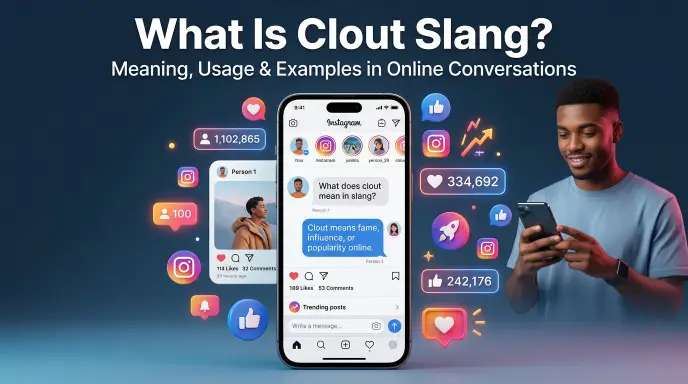
Clout slang means influence, popularity, or social status, especially online. When someone has “clout,” it means people notice them, respect their opinions, follow them, or consider them important in a certain community.
The phrase what is clout slang is commonly searched by people who see the word on TikTok, Instagram, Snapchat, Discord, gaming chats, or online discussions. The meaning can be confusing because clout is not always about talent or success sometimes it simply refers to attention and online recognition.
In this guide, you will learn what clout means in slang, where the term came from, how people use it in different online spaces, if it is positive or negative, and when you should avoid using it.
Quick Answer: What Is Clout Slang?
Clout slang refers to popularity, influence, or social power that a person gains through attention, reputation, followers, or recognition. Online, someone with clout is usually seen as influential or well known within a specific community.
For example:
- “She has a lot of clout on TikTok” means she has strong influence or popularity there.
- “He only did that for clout” means he did it mainly to get attention or become more famous.
What Does Clout Slang Mean?
Clout in slang means having influence, attention, or status that makes people notice you. It is commonly used when talking about social media popularity, internet fame, and reputation.
The word can describe:
- A person with many followers
- Someone respected in a specific group
- A creator whose opinions affect others
- A person trying to gain attention online
- Someone who becomes famous from a trend or event
Unlike traditional ideas of success, clout is often connected to visibility. A person may have clout because many people know them, talk about them, or follow their content.
For example:
“That streamer has serious clout in the gaming community.”
This means the streamer is respected and influential among gamers.
However, clout does not always mean someone is admired. Sometimes people use it negatively when they believe someone is chasing attention without a good reason.
Example:
“He started that argument just for clout.”
This suggests the person wanted attention rather than solving a real problem.
What Does Clout Stand For? Is It an Abbreviation?
Clout is not an abbreviation and does not stand for a longer phrase. It is a normal English word that developed an additional slang meaning over time.
The modern slang meaning is connected to the idea of having influence or power, especially in social situations.
In online conversations, people use “clout” almost like a measurement of attention or popularity.
Examples:
- “How much clout does this creator have?”
- “That video gave him more clout.”
- “She lost clout after the controversy.”
In these examples, clout means social influence or public attention.
Different Meanings of Clout
The meaning of clout slang can change depending on the situation. While online users usually mean popularity or influence, the word has other meanings outside internet culture.
1. Clout as Online Popularity
This is the most common slang meaning today.
A person has clout when they have:
- Many followers
- Strong online presence
- Recognition from others
- Influence over trends or opinions
Example:
“That creator has enough clout to make a small brand go viral.”
Here, clout means online influence.
2. Clout as Attention Seeking
Sometimes clout is used negatively.
The phrase “doing it for clout” means someone is acting mainly to gain attention, followers, or fame.
Examples:
“Posting that fake story was just for clout.”
Meaning:
The person may have wanted reactions, shares, or internet attention.
This use often appears in debates about viral videos, online drama, and social media behavior.
3. Traditional Meaning of Clout
Outside slang, “clout” has older meanings in English.
Historically, it could refer to:
- Influence or power
- A heavy strike or hit (in older usage)
- A piece of cloth or patch
These meanings are usually not what people mean when using the term online.
In modern internet conversations, “clout” almost always refers to popularity, reputation, or influence.
Where Is Clout Commonly Used?
Clout is strongly connected to internet culture, but people also use it in everyday conversations.
Clout on TikTok
On TikTok, clout often relates to:
- Viral videos
- Followers
- Trending content
- Creator popularity
Example:
“That dance gave her a lot of clout.”
Meaning:
The trend increased her popularity.
TikTok users may also criticize creators who appear to chase attention:
“He is only making drama for clout.”
Clout on Instagram
On Instagram, clout is often linked with:
- Followers
- Brand deals
- Influencer status
- Social reputation
Example:
“That influencer has enough clout to promote a new product.”
Clout in Gaming and Discord Communities
In gaming spaces, clout can mean respect or reputation.
A player may gain clout by:
- Winning competitions
- Being highly skilled
- Creating popular content
- Helping a community
Example:
“That player has major clout in the esports scene.”
On Discord servers, someone may have clout because they are trusted, popular, or well known among members.
Clout in Text Messages
In texting, clout slang is usually used casually between friends. People often use it to talk about someone’s popularity, reputation, or desire for attention.
Examples:
Friend 1: “Why did he post that video?”
Friend 2: “Probably for clout.”
Meaning: The person may have posted it to get attention.
Another example:
“Your new song is getting you some clout.”
Meaning: The song is helping the person become more recognized.
In text conversations, the tone depends on context. It can be a compliment or a criticism.
Is Clout Slang Rude, Offensive, or Harmless?
Clout slang is usually harmless, but the meaning depends on the tone and situation. It can be positive when describing someone’s influence, but it can sound insulting when used to accuse someone of chasing attention.
Positive Use of Clout
When used positively, clout shows respect or recognition.
Example:
“She earned a lot of clout after winning that competition.”
This means people respect her achievements.
Negative Use of Clout
The phrase can become negative when someone suggests that another person only wants attention.
Example:
“He started a fight online for clout.”
This implies the person wanted fame, reactions, or followers rather than having a genuine reason.
Is Saying “You Have Clout” an Insult?
Usually, no.
Saying someone has clout can be a compliment because it means they are influential or respected.
However, saying:
“You’re just doing it for clout”
is usually criticism because it suggests fake behavior or attention seeking.
Is Clout Appropriate for Work or School?
Clout is considered informal slang and is usually not suitable for professional writing.
In casual conversations with friends, online communities, or social media, it is common.
In workplaces, schools, or formal communication, clearer words are better.
Instead of saying:
“She has a lot of clout in the industry.”
You could say:
“She has strong influence in the industry.”
or:
“She has a respected reputation in the field.”
Workplace Usage Guide
| Situation | Is “Clout” OK? | Better Choice |
| Talking with friends | Yes | Clout is natural |
| Social media posts | Yes | Common online term |
| Gaming communities | Yes | Widely understood |
| School assignments | Usually avoid | Use “influence” or “reputation” |
| Business emails | Avoid | Use professional terms |
| Formal reports | Avoid | Use precise language |
Why Do People Use Clout Slang?
People use clout slang because it provides a quick way to describe social influence and online popularity.
The word became useful because internet culture created new ways for people to gain recognition.
Someone can become well known through:
- Viral videos
- Memes
- Gaming achievements
- Online communities
- Social media content
- Public discussions
The term also helps people describe the difference between ordinary popularity and having a strong influence over others.
For example:
A person with 100,000 followers may have popularity.
A person whose recommendations affect what thousands of people buy, watch, or discuss may have clout.
Origin and History of Clout Slang
The modern slang meaning of clout developed from the older English meaning related to influence and power.
The word “clout” has been used in English for centuries, but the current internet meaning became popular through hip hop culture and online communities.
Early Use in Hip Hop Culture
Before becoming common internet slang, “clout” was used in some hi hop communities to describe:
- Respect
- Reputation
- Status
- Influence
The idea was connected to having social power or being recognized by others.
Rise Through Social Media
The meaning expanded during the growth of platforms such as:
- YouTube
- Twitter/X
- TikTok
As online fame became easier to measure through followers, views, and engagement, “clout” became a common way to describe digital influence.
Did TikTok Create the Word Clout?
No.
TikTok helped spread the modern usage, but the word existed before TikTok became popular.
The exact moment when slang usage became widespread is difficult to identify because slang often spreads through communities gradually rather than having one clear creator or starting point.
Clout Usage Across Different Platforms
The meaning of clout can slightly change depending on where it is used.
| Platform | Common Meaning of Clout |
| TikTok | Viral attention, followers, internet fame |
| Influence, popularity, creator status | |
| Discord | Respect or reputation inside a community |
| Gaming | Skill based reputation or recognition |
| Community respect, credibility, or attention | |
| Snapchat | Social popularity among friends |
| Text Messages | General attention or status |
Real Life Examples of Clout Slang
Understanding examples is the easiest way to learn how people actually use the term.
Example 1: Social Media
“That video gave her a lot of clout overnight.”
Meaning:
The video increased her popularity quickly.
Example 2: Online Drama
“They are arguing online just for clout.”
Meaning:
They may be creating drama to get attention.
Example 3: Gaming
“Beating that tournament boss gave him serious clout in the gaming group.”
Meaning:
The achievement earned him respect.
Example 4: Friends Talking
Friend 1: “Why is everyone following him now?”
Friend 2: “He got clout after his funny videos went viral.”
Meaning:
He became more popular.
Example 5: Workplace Conversation (Informal)
“That designer has a lot of clout in the fashion world.”
Meaning:
The designer has strong influence or reputation.
(Note: “Influence” or “authority” would sound more professional in a workplace setting.)
Is Clout Still Popular Slang?
Yes, clout is still widely understood, especially among people familiar with internet culture.
However, slang changes over time. In some younger online spaces, words like “clout” may sometimes feel less fresh because they have been used heavily for years.
Some people may use it jokingly or call certain behaviors “clout chasing,” which can make the term sound negative.
The word is not outdated, but its meaning depends heavily on the community using it.
What Does “Clout Chasing” Mean?
Clout chasing means trying to gain attention, popularity, or influence, often by doing things mainly for recognition.
The phrase is usually negative because it suggests someone cares more about attention than the actual situation.
A person may be called a clout chaser if they:
- Create unnecessary drama online
- Copy trends only to become popular
- Attach themselves to famous people for attention
- Post controversial content to get reactions
- Pretend to support something only because it is popular
Examples of Clout Chasing
“He only started talking about that celebrity because he wanted clout.”
Meaning:
The person may be using the situation to gain attention.
“That video feels like a clout chase.”
Meaning:
The video seems designed mainly to become popular.
However, calling someone a clout chaser is an opinion, not always a fact. Sometimes people genuinely share content that becomes popular without trying to gain fame.
Similar Slang Terms Related to Clout
Several internet slang words are connected to the idea of popularity, attention, or online influence.
| Slang Term | Meaning | Example |
| Fame | Being widely known by many people | “She gained fame after the movie.” |
| Influence | Ability to affect people’s opinions or actions | “He has influence in the fitness community.” |
| Viral | Quickly becoming popular online | “That clip went viral.” |
| Status | Social position or reputation | “He has high status in the group.” |
| Hype | Excitement or attention around something | “The new game has a lot of hype.” |
| Aura | A person’s confidence, style, or presence | “That player has great aura.” |
| Rizz | Charm or ability to attract others | “He has good rizz.” |
| Street cred | Respect earned through experience or reputation | “She has street cred in the music scene.” |
Although these words overlap, they are not identical.
For example:
- Clout focuses on influence and recognition.
- Viral focuses on rapid popularity.
- Fame focuses on being widely known.
- Hype focuses on excitement around something.
When Should You Avoid Using Clout Slang?
Although clout slang is common online, there are situations where it may not be the best word choice.

Avoid It in Formal Writing
Do not use “clout” in:
- Academic essays
- Official reports
- Professional documents
- Business presentations
Instead, use:
- Influence
- Reputation
- Recognition
- Authority
- Social impact
Example:
❌ “The company gained more clout after the campaign.”
✅ “The company gained more recognition after the campaign.”
Avoid Using It With People Who May Not Know Internet Slang
Older adults, teachers, or people outside online communities may not understand the slang meaning.
If explaining an idea clearly matters, use a more direct word.
Instead of:
“She has a lot of clout.”
Say:
“She has a strong reputation and influence.”
Avoid Using It as an Unfair Judgment
Calling someone a “clout chaser” can sound insulting.
Before using the term, consider if you actually know someone’s intentions.
A person may post something because they enjoy sharing it, not because they want attention.
Polite Alternatives to Clout
If you need a more professional or neutral word, these alternatives work better:
| Instead of Saying | Use |
| He has a lot of clout | He has strong influence |
| She gained clout online | She gained popularity online |
| They did it for clout | They may have wanted attention |
| He is a clout chaser | He may be seeking attention |
The best replacement depends on the situation.
For social media conversations, “clout” feels natural. For professional communication, “influence” or “reputation” usually works better.
Common Misunderstandings About Clout Slang
1. Clout Does Not Always Mean Real Success
Having clout does not automatically mean someone is skilled, talented, or trustworthy.
A person may have a large audience but little expertise in a subject.
Example:
A creator may have millions of followers but not be an expert in health, finance, or education.
2. Clout Is Not the Same as Money
Some people confuse popularity with wealth.
A person can have:
- High clout but little money
- Money but little online influence
- Both
- Neither
Clout mainly refers to attention, respect, or influence.
3. Clout Is Not Always Fake
The phrase “doing it for clout” can make people think all online popularity is dishonest.
That is not true.
Someone can gain clout by:
- Creating helpful content
- Sharing useful information
- Showing talent
- Helping a community
The word itself is neutral. The context decides if it sounds positive or negative.
Frequently Asked Questions About What Is Clout Slang
What does clout mean in slang?
Clout means popularity, influence, or social status, especially online. Someone with clout is recognized, respected, or followed by others.
What does clout mean in texting?
In texting, clout usually means attention, popularity, or reputation.
Example:
“He only posted that for clout.”
This means the person may have posted it to get attention.
What does “for clout” mean?
“For clout” means doing something mainly to gain attention, followers, recognition, or popularity.
Example:
“She joined the trend for clout.”
Meaning:
She joined because she wanted more attention.
Is clout a bad word?
No. Clout is not a bad word.
It can be positive:
“She has clout in the fashion industry.”
It can also be negative:
“He is chasing clout.”
The meaning depends on the speaker’s intention and tone.
Is clout used on TikTok?
Yes. Clout is commonly used on TikTok to describe popularity, viral attention, and creator influence.
Users often talk about gaining clout, losing clout, or chasing clout.
What does losing clout mean?
Losing clout means losing popularity, attention, or influence.
Example:
“That creator lost clout after people stopped following them.”
Can clout be used in gaming?
Yes. In gaming communities, clout can refer to respect, reputation, skill, or recognition.
A player may gain clout by winning competitions, creating content, or becoming well known in a gaming group.
What is a clout chaser?
A clout chaser is someone who tries to gain popularity or attention, sometimes through exaggerated actions, controversy, or trends.
The phrase is usually negative.
Clout vs Influence: What Is the Difference?
Many people use clout and influence as if they mean the same thing, but there is a small difference.
| Word | Meaning | Common Use |
| Clout | Social power, attention, popularity | Internet conversations |
| Influence | Ability to affect opinions or actions | Professional and general communication |
| Reputation | What people think about someone | Formal and personal situations |
| Authority | Trusted knowledge or expertise | Professional settings |
Example:
A doctor may have influence because of expertise.
A TikTok creator may have clout because of online popularity.
A person can have one without having the others.
Conclusion:
Clout slang means popularity, influence, recognition, or social status, especially in online communities. People use it on platforms like TikTok, Instagram, Discord, Reddit, and gaming spaces to describe someone’s level of attention or reputation.
The meaning changes depending on the context:
- Positive: Someone has clout because they are respected or influential.
- Negative: Someone is chasing clout because they want attention.
- Neutral: A person simply has online recognition.
The key thing to remember is that clout is about visibility and influence, not necessarily talent, success, or trustworthiness. A person can have a lot of clout in one community and very little recognition in another.
When using the term, think about your audience. It works well in casual online conversations, but words like influence, reputation, or recognition are usually better for formal situations.
Read more!
TKT French Slang Meaning: What Does TKT Mean?
Hyy Meaning Slang: What Does “Hyy” Mean in Text?