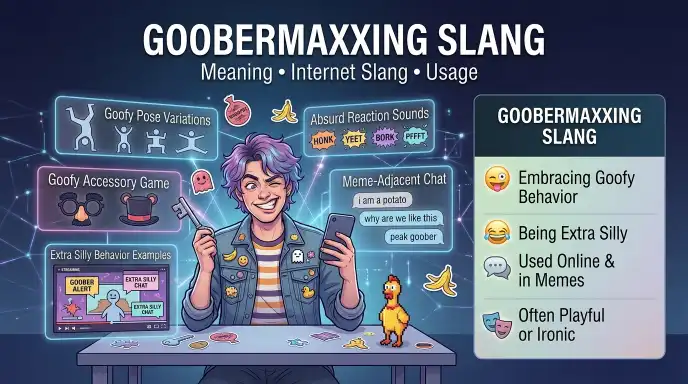
Goobermaxxing slang is a humorous internet expression for fully embracing a goofy, silly, awkward, or playful side of yourself. The term combines “goober,” an informal word for a silly person, with “-maxxing,” a slang pattern that suggests taking something to an extreme.
It is usually used jokingly in texts, memes, comments, and social media posts. In this article, you’ll learn what goobermaxxing means, how people use it, its tone, examples, and how it relates to other internet slang.
Goobermaxxing slang means fully embracing goofy, silly, awkward, or ridiculous behavior, usually for fun. The term combines “goober,” meaning a silly or goofy person, with “-maxxing,” an internet slang pattern that suggests taking something to the fullest.
It is mainly used in casual texts, memes, comments, and social media posts.
Quick Answer: What Does Goobermaxxing Slang Mean?
Goobermaxxing slang is a playful internet expression for fully leaning into goofy, silly, awkward, or ridiculous behavior. It combines “goober,” an informal word for a silly or goofy person, with “-maxxing,” a slang pattern that suggests taking something to an extreme.
People may use it to describe themselves, a friend, an action, or a funny situation. The term is usually humorous and informal, so its exact meaning can change slightly depending on the context.
What Does Goobermaxxing Mean?
Goobermaxxing means intentionally leaning into goofy, silly, or awkward behavior in an exaggerated way. It can describe someone acting ridiculous for fun, making silly faces, saying strange things, or simply embracing their goofy personality.
The word combines two parts:
- “Goober” refers to a silly, goofy, or somewhat foolish person.
- “-maxxing” is an internet slang suffix used to suggest maximizing or taking something to the fullest.
So, “goobermaxxing” can be understood as “being as much of a goober as possible.” The phrase is usually playful rather than serious.
Goobermaxxing in Simple Words
In simple words, goobermaxxing means acting extra goofy on purpose. Someone might use the term when they are being silly, playful, weird, or harmlessly awkward.
For example, a person dancing badly just to make their friends laugh might jokingly say they are “goobermaxxing.”
Is Goobermaxxing Actually Slang?
Yes. Goobermaxxing fits the style of modern internet slang. It is an informal, playful word rather than a standard term used in formal English.
Because it is a flexible slang creation, people can use it in different ways depending on the joke or situation.
What Does “Goober” Mean?
“Goober” is an informal word that can describe a silly or goofy person. It is often used in a lighthearted way, although the tone can change depending on who says it and how it is used.
What Does “-Maxxing” Mean?
“-Maxxing” is an internet slang pattern based on the idea of maximizing something or taking it to the fullest. People can attach it to different words to create humorous expressions.
When “goober” and “-maxxing” are combined, “goobermaxxing” suggests taking goofy behavior to the maximum.
Goobermaxxing Slang Meaning in Context
The meaning of goobermaxxing depends on what is happening in the conversation. Most of the time, it describes someone fully embracing a goofy or silly mood.
For example, a person may use goobermaxxing when they are:
- Acting unusually goofy with friends
- Making silly jokes or faces
- Doing something funny or awkward on purpose
- Posting a ridiculous photo or video
- Acting childish in a harmless way
- Leaning into their strange or playful personality
The term can also describe a funny situation rather than a person. Someone might post a silly video and caption it “goobermaxxing” to show that they are intentionally being ridiculous.
In most casual contexts, the word has a playful tone. The surrounding message, image, or joke helps show if it is meant as praise, self-mockery, or a light insult.
What Does Goobermaxxing Say About Someone?
Goobermaxxing usually suggests that a person is comfortable showing their goofy or playful side. It can describe someone who does not mind looking silly when they are having fun.
The term may suggest that someone is:
- Playful and carefree
- Comfortable being silly
- Intentionally ridiculous
- Funny or entertaining
- Not taking the situation too seriously
However, goobermaxxing does not always describe someone’s whole personality. It can simply refer to one funny moment or action.
For example, if someone normally acts serious but suddenly starts making silly jokes with friends, another person might call that moment “goobermaxxing.” The phrase focuses more on the behavior than on the person’s character.
Is Goobermaxxing Positive or Negative?
Goobermaxxing is usually positive or neutral because people often use it as a playful way to describe silly behavior. However, its meaning can change based on the speaker, situation, and tone.
Positive Use
Someone may use goobermaxxing to praise a person’s fun and playful behavior.
For example:
“He was goobermaxxing all night and had everyone laughing.”
Here, the term suggests that the person was being funny and entertaining.
Negative Use
In some situations, goobermaxxing can point out behavior that seems childish, foolish, or annoying. A person might use it to gently tease someone who is acting too silly.
For example:
“Bro needs to stop goobermaxxing during the meeting.”
The speaker is criticizing the behavior, but the phrase can still sound humorous rather than harsh.
Tone Matters
The surrounding conversation matters most. Between friends, goobermaxxing is often harmless teasing or self-joking. In a serious conversation, the same word could sound dismissive or insulting.
So, goobermaxxing is not automatically positive or negative. Context determines the tone.
Examples of Goobermaxxing
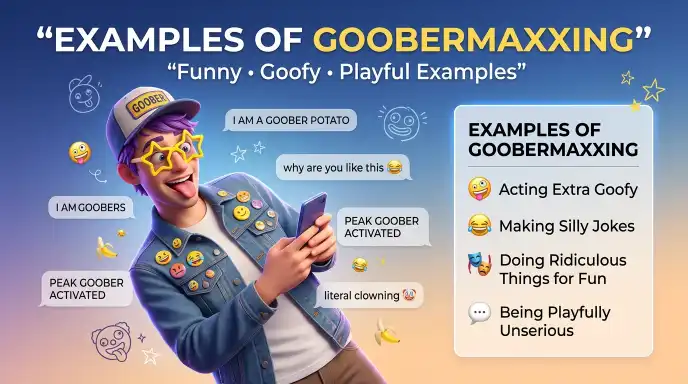
Goobermaxxing can describe many harmless and funny situations. The key idea is that someone is leaning into goofy behavior instead of trying to act serious.
Here are some simple examples:
- Making a ridiculous face for a photo
- Dancing badly on purpose
- Making random jokes with friends
- Wearing a silly outfit just for fun
- Acting extra goofy in a group chat
- Posting an intentionally awkward selfie
- Turning a normal situation into a funny moment
- Doing something ridiculous to make friends laugh
For example, someone might post a video of themselves dancing around their room and write, “I’m goobermaxxing today.”
Another person might see their friend making strange faces and say, “You are seriously goobermaxxing right now.”
The expression can also be used about yourself. Saying “I was goobermaxxing” can show that you know your behavior was silly and are joking about it.
Goobermaxxing in Text Messages
People can use goobermaxxing in text messages to describe their own silly behavior or tease a friend. It often makes a casual conversation feel more playful.
For example:
- “I’m goobermaxxing today 😂”
- “Why are you goobermaxxing at 2 AM?”
- “We were just goobermaxxing in the group chat.”
- “That was peak goobermaxxing.”
- “Bro has entered full goobermaxxing mode.”
The term can also work as a short reaction. If a friend sends a ridiculous photo or message, replying “goobermaxxing” can mean that they are fully embracing their goofy side.
Because the word is informal and playful, it fits best in texts, group chats, memes, and conversations with people who understand internet slang.
Goobermaxxing on Social Media
Goobermaxxing can appear in captions, comments, memes, and short posts where people share funny or exaggerated behavior. The term works well in social media spaces because it can describe a mood, action, photo, or video in just one word.
Goobermaxxing on TikTok
On TikTok, someone might use goobermaxxing as a caption or comment on a video showing silly dancing, strange expressions, random jokes, or intentionally awkward behavior.
Goobermaxxing on Instagram
On Instagram, the term may appear in captions, comments, Stories, or posts that show someone’s goofy side. A person might caption a funny photo with “goobermaxxing” to make it clear that the image is meant to be silly.
Goobermaxxing on Reddit
On Reddit, users may use the term when discussing funny posts, unusual behavior, memes, or intentionally ridiculous situations. The meaning usually comes from the context of the post.
Goobermaxxing on Discord
In Discord chats, goobermaxxing can be used as quick slang between friends. Someone might call a funny message or a silly voice-chat moment “goobermaxxing.”
Across these platforms, the term generally keeps the same basic idea: deliberately embracing a goofy or ridiculous side for fun.
Why Do People Say Goobermaxxing?
People say goobermaxxing because it turns ordinary silly behavior into a funny, exaggerated idea. The “-maxxing” part makes the action sound like someone is taking their goofy behavior to the highest possible level.
The term can be useful when someone wants to:
- Make a joke about their own behavior
- Tease a friend in a playful way
- Describe an unusually goofy moment
- Add humor to a caption or comment
- Show that they are not taking themselves seriously
It also works because “goober” already has a playful meaning. Adding “-maxxing” makes the expression sound more dramatic and intentionally ridiculous.
For many users, the humor comes from treating something as simple as being goofy like it is a serious goal that can be “maxed out.”
How Is Goobermaxxing Used in a Sentence?
Goobermaxxing usually appears in casual sentences, captions, comments, and messages. It can describe what someone is doing or label a funny situation.
Here are some natural examples:
- “I spent the whole afternoon goobermaxxing.”
- “Why are you goobermaxxing in the group chat?”
- “She was goobermaxxing during the entire video.”
- “This photo is pure goobermaxxing.”
- “We started goobermaxxing and couldn’t stop laughing.”
- “He is officially in his goobermaxxing era.”
- “That was some serious goobermaxxing.”
- “I’m just goobermaxxing with my friends.”
The word is flexible, so it does not need to follow one fixed sentence pattern. In most cases, the surrounding context makes it clear that the speaker is talking about exaggerated goofy or playful behavior.
Goobermaxxing vs. Being Goofy
Goobermaxxing and being goofy are closely related, but they are not exactly the same. Both can describe silly or playful behavior, but goobermaxxing adds the idea of taking that behavior to an exaggerated level.
Being goofy simply means acting in a silly, funny, or playful way.
Goobermaxxing suggests that someone is fully leaning into that behavior, often for humor.
For example:
- “He is being goofy.” :He is acting silly.
- “He is goobermaxxing.” : He is taking his goofy behavior to another level.
The term goobermaxxing also has a stronger internet-slang feel. “Goofy” is a common everyday word, while goobermaxxing sounds more like a humorous meme or online expression.
So, someone can be goofy without goobermaxxing, but goobermaxxing usually involves some form of deliberate or exaggerated goofiness.
Goobermaxxing vs. Goober
Goober and goobermaxxing come from the same basic idea, but they are used differently.
“Goober” usually describes a person who is silly, goofy, or a little foolish. It can be a playful nickname for someone who is acting in a funny way.
“Goobermaxxing” describes the act of fully leaning into that goofy behavior. The “-maxxing” part adds the idea of taking something to the fullest or exaggerating it.
For example:
- “You’re such a goober.” : You are acting silly.
- “You’re goobermaxxing.” : You are going all-in on being silly.
So, goober is mainly a label for a person, while goobermaxxing describes a behavior, mood, or playful action.
Goobermaxxing vs. Other “-Maxxing” Slang
Goobermaxxing follows the same basic pattern as many other internet expressions that use “-maxxing.” The suffix suggests taking a certain activity, trait, or behavior to an extreme or doing as much of it as possible.
The main difference is the thing being “maxed.”
- Goobermaxxing : fully embracing goofy or silly behavior.
- Looksmaxxing : focusing heavily on improving physical appearance.
- Gymmaxxing : putting strong effort into fitness or muscle building.
- Sleepmaxxing :focusing heavily on improving sleep.
- Personalitymaxxing : emphasizing or improving aspects of one’s personality.
These expressions can be serious, humorous, or ironic depending on the context. Goobermaxxing is generally more playful because the word “goober” already carries a silly meaning.
The shared idea is simple: take the word before “-maxxing” and imagine doing it to the fullest.
Is Goobermaxxing the Same as Being a Goober?
Not exactly. Being a goober usually describes a person who is silly, goofy, or a little foolish. Goobermaxxing describes the behavior of fully embracing that goofy side.
A person can be called a goober without doing anything unusual. For example, a friend might say, “You’re such a goober,” as a playful nickname.
Goobermaxxing is more about what someone is doing at that moment. It suggests that the person is going all-in on silly behavior.
For example:
- “He’s a goober.” : This describes the person.
- “He’s goobermaxxing.” : This describes his current behavior.
- “We were goobermaxxing all evening.” : This describes a shared playful activity.
The two terms are closely connected, but goobermaxxing adds the idea of exaggerated or deliberate goofiness.
Is Goobermaxxing an Insult?
Goobermaxxing is usually not a serious insult. People often use it as playful slang when someone is acting extremely goofy, silly, or ridiculous.
The meaning depends on the relationship between the speakers and the situation.
If friends say, “Bro is goobermaxxing,” they may simply be teasing each other and having fun. It can even sound affectionate when used between close friends.
However, the term can feel negative if someone uses it to mock another person’s behavior. For example, calling someone out for “goobermaxxing” during a serious situation may suggest that their behavior is childish or inappropriate.
So, goobermaxxing is best understood as a playful expression whose tone can range from friendly teasing to mild criticism.
Is Goobermaxxing Appropriate for Work or School?
Goobermaxxing is mainly casual internet slang, so it is usually better suited to friendly conversations, texts, memes, and social media.
In school, the term may be fine when talking casually with friends. However, it may not be appropriate in essays, presentations, or other formal assignments unless the topic specifically discusses slang or internet culture.
At work, it is safer to avoid the term in formal emails, reports, meetings, and professional documents. Some coworkers may not know what it means, and informal slang can make a message less clear.
A simple rule is:
- Casual chats: Usually fine
- Social media: Fine in the right context
- School assignments: Avoid unless relevant to the topic
- Formal emails: Usually avoid
- Professional reports: Avoid
When clarity and professionalism matter, use simple words such as “being silly,” “acting goofy,” or “joking around” instead.
Common Misunderstandings About Goobermaxxing
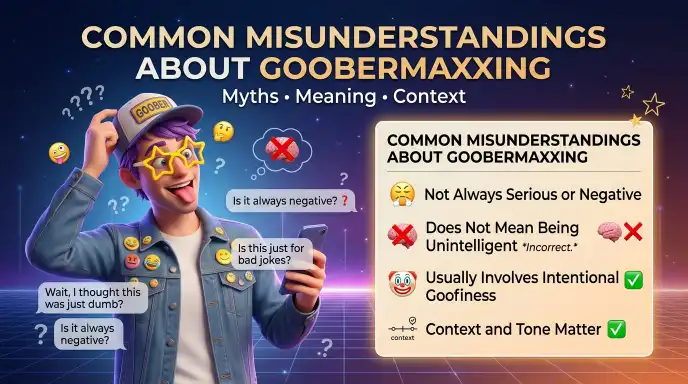
Because goobermaxxing is informal internet slang, people may understand it differently. A few common misunderstandings are worth clearing up.
It Does Not Always Mean Being foolish
Goobermaxxing usually points to playful or goofy behavior. It does not automatically mean that someone is unintelligent.
It Is Not Always an Insult
The term can be used as friendly teasing or self-joking. The tone and context usually show if the speaker means it positively or negatively.
It Does Not Have One Fixed Meaning
Internet slang can be flexible. One person may use goobermaxxing for silly behavior, while another may use it more broadly for doing something ridiculous or awkward.
It Does Not Have to Be Serious
The “-maxxing” format can make an ordinary action sound exaggerated. In goobermaxxing, that exaggeration is often part of the joke.
It Is Not a Formal English Word
Goobermaxxing belongs to casual online language. It is better suited to informal conversations than formal writing.
How Did Goobermaxxing Develop?
Goobermaxxing appears to be a playful combination of “goober” and the internet slang suffix “-maxxing.” There is no clear, widely documented source that identifies one person or community as the creator of the exact term.
The first part, “goober,” can describe a silly or goofy person. The second part, “-maxxing,” comes from the idea of maximizing something or taking it to the fullest.
This combination creates a humorous expression for going all-in on goofy behavior. Like many internet slang terms, people can create and adapt words in casual online conversations without a single official origin.
Because of this, it is safer to treat goobermaxxing as a niche internet expression rather than claim a specific creator, date, or platform for its origin.
Why Is Goobermaxxing Funny?
Goobermaxxing is funny because it treats ordinary goofy behavior as if it were a serious goal that someone can take to the maximum.
The humor often comes from the contrast between the casual meaning of “goober” and the dramatic feel of “-maxxing.” Instead of simply saying someone is being silly, goobermaxxing makes it sound like they are fully committed to being silly.
For example, saying “I’m goobermaxxing” can make a simple act, such as making funny faces or telling random jokes, sound much more dramatic.
The term can also be funny because it allows people to joke about themselves. Someone can admit that they are acting ridiculous without making the situation feel serious.
This playful exaggeration is a common reason internet users create and use “-maxxing” expressions.
The Tone of Goobermaxxing
Goobermaxxing usually has a playful, humorous, and informal tone. People often use it when they want to make a silly situation sound more exaggerated.
The tone can be:
- Playful when friends joke with each other
- Self-deprecating when someone jokes about their own behavior
- Ironic when someone exaggerates how goofy they are
- Teasing when describing a friend’s silly actions
- Negative when used to criticize annoying or childish behavior
For example, “I’m goobermaxxing today” usually sounds lighthearted. But “Stop goobermaxxing during the meeting” can sound like a mild complaint.
The surrounding words, situation, and relationship between the speakers help determine the intended tone.
How to Know What Goobermaxxing Means in a Post
The easiest way to understand goobermaxxing is to look at what the person is doing or talking about. The term can describe a person, action, photo, video, or funny situation.
Look at these clues:
- If someone is acting silly, it likely refers to goofy behavior.
- If a post shows an awkward or ridiculous moment, it may describe that moment.
- If someone uses it about themselves, it is often self-joking.
- If it appears in a comment about a friend, it may be playful teasing.
- If the post has a serious tone, the term may be criticizing someone’s behavior.
The words around goobermaxxing can also help. Expressions such as “full goobermaxxing,” “peak goobermaxxing,” or “goobermaxxing mode” usually strengthen the idea of exaggerated goofiness.
When the context is unclear, focus on the overall joke or situation instead of treating goobermaxxing as having one strict definition.
How to Use Goobermaxxing Correctly
Use goobermaxxing in casual situations where you want to describe exaggerated goofy or playful behavior. It works best when the people reading it understand informal internet slang.
You can use it to describe yourself:
“I’m goobermaxxing today.”
You can also use it to describe a friend:
“You’ve been goobermaxxing all morning.”
It can describe a funny moment:
“That whole video was pure goobermaxxing.”
Or you can use it as a short reaction:
“Peak goobermaxxing.”
The main idea is to keep the word connected to silly, playful, awkward, or ridiculous behavior. Since it is informal slang, avoid using it when you need a formal or professional tone.
When Should You Avoid Using Goobermaxxing?
Goobermaxxing is casual slang, so it is not suitable for every situation. The word can sound confusing or too informal when the audience does not know internet slang.
You should usually avoid it when:
- Writing a formal school assignment
- Sending a professional email
- Writing a business report
- Speaking in a serious meeting
- Talking to someone who may not understand the term
- Discussing a sensitive or serious situation
It is also better to avoid calling someone a goobermaxxer if you are not sure how they will take the joke. Even playful slang can sound insulting when the relationship or context is unclear.
In formal situations, clearer phrases such as “acting silly,” “joking around,” or “behaving playfully” are usually better choices.
Goobermaxxing in Real Conversations
Goobermaxxing can fit naturally into casual conversations when people are joking, teasing, or talking about silly behavior. The meaning is usually easy to understand when the situation is playful.
For example:
Friend: “Why are you making that face?”
You: “I’m goobermaxxing.”
Another example:
Friend: “We were supposed to study, but you spent an hour making terrible jokes.”
You: “Sorry, I was goobermaxxing.”
It can also describe a group activity:
“We were all goobermaxxing in the chat last night.”
In these examples, the term does not describe a serious activity. It adds humor and shows that the speaker knows their behavior is silly.
Because goobermaxxing is informal, it works best with friends and in relaxed online conversations.
Who Is Most Likely to Use Goobermaxxing?
Goobermaxxing is most likely to appear among people who spend time in casual online communities and are familiar with internet slang and meme language.
It may be used by:
- Social media users
- Meme fans
- Gamers
- People active in group chats
- Online communities
- Friends joking with each other
- People who enjoy playful or ironic slang
You may see the term used when someone wants to describe their own goofy behavior without making the situation sound serious.
However, there is no fixed age group or community that owns the term. Anyone familiar with this style of online language can use it. The meaning still depends on the context and the people involved.
Where Is Goobermaxxing Commonly Used?
Goobermaxxing is mainly used in casual online spaces where people share jokes, memes, and playful content. It fits best in conversations where informal internet language is already common.
You may see it in:
- Text messages and group chats
- Social media comments and captions
- Meme posts
- Gaming communities
- Reddit discussions
- Discord conversations
- Short-form videos
- Casual conversations between friends
The term is not limited to one platform. Someone can use it anywhere they want to describe exaggerated goofy behavior in a humorous way.
Because it is niche slang, some people may not recognize it immediately. The surrounding post or conversation usually provides the clues needed to understand what the speaker means.
Is Goobermaxxing Still Used Today?
Goobermaxxing appears to be a niche internet slang expression rather than a widely established everyday term. Its use can vary between online communities, memes, and individual conversations.
Because internet slang changes quickly, some users may recognize the word while others may have never seen it before. This does not make the expression meaningless. It simply means that context plays an important role.
When you see goobermaxxing in a recent post, look at the surrounding text, image, or video. If the content shows someone being unusually goofy, silly, awkward, or playful, the term is likely being used in that sense.
The broader “-maxxing” pattern remains useful in online slang, where people create playful expressions by adding the suffix to different words.
Related Slang Terms
Goobermaxxing is connected to several casual words and internet slang terms that describe silly, playful, or exaggerated behavior. Knowing these terms can make the meaning easier to understand.
- Goober : an informal word for a silly or goofy person.
- Goofy : describes someone or something that is silly, funny, or awkward.
- Goofball : a person who often acts silly or playful.
- Dork : an informal term for someone who behaves awkwardly or foolishly.
- Derpy : describes something that looks or acts awkward, silly, or clumsy.
- Goobery : a playful way to describe behavior that feels like that of a goober.
- Maxxing : an internet slang pattern that suggests maximizing or taking something to the fullest.
Among these terms, goober and maxxing are the most directly connected to goobermaxxing. The other words describe similar types of behavior but do not have exactly the same meaning.
Goobermaxxing vs. Similar Words
Goobermaxxing is close to words such as goofy, goofball, and silly, but each term has a slightly different use.
| Term | Main idea |
| Goobermaxxing | Going all-in on goofy or silly behavior |
| Goofy | Acting silly, funny, or awkward |
| Goofball | A person who behaves in a silly way |
| Silly | Not serious or playful |
| Goober | A silly or goofy person |
| Dork | Someone who may act awkward or foolish |
The biggest difference is the “maxxing” idea. Goofy or silly can describe normal playful behavior, while goobermaxxing suggests taking that behavior further or fully embracing it.
For example, making one silly joke is simply being goofy. Spending the whole day making ridiculous jokes, faces, and comments could jokingly be called goobermaxxing.
Benefits and Problems of Using Goobermaxxing
Goobermaxxing can be useful in casual communication because it gives people a short and humorous way to describe exaggerated goofy behavior. It can also make a conversation feel more relaxed.
Benefits of Goobermaxxing
The term can:
- Add humor to casual conversations
- Describe a silly moment in one word
- Make self-jokes feel more playful
- Help people express an informal mood
- Fit naturally into memes and online conversations
Problems With Goobermaxxing
The term can also cause confusion because it is niche slang. Someone who has never seen the expression may not understand it.
Other possible problems include:
- It may sound too informal in professional settings.
- Its meaning can change with context.
- Some people may interpret it as an insult.
- It may not be suitable for serious conversations.
Overall, goobermaxxing works best when the audience understands casual internet language and the situation is clearly playful.
FAQs About Goobermaxxing
Q1. What does goobermaxxing mean?
Goobermaxxing means fully embracing goofy, silly, awkward, or playful behavior. It is usually used as humorous internet slang.
Q2. Is goobermaxxing a real word?
Goobermaxxing is an informal internet expression rather than a standard formal English word. It is formed from “goober” and the “-maxxing” slang pattern.
Q3. What does goober mean in goobermaxxing?
In this expression, “goober” refers to a silly or goofy person. The word is often used in a playful way.
Q4. What does maxxing mean in goobermaxxing?
“-Maxxing” suggests taking something to the fullest or doing as much of it as possible. In goobermaxxing, it creates the idea of being extremely goofy.
Q5. Is goobermaxxing an insult?
Not usually. It is often friendly teasing or self-joking. However, it can sound negative if someone uses it to criticize another person’s behavior.
Q6. Is goobermaxxing positive or negative?
It can be either, depending on context. In most casual situations, it has a playful or humorous meaning.
Q7. How do you use goobermaxxing in a sentence?
You can say, “I’m goobermaxxing today,” or “Bro is goobermaxxing again.” Both examples describe someone acting especially goofy.
Q8. What does goobermaxxing mean in text?
In text messages, goobermaxxing usually means that someone is acting silly, ridiculous, or playful. Friends may also use it as a funny reaction to a message.
Conclusion:
Goobermaxxing is a playful internet slang expression for fully embracing goofy, silly, awkward, or ridiculous behavior. It combines “goober,” which can describe a silly person, with “-maxxing,” a slang pattern that suggests taking something to the fullest.
The term is mainly useful in casual texts, memes, social media posts, group chats, and online communities. Its tone is usually humorous, but it can also become teasing or mildly negative depending on the context.
If you see someone say “I’m goobermaxxing,” they are usually joking about going all-in on their goofy side.

I’m Emily Carter, and I enjoy writing about slang, internet language, and modern English expressions. My goal is to explain word meanings in a simple, clear, and easy-to-understand way so anyone can learn with confidence.