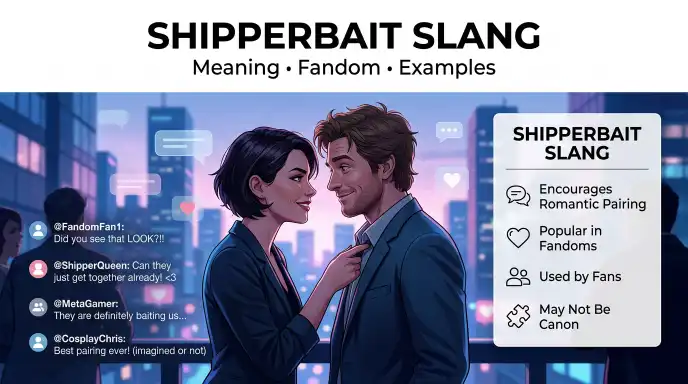
Shipperbait slang refers to content, scenes, or interactions that encourage fans to imagine two people or fictional characters as a romantic pair. The term is common in fandom and online discussions, especially when fans notice romantic hints, close moments, or teasing between characters.
Shipperbait can be playful, exciting, or critical depending on the context. It does not always mean the relationship is officially romantic or part of the story’s canon. In this article, you’ll learn its meaning, examples, uses, and differences from related fandom terms.
Shipperbait slang means content or interactions that encourage fans to imagine or support two people or fictional characters as a romantic pairing. It is commonly used in fandom discussions and online communities.
Quick Answer: What Does Shipperbait Mean in Slang?
Shipperbait slang describes content or interactions that encourage fans to imagine or support a romantic pairing between two people or fictional characters. It may include flirting, emotional closeness, teasing, or scenes that create romantic tension.
The term is often used in fandom discussions and on social media. Shipperbait does not necessarily mean the characters are officially a couple. Fans may use the word positively when they enjoy the chemistry or negatively when they feel a story is teasing a relationship without confirming it.
What Does Shipperbait Mean?
Shipperbait is an informal fandom term for content that seems to encourage fans to “ship” two people or characters as a romantic pair. This can happen through flirty conversations, emotional moments, physical closeness, or repeated scenes that create strong chemistry.
The word combines “shipper,” meaning a person who supports a particular pairing, with “bait,” suggesting something that attracts or encourages that interest. In online discussions, fans may call a scene shipperbait when it gives them more reasons to imagine two characters together.
The term does not always suggest that the creators have confirmed a romance. It can simply describe how fans interpret a scene or interaction. Depending on the context, people may use shipperbait in an excited, playful, neutral, or critical way.
What Is a “Ship” in Fandom Slang?
In fandom slang, a “ship” is a romantic pairing that fans support or enjoy. The word comes from “relationship” and is commonly used when people discuss two characters they believe would make a good couple.
“Shipping” is the act of supporting or imagining that pairing, while a “shipper” is someone who supports it. A ship can involve characters who are officially together in a story or characters whose relationship exists only in the imagination of fans.
This is where the idea of shipperbait connects. When a story gives fans romantic-looking moments between two characters, some fans may describe those moments as shipperbait because they encourage interest in that pairing.
How Is Shipperbait Used Online?
Shipperbait is mostly used in online fandom discussions when people talk about the relationship or chemistry between two characters. Fans may use the term in comments, posts, memes, videos, or discussions about a TV show, movie, anime, manga, book, or game.
For example, someone might comment, “This scene is such shipperbait” after two characters share a romantic-looking moment. The person may be saying that the scene gives fans more material to support their pairing.
The term can also appear when fans discuss trailers, promotional images, interviews, or social media posts. In these cases, people may feel that the content highlights a particular pairing and encourages fans to become more interested in it.
The tone depends on the situation. Some people use “shipperbait” because they enjoy the interaction, while others use it to criticize what they see as excessive teasing of a relationship.
What Does Shipperbait Look Like?
Shipperbait can appear in many forms, especially when a story or piece of content gives fans reasons to see two characters as a possible romantic pair. The clues are often small rather than direct.
Common examples include:
- Flirty conversations or playful teasing
- Strong emotional connections
- Frequent one-on-one scenes
- Meaningful eye contact
- Physical closeness
- Jealous reactions
- Almost-confessions or romantic tension
- Scenes that make the pairing look especially close
- Promotional content that highlights two characters together
These moments do not automatically prove that the characters are romantically involved. Fans may simply interpret them as hints or material that supports their ship. That interpretation is why the same scene can feel like ordinary friendship to one viewer but shipperbait to another.
Why Do Writers and Creators Use Shipperbait?
Writers and creators may include moments that appeal to fans who enjoy a particular pairing. These moments can add romantic tension, make character relationships more interesting, or encourage viewers to keep discussing what might happen next.
Shipperbait can also create excitement around a show, movie, anime, game, or other story. A small interaction between two popular characters may lead to fan theories, social media posts, edits, and discussions.
However, not every romantic-looking scene is deliberately created as shipperbait. Sometimes characters simply have strong chemistry or a close friendship. Fans may interpret those interactions as shipperbait even when the creators have not confirmed that intention.
For this reason, it is useful to separate what appears in the story from what fans believe the creators intended.
Why Do Fans Call Something Shipperbait?
Fans may call something shipperbait when a scene or interaction gives them strong reasons to think about two people or characters as a possible romantic pair. The term often appears after a moment that feels more intimate or suggestive than a normal friendship scene.
For example, fans might use “shipperbait” when:
- Two characters share a noticeably romantic moment.
- The story repeatedly brings the same pair together.
- One character becomes jealous of another person.
- Their dialogue sounds flirtatious.
- A trailer focuses heavily on their chemistry.
- A scene leaves their relationship open to romantic interpretation.
The word can also be used jokingly. A fan might say, “The writers know exactly what they are doing,” when a scene gives shippers another exciting moment.
Still, calling something shipperbait is usually an interpretation. It does not prove that the creators intentionally designed the scene to attract shippers.
Is Shipperbait Always Intentional?
Not necessarily. Shipperbait can describe how fans interpret a scene, even when the writer or creator did not intend to encourage a romantic pairing.
Two characters may have a close friendship, strong emotional connection, or natural chemistry without being written as a couple. Fans who support that pairing may still see these moments as shipperbait.
Intent can be especially difficult to judge when the story leaves a relationship open to interpretation. Promotional content can create the same situation because a trailer, poster, or social media post may highlight two characters without confirming romance.
Because of this, it is better to say that something “feels like shipperbait” rather than assume the creators definitely intended it that way. This keeps the term focused on the fan interpretation and avoids treating speculation as fact.
Shipperbait Examples in Fiction
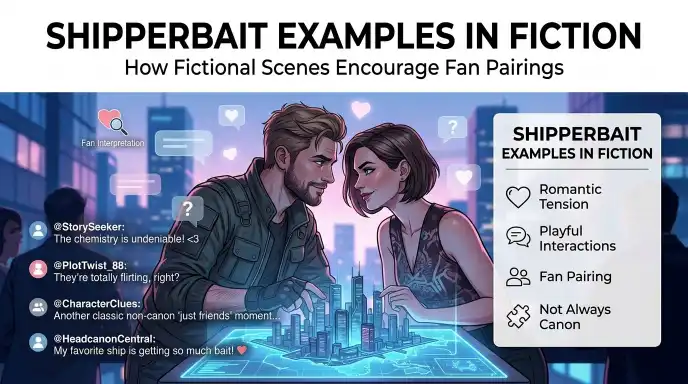
Shipperbait can appear in many types of fictional stories. A scene may bring two characters closer together, give them playful chemistry, or create a moment that fans can easily read as romantic. Fans may then use “shipperbait” to describe that content.
For Example, two characters might spend more time together than usual, share a meaningful conversation, or tease each other in a way that feels romantic. A story might also create jealousy, emotional tension, or an almost-confession between them.
These moments can appear in TV shows, movies, anime, manga, books, and video games. However, the presence of these moments does not automatically make the pairing canon. A scene can encourage shipping while the story still presents the characters as friends or leaves their relationship unclear.
The important point is that shipperbait describes the effect or interpretation of the content, rather than proving that the characters are officially a couple.
Shipperbait Examples in Texting and Online Conversations
People may use “shipperbait” in texts, comments, group chats, or social media posts when they notice an interaction that seems to encourage a romantic pairing. The word is usually informal and works best when the people involved already understand fandom or shipping language.
Here are some natural examples:
- “That scene was pure shipperbait.”
- “The new episode gave shippers so much shipperbait.”
- “Is this actually romance, or is it just shipperbait?”
- “The trailer is full of shipperbait for those two.”
- “I know they are friends, but that moment felt like shipperbait.”
In each example, the speaker is pointing to content that may encourage people to imagine two characters as a couple. The term does not confirm that a romance exists. It simply describes how the interaction may appeal to fans who support that pairing.
Shipperbait vs Shipping
Shipperbait and shipping are closely related, but they describe different things. Shipping is the act of supporting, imagining, or wanting two people or fictional characters to be in a romantic relationship. A person who does this is often called a shipper.
Shipperbait, on the other hand, refers to content that encourages or feeds that shipping interest. It may be a scene, interaction, image, dialogue, or promotional moment that makes fans more interested in a particular pairing.
For example, if fans want two characters to become a couple, that is shipping. If the story gives those characters a flirty scene that makes fans even more excited about the pairing, fans may call that scene shipperbait.
In simple terms: Shipping is the fan interest in a pairing, while shipperbait is the content that encourages that interest.
Shipperbait vs Shipper
A shipper and shipperbait are related to fandom culture, but they describe different things. A shipper is a person who supports or enjoys a particular romantic pairing. They may want two characters to become a couple, create fan content about them, or simply enjoy their relationship.
Shipperbait refers to the content that can encourage or appeal to those fans. It may include romantic tension, playful flirting, emotional moments, or scenes that make a pairing seem possible.
For example, a fan who supports two characters is a shipper. A scene that gives that fan another reason to support the pairing may be called shipperbait.
In simple terms: A shipper is the fan, while shipperbait is the content that attracts or encourages shipping interest.
Shipperbait vs Romantic Subtext
Shipperbait and romantic subtext are related, but they describe different ideas. Romantic subtext refers to an implied romantic meaning that is not stated directly. Viewers may notice certain looks, conversations, or interactions and feel that two characters have romantic feelings for each other.
Shipperbait focuses more on how that content encourages fans to support or imagine a pairing. A scene can contain romantic subtext without being created to attract shippers. Fans may still describe it as shipperbait if they feel it gives them material for their preferred pairing.
For example, two characters sharing a meaningful look may have romantic subtext. If a story repeatedly gives the same pair moments like this and fans become excited about their relationship, those moments may also be described as shipperbait.
In simple terms: Romantic subtext is an implied romantic meaning, while shipperbait is content that feeds or encourages shipping interest.
Is Shipperbait a Negative Term?
Shipperbait is not always negative. Its meaning and tone depend on how someone uses the word and how they feel about the content being discussed.
Some fans use “shipperbait” in a playful or positive way when they enjoy seeing two characters interact. For example, a fan might call a romantic-looking scene “great shipperbait” because it gives them more content to enjoy about their favorite pairing.
Others use the term more critically. They may feel that a story keeps teasing a romantic relationship without developing or confirming it. In this context, “shipperbait” can suggest frustration or disappointment.
The surrounding conversation usually shows the intended tone. A positive comment may express excitement, while a critical comment may suggest that the writer is relying too heavily on romantic teasing.
So, shipperbait can be positive, neutral, or negative depending on context.
Related Terms
| Term | Simple Meaning | Key Difference |
|---|---|---|
| Shipping | Supporting or imagining a romantic pairing | It is the fan activity |
| Shipper | A person who supports a pairing | It refers to the fan |
| Shipperbait | Content that encourages pairing interest | It refers to the content |
| Fan Service | Content created to please fans | It has a wider meaning |
| Canon Romance | An officially established relationship | The romance is part of the story |
| Romantic Subtext | An implied romantic meaning | The romance is suggested |
| Queerbaiting | Perceived teasing of LGBTQ+ representation | It has a more specific context |
Common Signs Fans May Call Something Shipperbait
Fans may describe content as shipperbait when it repeatedly gives them reasons to view two people or characters as a possible romantic pairing. These signs do not prove that the creators intended to attract shippers, but they can shape how fans interpret the relationship.
Common signs include:
- Frequent scenes between the same two characters
- Flirty jokes or playful teasing
- Strong emotional support between them
- Meaningful eye contact or physical closeness
- Jealous reactions involving another character
- Romantic-looking settings or situations
- Almost-confessions or unresolved romantic tension
- Promotional material that strongly highlights the pair
- Repeated hints without an official relationship
Context matters when judging these signs. A single friendly interaction does not automatically become shipperbait. Fans usually use the term when several moments create a noticeable pattern or strongly encourage interest in a particular pairing.
Signs of Shipperbait
| Possible Sign | What Fans May Notice |
|---|
| Flirty dialogue | Playful or romantic-sounding conversations |
| Emotional closeness | Strong personal moments between characters |
| Jealousy | A strong reaction involving another person |
| Physical closeness | Hugs, close scenes, or lingering looks |
| Almost-confession | A romantic moment stops before a clear confession |
| Promotional focus | Content highlights the pair together |
Where Is Shipperbait Commonly Used?
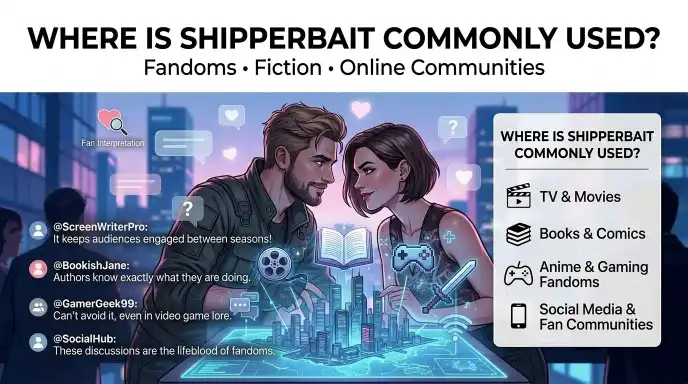
Shipperbait is mainly used in online spaces where people discuss fictional characters, relationships, and fan theories. It is especially common in fandom conversations where fans analyze scenes and interactions between characters.
You may come across the term in:
- TV show fandoms
- Movie discussions
- Anime and manga communities
- Book fandoms
- Video game communities
- Fanfiction discussions
- Social media posts and comments
- Fan edits and reaction videos
- Online fan forums and group chats
The term is usually informal, so people are more likely to use it in casual conversations than in formal writing. Its meaning remains connected to the idea of content that encourages fans to become interested in or support a particular pairing.
Who Uses the Word Shipperbait?
The word “shipperbait” is mainly used by people who take part in online fandom communities. These users may discuss fictional relationships, character chemistry, fan theories, or possible romantic pairings.
You may see the term used by:
- Fans of TV shows and movies
- Anime and manga fans
- Book and fanfiction communities
- Video game fans
- Social media users
- Fandom content creators
- People who discuss character relationships online
A person does not need to be a dedicated shipper to use the term. Someone may simply notice a romantic-looking scene and describe it as shipperbait.
Because it is informal fandom slang, people outside online fan communities may not immediately understand the term. In formal or professional writing, a clearer phrase such as “content that encourages shipping” may be easier for a general audience.
How to Use Shipperbait in a Sentence
“Shipperbait” is informal slang, so it works best in casual conversations about fandoms, fictional characters, or relationships. It is often used to describe a scene, interaction, post, or promotional moment that encourages fans to support a particular pairing.
Here are some natural examples:
- “That episode was full of shipperbait.”
- “The writers gave us more shipperbait in this scene.”
- “Is this romance, or is it just shipperbait?”
- “That trailer looks like major shipperbait for those two.”
- “Fans are calling the new scene shipperbait.”
- “I love the shipperbait between these characters.”
The word can sound excited, playful, or critical depending on the surrounding conversation. In formal writing, it is usually better to explain the term or use a clearer phrase such as “content that encourages shipping.”
What Does Shipperbait Mean on Social Media?
On social media, shipperbait refers to posts, videos, images, or interactions that encourage fans to imagine two people or fictional characters as a romantic pair. The term often appears in comments and fandom discussions when users notice chemistry or romantic hints.
For example, a short video showing two characters acting unusually close may lead fans to comment, “This is such shipperbait.” A promotional post featuring the same pair may also receive this reaction if fans believe it is designed to increase interest in their relationship.
Shipperbait can appear in fan edits, memes, reaction posts, trailers, interviews, and other online content. The term does not prove that the people involved are a couple or that the content was intentionally created to attract shippers.
In most cases, its meaning comes from how the online community interprets the content.
Can Shipperbait Be Used Outside Fandom?
Yes, the idea of shipperbait can sometimes be used outside traditional fandom spaces, but its strongest and most common use is still connected to online fan culture. People may apply the term to celebrities, public figures, or other real people when discussing interactions that appear to encourage fans to imagine a relationship.
For example, fans might call a promotional post “shipperbait” if it deliberately highlights two popular people together in a way that encourages relationship speculation.
However, the term should be used carefully when talking about real people. An interaction that looks romantic to fans does not prove that the people involved have a romantic relationship or that they intended to encourage such speculation.
In general, “shipperbait” is most natural when discussing fictional characters and fandom content.
Common Misunderstandings About Shipperbait
Shipperbait can be confusing because people sometimes use it as if it means the same thing as shipping, romance, or fan service. These terms are related, but they describe different ideas.
- Shipperbait does not automatically mean romance. A scene may encourage shipping without confirming a romantic relationship.
- Shipperbait does not mean a couple is canon. Fans can see romantic hints even when the story never makes the pairing official.
- Shipperbait is not the same as shipping. Shipping is the fan activity, while shipperbait describes content that feeds or encourages that interest.
- Shipperbait is not the same as a shipper. A shipper is the person who supports a pairing.
- Shipperbait is not always negative. Fans may use the word with excitement, humor, or criticism.
- Shipperbait does not prove creator intent. Fans may interpret content as shipperbait even when there is no clear evidence that creators designed it for that purpose.
- Every close friendship is not shipperbait. Two characters can have a strong friendship without the story trying to suggest romance.
Understanding these differences makes it easier to use “shipperbait” accurately in fandom discussions.
Is Shipperbait the Same as Queerbaiting?
Shipperbait and queerbaiting can sometimes overlap, but they are not the same term. Shipperbait generally describes content that encourages fans to imagine or support a romantic pairing. It can involve any type of pairing and does not necessarily relate to LGBTQ+ relationships.
Queerbaiting is a more specific term used when media is perceived as hinting at LGBTQ+ representation or relationships without meaningfully following through. Because the concept involves representation, it should not be used simply because two characters have close or ambiguous interactions.
For example, two characters may have playful chemistry that fans call shipperbait. If fans interpret that content as suggesting a same-sex relationship while the story avoids confirming or developing it, some may discuss it in terms of queerbaiting. However, the two concepts should not automatically be treated as synonyms.
In simple terms: Shipperbait focuses on encouraging shipping interest, while queerbaiting specifically concerns perceived teasing of LGBTQ+ representation or relationships.
Shipperbait vs Fanbait
Shipperbait and fanbait are related because both describe content that can attract or engage a specific audience. The main difference is the type of audience interest involved.
Fanbait is a broader idea. It can refer to content that appeals to fans through popular characters, references, callbacks, surprises, or other details that fans enjoy. It does not have to involve romance or relationships.
Shipperbait is more specific. It focuses on content that encourages fans to imagine, discuss, or support a romantic pairing.
For example, bringing back a popular character may be considered fanbait. Giving that character several romantic-looking scenes with another character may be described as shipperbait.
In simple terms: Fanbait can target fan interest in many ways, while shipperbait specifically targets or encourages interest in a pairing.
When Should You Avoid Using Shipperbait?
“Shipperbait” is informal fandom slang, so it may not be suitable for every situation. In casual conversations, social media posts, and fan communities, the term is usually easy to understand. However, a more direct phrase may work better when your audience is unfamiliar with fandom language.
You may want to avoid using the term in:
- Formal or professional writing
- Academic work without explaining the term
- Business communication
- Official reports
- Content written for a general audience unfamiliar with fandom slang
In these situations, phrases such as “content that encourages shipping,” “romantic teasing,” or “content aimed at fans of a pairing” may communicate the idea more clearly.
When you do use “shipperbait,” make sure the surrounding context makes its meaning clear.
What Is the Tone of Shipperbait?
The tone of “shipperbait” depends on the person using it and the situation being discussed. The word itself is informal and can express excitement, humor, skepticism, or criticism.
A fan may use it positively when they enjoy seeing two characters together. For example, saying “That scene is amazing shipperbait” can show excitement about the pairing.
It can also sound critical when someone believes a story keeps teasing a relationship without developing it. In that case, “shipperbait” may suggest frustration with the way the pairing is being presented.
The surrounding words usually make the intended tone clear. When reading the term online, look at the full comment or conversation rather than assuming it is always positive or negative.
Why Is Shipperbait Popular in Internet Culture?
Shipperbait is popular in online fandoms because fans often enjoy discussing character relationships and imagining possible romantic pairings. A small interaction between two characters can give fans something to analyze, share, or discuss with others.
Social media can make these moments spread quickly. Fans may create edits, memes, theories, or reaction posts around a pairing. A short scene can therefore lead to much more conversation within a fandom.
Shipperbait can also add excitement to a story. Romantic tension and uncertain relationships can make fans curious about what may happen next. However, popularity does not mean every close interaction is intentionally created as shipperbait.
Ultimately, the term reflects the strong interest fans can have in relationships and character chemistry.
Shipperbait: Simple Meaning for Beginners
If you are new to fandom slang, the easiest way to understand “shipperbait” is to break the word into related terms.
- Ship: A romantic pairing that fans support or enjoy.
- Shipping: Supporting or imagining that pairing.
- Shipper: A person who supports a particular pairing.
- Shipperbait: Content that encourages or feeds interest in that pairing.
For example, if two characters share a flirty scene, emotional moment, or strong romantic tension, fans may call that scene “shipperbait.” It gives people who support the pairing more material to enjoy or discuss.
Remember that shipperbait does not automatically mean the relationship is official. It describes content that can encourage shipping interest, while the actual meaning depends on the story and the context in which fans use the term.
Frequently Asked Questions About Shipperbait Slang
Q1. What does shipperbait mean in slang?
Shipperbait refers to content or interactions that encourage fans to imagine or support two people or fictional characters as a romantic pairing. It is mainly used in fandom and online discussions.
Q2. What does shipperbait mean in texting?
In texting, shipperbait usually has the same fandom-related meaning. Someone may use it to describe a message, scene, or interaction that gives fans more reasons to support a particular pairing.
Q3. What does shipperbait mean in fandom?
In fandom, shipperbait describes content that feeds interest in a romantic pairing. This may include flirting, emotional closeness, romantic tension, or other moments that fans interpret as encouraging a ship.
Q4. What does shipperbait mean on social media?
On social media, shipperbait can refer to posts, videos, images, edits, or promotional content that encourages fans to focus on a particular pairing.
Q5. Is shipperbait the same as shipping?
No. Shipping means supporting or imagining a romantic pairing. Shipperbait refers to content that encourages or feeds that shipping interest.
Q6. What is a shipper?
A shipper is someone who supports or enjoys a particular romantic pairing, usually involving fictional characters. Shippers may discuss the pairing, create fan content, or hope the characters become a couple.
Q7. Is shipperbait the same as fan service?
No. The terms can overlap, but fan service has a broader meaning. Shipperbait specifically relates to content that appeals to people interested in a particular pairing.
Q8. Does shipperbait mean a couple is canon?
No. Something can be called shipperbait even when the characters are not officially a couple. The term describes content that encourages shipping interest rather than confirming a canon relationship.
Final Takeaway: What Does Shipperbait Mean?
Shipperbait slang refers to content, scenes, or interactions that encourage fans to imagine or support a romantic pairing. It is mainly used in fandom and online discussions about fictional characters, shows, movies, anime, books, and games.
The term is closely connected to shipping, but the two are different. Shipping is the act of supporting a pairing, while shipperbait describes content that feeds or encourages that interest. Shipperbait also does not automatically mean that a relationship is canon or that creators intentionally designed the content for shippers.
In short, shipperbait is fandom slang for content that gives shippers more reasons to support or discuss a potential pairing.