Scuba slang is the set of words and phrases divers use to talk about diving in a quick, natural way instead of using long technical terms every time.
People search for scuba slang meaning because they’ve heard a diver mention something like “I got narced” or “we did a safety stop” and want to know what it actually means, If it’s serious, and how it’s used in real conversation.
This guide breaks down the most common scuba slang terms, explains where they come from, and shows how divers actually use them when texting, chatting online, or talking after a dive.
Quick Answer: Scuba Slang
Scuba slang refers to informal words and phrases divers use to describe diving conditions, gear, mistakes, or experiences, such as “narced,” “the bends,” or “buddy breathing,” instead of formal technical language.
What Does Scuba Slang Mean in Text?
In texts or online chats, scuba slang usually shows up when divers are describing a dive they just did, checking in with a dive buddy, or talking in diving forums and groups. It’s shorthand built from real diving concepts, so most terms have a specific technical meaning behind the casual word.
For example, someone might text “felt a bit narced at 30m today” instead of writing out the full explanation of nitrogen narcosis. The slang version is faster and still clearly understood by anyone familiar with diving.
Full Form and Definition
Scuba slang isn’t one single term with one full form, but the word “scuba” itself is an acronym. SCUBA stands for Self-Contained Underwater Breathing Apparatus, referring to the tank and regulator system divers wear instead of being connected to a surface air supply.
The “slang” part simply means the informal words have a diverse layer on top of that core activity to describe their experiences more casually.
Is Scuba Slang Rude, Offensive, or Neutral?
Scuba slang is neutral. It’s not designed to insult anyone, and it isn’t tied to any offensive meaning. Most terms describe gear, conditions, or physical effects of diving, not people.
The only exception is when a term describing a mistake, like “silt out” or “air hog,” is used to tease a diver a bit too harshly. Even then, it’s usually friendly ribbing between people who dive together regularly, not a genuine insult.
Where Is Scuba Slang Commonly Used?
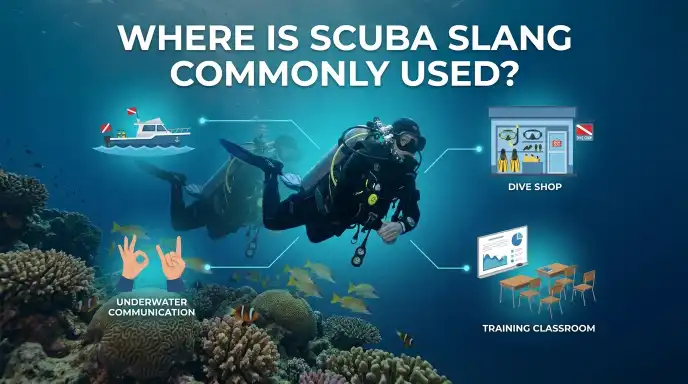
Scuba slang shows up most in these places:
- Dive logs and dive briefings
- Diving forums like Reddit’s diving communities
- Instagram captions on underwater photos
- Texting between dive buddies before or after a trip
- Diving certification courses, where instructors introduce the informal terms alongside technical ones
- YouTube dive vlogs and comment sections
It’s rarely used on platforms like Discord or TikTok unless the account is specifically focused on diving content, since the terms only make sense to people already familiar with the sport.
Real-Life Examples of Usage
Friendly Example
Text between dive buddies: “That reef dive was amazing, I saw a turtle right after our safety stop.”
Casual Example
Diving forum comment: “Did my first night dive last week, definitely wet a fin for the first time in months.”
Argumentative Example
Diving group chat disagreement: “You skipped the safety stop again? That’s exactly how people get bent.”
Gaming or Social Media Context
Instagram caption under an underwater photo: “Slight nitrogen narc at depth but the visibility made it worth it 🤿”
Origin and Background
Most scuba slang developed naturally within diving communities as a shorthand for real technical terms taught in certification courses. Words like “narced” come directly from “nitrogen narcosis,” a documented physical effect of breathing compressed air at depth. “The bends” refers to decompression sickness, a term that has been used informally among divers for decades.
The exact first use of most of these terms isn’t documented anywhere reliable, so it’s more accurate to say they emerged gradually across diving schools, dive boats, and communities rather than starting from one specific source.
Comparison With Similar Terms
| Slang Term | Technical Meaning | Tone |
| Narced | Nitrogen narcosis at depth | Neutral, sometimes joked about |
| The bends | Decompression sickness | Serious, safety-related |
| Buddy breathing | Sharing one air source in an emergency | Neutral, technical |
| Wet a fin | Going diving, especially after a break | Casual, friendly |
| Silt out | Kicking up sediment that blocks visibility | Neutral, sometimes teasing |
| Air hog | Someone who uses air faster than their buddy | Playful, mildly teasing |
When Should You Avoid Using Scuba Slang?
Avoid scuba slang in these situations:
- When writing official dive logs or incident reports, where precise technical terms are required
- When talking to someone unfamiliar with diving, since the slang won’t make sense without context
- When discussing a real medical emergency, where clear terms like “decompression sickness” matter more than casual shorthand
In everyday conversation with other divers, the slang is completely normal and expected.
Why Do People Use Scuba Slang?
Divers use this slang because it’s faster than repeating full technical terms every time, and it signals that the speaker is part of the diving community. It also makes conversations feel more natural after a dive, when people want to share an experience quickly rather than explain every detail formally.
Impact of Using Slang in Communication

Using scuba slang correctly can make communication with other divers smoother and more efficient. It also builds a sense of shared identity within the diving community. The main downside is that it can confuse or exclude people who aren’t familiar with diving, so it’s worth explaining terms when talking to beginners or non-divers.
Is Scuba Slang Safe for Social Media?
Yes, scuba slang is generally safe to use on social media. It doesn’t carry any offensive or sensitive meaning, and most people who see it either understand it from context or find it interesting as diving-related content.
The only thing to keep in mind is that non-divers might not follow the meaning right away, so adding a short explanation in the caption can help a wider audience understand your post.
Frequently Asked Questions
Q1. What does scuba slang mean?
Scuba slang refers to informal words and phrases divers use to describe diving experiences, gear, or conditions instead of formal technical terms.
Q2. What does SCUBA stand for?
SCUBA stands for Self-Contained Underwater Breathing Apparatus, describing the tank and regulator system divers use to breathe underwater.
Q3. Is scuba slang offensive?
No, scuba slang is neutral. It describes diving conditions or experiences rather than people, and it isn’t meant to insult anyone.
Q4. What does “narced” mean in scuba slang?
“Narced” is short for nitrogen narcosis, a temporary mental effect some divers experience at greater depths due to breathing compressed air.
Q5. Is scuba slang used outside of diving communities?
Rarely. Most scuba slang only makes sense to people familiar with diving, so it isn’t common on general social media platforms unless the content is diving-related.
Q6. Can I use scuba slang if I’m a beginner diver?
Yes, but it helps to learn the technical term behind each slang word first, especially for safety-related terms like “the bends,” so you fully understand what you’re saying.
Conclusion:
Scuba slang is simply the informal language divers use to talk about their experiences more naturally, built on real technical concepts taught in diving courses.
Terms like “narced,” “the bends,” and “buddy breathing” all have specific meanings behind them, and using them correctly shows a real understanding of diving, not just casual talk. Once you know the technical meaning behind each term, the slang becomes easy to use naturally in your own conversations.