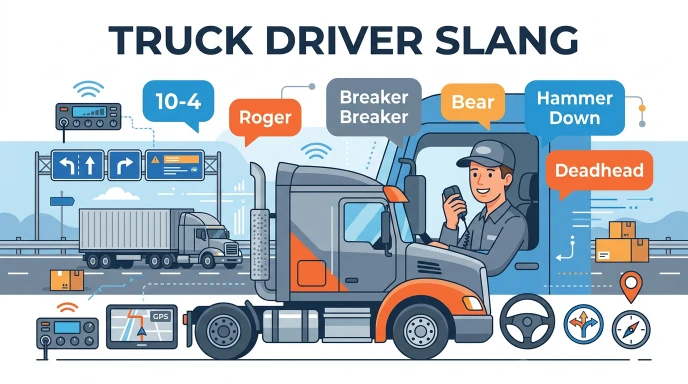
Truck driver slang refers to the special words, phrases, and radio expressions used by truck drivers to communicate quickly on the road. These terms help drivers talk about traffic, vehicles, weather, routes, and daily trucking life in a simple way.
People search for truck driver slang because they hear these phrases in movies, CB radio conversations, trucking videos, social media posts, or real life conversations with drivers. Some terms are old-school radio expressions, while others are still common among modern truckers.
In this guide, you will learn what truck driver slang means, where these expressions come from, how truckers use them, and which terms are safe to use outside the trucking community. You will also see realistic examples from driving, texting, online discussions, and workplace conversations.
Quick Answer: What Is Truck Driver Slang?
Truck driver slang is a collection of informal words and phrases used by truckers to describe roads, trucks, driving conditions, jobs, and experiences on the highway. Many terms come from CB radio communication and trucking culture.
Examples include:
- Bear = police officer or highway patrol
- Four-wheeler = regular passenger vehicle
- Smokey = police officer or highway patrol
- Hammer down = drive faster or increase speed
- Handle = a nickname used on a CB radio
Truck driver slang is mostly informal and is mainly used among drivers, trucking communities, and people familiar with the transportation industry.
What Does Truck Driver Slang Mean?
Truck driver slang means the informal language truck drivers use to make communication faster and easier. These expressions developed because drivers often needed quick ways to share information while traveling long distances.
Before smartphones and modern communication apps, many truckers used CB radios to communicate with other drivers. Short phrases helped them exchange important information without long conversations.
For example:
- Instead of saying, “There is a police officer ahead,” a driver might say, “There’s a bear ahead.”
- Instead of saying, “A normal car is blocking traffic,” a driver might say, “Watch out for four wheelers.”
Truck driver slang is not usually official trucking language. It is part of the culture and everyday communication style of many drivers.
Why Do Truck Drivers Use Slang?
Truck drivers use slang for several practical reasons:
1. Faster Communication
Driving requires attention. Short phrases allow drivers to share information quickly.
Example:
“Brake check ahead.”
This is faster than saying:
“There is sudden traffic slowing down in front of you, so prepare to stop.”
2. Building Community
Truckers often spend many hours alone on the road. Shared slang creates a feeling of connection among drivers.
Using familiar terms helps drivers recognize others who understand trucking life.
3. Radio Communication
CB radios played a major role in creating trucking slang. Drivers needed short, clear messages because radio conversations could be limited or crowded.
4. Describing Trucking Life
Some slang terms describe experiences unique to truck drivers, such as long routes, difficult weather, loading problems, and vehicle issues.
Common Truck Driver Slang Terms and Their Meanings
Below are some popular trucking expressions and what they mean.
| Truck Driver Slang | Meaning |
| Bear | Police officer or highway patrol |
| Smokey | Police officer, especially highway patrol |
| Four wheeler | Regular passenger vehicle |
| Hammer down | Increase speed or keep moving quickly |
| Breaker breaker | A phrase used to start a CB radio conversation |
| Handle | CB radio nickname |
| Big rig | Large commercial truck |
| Eighteen wheeler | Tractor trailer truck |
| Bobtail | Truck without a trailer attached |
| Deadhead | Driving without a loaded trailer |
| Road dog | A truck driver who spends a lot of time traveling |
| Alligator | Tire piece lying on the road |
| Yard goat | Vehicle used to move trailers around a yard |
Different Types of Truck Driver Slang
Truck driver slang is not just one group of words. Different expressions describe different parts of trucking life.
1. Road and Traffic Slang
These terms help drivers talk about highway conditions.
Bear
Meaning: A police officer or highway patrol officer.
Example:
“Watch your speed. There’s a bear near the next exit.”
The word is commonly associated with CB radio culture.
Four Wheeler
Meaning: A normal passenger vehicle, such as a car or SUV.
Truck drivers use this term because most trucks have many more wheels than regular vehicles.
Example:
“A four wheeler cut in front of me near the highway entrance.”
The term can sound slightly negative because some truckers use it when talking about unsafe driving by car drivers.
Alligator
Meaning: A piece of damaged tire lying on the road.
Example:
“Be careful around mile marker 50. There’s an alligator in the lane.”
This term comes from the way broken tire pieces can look like an animal lying on the road.
2. Truck and Vehicle Slang
Truck drivers also use special words to describe their vehicles.
Big Rig
Meaning: A large commercial truck, usually a tractor trailer.
Example:
“He has been driving a big rig for more than ten years.”
This term is widely understood outside the trucking industry too.
Eighteen Wheeler
Meaning: A large truck with many wheels, usually a tractor pulling a trailer.
Example:
“An eighteen wheeler delivered the supplies this morning.”
The term is common in everyday speech, even among people who are not truck drivers.
Bobtail
Meaning: A tractor truck driving without a trailer attached.
Example:
“The driver was bobtailing back to the company yard.”
This term is mainly used inside the trucking industry.
Deadhead
Meaning: Driving without cargo or without a loaded trailer.
Example:
“The driver had to deadhead 200 miles before picking up a new load.”
Deadhead does not mean the driver is inactive. It simply describes an empty trip.
More Popular Truck Driver Slang Terms
Truck driver slang covers many parts of the job, including communication, deliveries, weather, road conditions, and relationships between drivers. Some expressions are used daily, while others are older terms mostly connected to classic CB radio culture.
3. CB Radio Truck Driver Slang
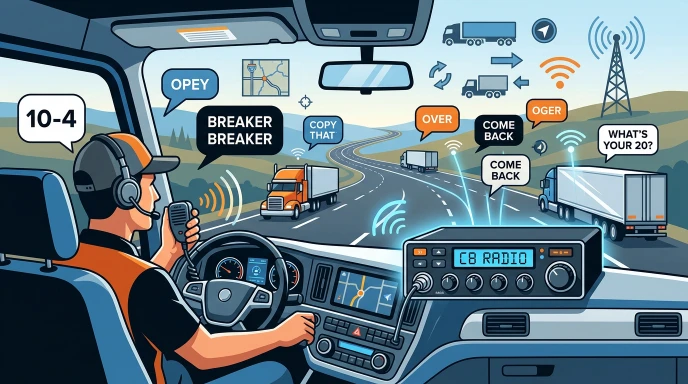
CB radio communication created many famous truck driver expressions. Although fewer drivers rely on CB radios today because of phones and apps, many of these phrases remain part of trucking culture.
Breaker Breaker
Meaning: A phrase used to start a conversation on a CB radio.
Example:
“Breaker breaker, anyone know how traffic looks ahead?”
Truckers traditionally used this phrase when they wanted to get another driver’s attention on the radio.
Today, it is often recognized from movies, television, and popular culture.
Handle
Meaning: A nickname or personal name used on a CB radio.
Example:
“My handle on the radio is Road Hawk.”
Before online usernames became common, CB handles were a way for drivers to identify themselves.
A handle was often based on a driver’s personality, truck, location, or experience.
Copy
Meaning: To hear or understand what someone said.
Example:
“Do you copy my message?”
This expression is also used in aviation, military, and emergency communication.
Come Back
Meaning: A request asking someone to repeat their message.
Example:
“Come back, I didn’t catch that.”
Drivers use this when radio signals are unclear or when there is too much background noise.
4. Driving and Movement Slang
Truck drivers use many phrases to describe speed, movement, and travel conditions.
Hammer Down
Meaning: To drive faster or maintain speed.
Example:
“The road is clear, so I’m going to hammer down for the next few miles.”
The phrase does not always mean speeding illegally. It usually means moving efficiently or keeping momentum.
Rolling
Meaning: Driving or continuing the trip.
Example:
“I’m rolling toward Dallas and should arrive tonight.”
This term is common in casual trucking conversations.
Wheels Turning
Meaning: The truck is moving and making progress.
Example:
“As long as the wheels are turning, I’m making money.”
This phrase reflects the trucking idea that movement equals productivity.
Shut Down
Meaning: Stop driving, usually to rest or park.
Example:
“I’m going to shut down at the next truck stop.”
Truck drivers often use this phrase when ending their driving shift.
5. Truck Stop and Work Related Slang
Truck stops are important places in trucking culture. Drivers use certain words to describe stops, schedules, and daily work situations.
Chicken Coop
Meaning: A slang term sometimes used for a weigh station.
Example:
“There’s a chicken coop ahead, make sure your paperwork is ready.”
A weigh station is where commercial vehicles may be inspected for safety, weight, and documentation.
This term is older and not used by every driver.
Scale House
Meaning: A location where trucks are weighed and checked.
Example:
“I need to stop at the scale house before delivery.”
Unlike some slang terms, this phrase is widely understood in the trucking industry.
Yard Goat
Meaning: A small truck used to move trailers around a warehouse or shipping yard.
Example:
“The yard goat moved the trailer to the loading area.”
This term is mainly used by workers in logistics and transportation.
Shipper
Meaning: A company or location sending goods.
Example:
“The shipper loaded the trailer this morning.”
Receiver
Meaning: The company or location receiving the shipment.
Example:
“The receiver closes at 5 PM, so I need to arrive early.”
6. Slang About Other Drivers
Truck drivers often have informal words for different types of drivers on the road.
Four Wheeler
Meaning: A person driving a normal car or small vehicle.
Example:
“A four wheeler was driving between the trucks in heavy traffic.”
This term can be neutral or slightly negative depending on the speaker’s tone.
Some truckers use it simply as a category. Others use it when complaining about unsafe behavior from car drivers.
Steering Wheel Holder
Meaning: A disrespectful term sometimes used by experienced truckers for drivers they believe lack skill.
Example:
“That guy is just a steering wheel holder, not a professional driver.”
This phrase is usually negative and can sound insulting.
It should be avoided in professional conversations.
Rookie
Meaning: A new or inexperienced driver.
Example:
“The rookie driver is still learning the routes.”
Unlike some slang terms, this can be neutral. It depends on the speaker’s attitude.
Is Truck Driver Slang Rude or Offensive?
Most truck driver slang is harmless and simply reflects trucking culture. Many terms are used for convenience, humor, or faster communication.
However, some expressions can sound disrespectful depending on the context.
| Term | Possible Tone |
| Big rig | Neutral |
| Road dog | Friendly |
| Four wheeler | Sometimes negative |
| Steering wheel holder | Insulting |
| Rookie | Neutral or slightly negative |
| Bear | Usually harmless |
The meaning often depends on who says it and why they use it.
For example:
A truck driver saying:
“Watch out for four wheelers.”
may simply mean:
“Be careful around passenger cars.”
But saying:
“Those four wheelers don’t know how to drive.”
shows frustration and a negative attitude.
Truck Driver Slang on Social Media
Modern trucking slang is not limited to CB radios. Many drivers now share trucking language through online communities.
Common places where truck driver slang appears include:
- TikTok trucking videos
- YouTube trucking channels
- Facebook trucking groups
- Reddit communities
- Instagram trucking pages
- Online driver forums
Drivers often use slang online to share:
- Road stories
- Truck maintenance experiences
- Delivery challenges
- Life on the highway
- Trucking humor
Truck Driver Slang on TikTok
On TikTok, trucking terms are often used in videos showing daily life behind the wheel.
Examples:
“Another day chasing miles.”
Meaning:
The driver is talking about completing routes and earning income based on driving distance.
“Living the road dog life.”
Meaning:
The person spends a lot of time traveling and working on the road.
Truck Driver Slang on Reddit
Reddit trucking communities often use more technical and industry-specific language.
Drivers may discuss:
- Loads
- Routes
- Equipment
- Companies
- Regulations
The tone is usually more practical than entertainment focused platforms.
Truck Driver Slang in Gaming and Online Communities
Some trucking simulation games, such as virtual trucking communities, also use real trucking expressions.
Players may use words like:
- Big rig
- Load
- Route
- Dispatch
- Convoy
These terms help create a realistic trucking experience.
Is Truck Driver Slang Appropriate at Work?
It depends on the workplace and the audience.
Safe Professional Terms
These are usually acceptable:
- Delivery
- Route
- Load
- Trailer
- Scale house
- Big rig
Informal Terms to Be Careful With
These may not fit professional communication:
- Bear
- Four-wheeler
- Steering wheel holder
- Chicken coop
A driver talking with another trucker may use them naturally, but they may sound unclear or unprofessional in a meeting, email, or conversation with customers.
Origin and History of Truck Driver Slang
Truck driver slang developed from the unique lifestyle of long distance driving. Truckers spend many hours on highways, often far away from home, so they created their own communication style to share information quickly and build connections with other drivers.
Many classic trucking expressions became popular during the rise of CB (citizens band) radio communication in the 1960s and 1970s. CB radios allowed drivers to communicate with each other while traveling, especially about traffic, police locations, weather, and road conditions.
During this period, phrases like “breaker breaker,” “bear,” and “smokey” became widely recognized in trucking communities.
However, not every truck driver slang term has a clearly documented origin. Some expressions developed naturally among drivers over many years. Others became popular through movies, television, and trucking culture.
It is also important to understand that trucking slang changes over time. Some older CB radio phrases are less common today, while newer expressions appear through online communities, trucking videos, and social media.
Classic Truck Driver Slang vs Modern Trucking Language
Truck driver slang has changed with technology. Older drivers may use traditional radio expressions, while younger drivers often combine trucking terms with modern internet language.
| Classic Trucking Slang | Modern Usage |
| Breaker breaker | Less common, mostly associated with CB radios |
| Smokey | Still understood among many drivers |
| Handle | Still used in some radio communities |
| Road dog | Still popular online |
| Running miles | Common in trucking discussions |
| Dispatch | Common in professional trucking conversations |
| Load | Common across all trucking platforms |
The trucking community now communicates through:
- Smartphones
- Messaging apps
- GPS systems
- Trucking forums
- Social media platforms
Because of this, some slang has moved from radio conversations into online spaces.
Similar Slang and Related Trucking Terms
Truck driver slang is connected to many other transportation and road-related expressions.
Road Warrior
Meaning: A person who spends a lot of time traveling for work.
Example:
“After twenty years of driving, he considers himself a road warrior.”
This term is not only used by truck drivers. It can describe salespeople, travelers, and other professionals who travel frequently.
Road Dog
Meaning: A truck driver who spends a large amount of time on the road.
Example:
“My father has been a road dog for most of his career.”
The phrase usually has a friendly or respectful tone.
Long Haul
Meaning: A truck route covering a long distance.
Example:
“She specializes in long haul trucking across several states.”
This is more of a trucking industry term than casual slang.
Local Driver
Meaning: A driver who usually works within a nearby area and returns home regularly.
Example:
“Local drivers usually have shorter routes.”
OTR
Meaning: “Over the Road.”
It describes drivers who travel long distances, often across multiple states.
Example:
“He works as an OTR driver and spends weeks traveling.”
Common Misunderstandings About Truck Driver Slang
Truck driver slang can confuse people because some words have different meanings outside trucking.
“Bear” Does Not Mean an Animal
A person unfamiliar with trucking may think a driver is talking about wildlife.
In trucking conversations:
“There is a bear ahead.”
usually means:
“There is a police officer or highway patrol nearby.”
The meaning depends completely on context.
“Deadhead” Does Not Mean Someone Died
Outside trucking, the word may have different meanings.
In trucking:
“I’m deadheading to the next pickup.”
means:
“I am driving without cargo.”
It describes an empty trip.
“Load” Can Have Different Meanings
In trucking:
“I picked up my load.”
means:
“I collected the shipment I need to deliver.”
The meaning is related to transportation, not everyday conversation.
When Should You Avoid Using Truck Driver Slang?
Truck driver slang is useful inside trucking communities, but it may not always fit every situation.
Avoid It in Formal Business Communication
When writing emails to customers, companies, or managers, clear professional language is usually better.
Instead of:
“I’m waiting on the receiver.”
You might write:
“I am waiting for the receiving location to accept the delivery.”
Avoid Using Terms You Do Not Fully Understand
Some trucking expressions have specific meanings. Using them incorrectly may confuse people.
For example:
Using “deadhead” incorrectly could create misunderstanding about a delivery route.
Be Careful With Negative Terms
Some slang words can sound disrespectful.
Examples:
- Steering wheel holder
- Four wheeler (when used negatively)
- Rookie (when used to criticize someone)
The same word can be friendly between drivers but rude in another situation.
Can Truck Drivers Use Slang With Customers?
Truck drivers can use some casual trucking language with customers, but they should consider the situation.
Usually Safe:
- Delivery
- Trailer
- Route
- Load
- Pickup
- Drop off
Better Avoided:
- Bear
- Smokey
- Four wheeler
- Chicken coop
A customer may not understand these terms.
Professional communication should always come first when dealing with:
- Shipping companies
- Customers
- Managers
- Dispatch teams
Why Do People Search for Truck Driver Slang?
People search for truck driver slang for many reasons.
1. Understanding Trucking Videos
Many viewers watch trucking content on:
- TikTok
- YouTube
They hear unfamiliar words and want to know what they mean.
2. Learning About Trucking Careers
New drivers often research trucking language before entering the industry.
Knowing common terms helps beginners communicate better with experienced drivers.
3. Understanding Movies and TV Shows
Truck driver slang appears in entertainment because trucking culture has a strong connection with highway stories and American road culture.
4. Improving Writing Accuracy
Writers, journalists, and content creators may research trucking expressions to create realistic characters and stories.
Using correct terms makes writing feel more authentic.
Truck Driver Slang by Situation
Different situations require different expressions.
| Situation | Common Terms |
| Police nearby | Bear, Smokey |
| Truck without trailer | Bobtail |
| Empty trip | Deadhead |
| Large truck | Big rig, eighteen wheeler |
| Radio communication | Breaker breaker, copy |
| Long distance driver | Road dog, OTR |
| Moving quickly | Hammer down |
Are Truck Driver Slang Terms Still Popular?
Some truck driver slang terms remain popular, while others are becoming less common.
Still Common:
- Big rig
- OTR
- Load
- Dispatch
- Deadhead
- Bobtail
More Old Fashioned:
- Breaker breaker
- Handle
- Smokey
Older expressions are still understood, but younger drivers may use them less often because communication has moved from CB radios to digital platforms.
Real Life Examples of Truck Driver Slang
Understanding slang becomes easier when you see how drivers use these expressions in real conversations. Truck driver slang is usually short, practical, and connected to everyday experiences on the road.
Example 1: Highway Conversation
Driver A:
“Watch your speed. There’s a bear near the bridge.”
Meaning:
The driver is warning another trucker that police or highway patrol may be nearby.
Example 2: Talking About a Long Trip
Driver A:
“I’m heading out on a long haul tomorrow.”
Meaning:
The driver is preparing for a long distance trucking route.
Example 3: Talking About an Empty Truck
Driver A:
“I finished my delivery and I’m deadheading to the next pickup.”
Meaning:
The driver is traveling without cargo.
Example 4: Talking About Traffic
Driver A:
“Too many four wheelers are slowing everything down.”
Meaning:
The driver is complaining about passenger vehicles affecting traffic.
Note: This phrase can sound negative depending on the speaker’s tone.
Truck Driver Slang Examples in Text Messages
Truck drivers also use informal language when texting or communicating through apps.
Example:
Text message:
“Loaded up. Rolling out in 10.”
Meaning:
The driver has collected the shipment and will leave soon.
Example:
“Bobtailing back to the yard.”
Meaning:
The driver is returning without a trailer attached.
Example:
“Shutting down for the night.”
Meaning:
The driver is stopping work and resting.
Truck Driver Slang Examples on Social Media
Truck drivers often share their experiences online using trucking expressions.
TikTok Example
A driver posts a video:
“Another day chasing miles.”
Meaning:
The driver is talking about completing routes and earning money based on driving work.
Instagram Example
A truck photo caption:
“Big rig life.”
Meaning:
The person is sharing their experience with large commercial trucks.
Reddit Example
A driver writes:
“Deadheading 300 miles before my next load.”
Meaning:
The driver must travel 300 miles without cargo before receiving another shipment.
Truck Driver Slang in Gaming Communities
Truck simulation games have introduced trucking language to people who are not professional drivers.
Games and online communities often use terms like:
- Convoy
- Route
- Load
- Delivery
- Dispatch
- Big rig
Example:
“Our convoy leaves at 8 PM.”
Meaning:
A group of virtual truck drivers will travel together.
In gaming communities, these words are usually harmless and focused on creating a realistic trucking experience.
Polite Alternatives to Truck Driver Slang
If you are speaking with customers, employers, or people outside the trucking industry, standard words may be clearer.
| Truck Driver Slang | More Professional Alternative |
| Bear | Police officer / highway patrol |
| Four-wheeler | Passenger vehicle |
| Deadhead | Empty miles / unloaded trip |
| Bobtail | Tractor without trailer |
| Hammer down | Increase speed / continue driving |
| Road dog | Experienced long distance driver |
Using professional alternatives helps avoid confusion.
Frequently Asked Questions About Truck Driver Slang
Q1:What is the most common truck driver slang?
Some of the most recognized truck driver slang terms include big rig, bear, smokey, four-wheeler, deadhead, bobtail, and hammer down. Usage depends on the driver, region, and generation.
Q2:What does “bear” mean in truck driver slang?
In truck driver slang, bear means a police officer or highway patrol officer. The term is especially connected with CB radio communication.
Example:
“There’s a bear watching traffic ahead.”
Q3:What does “four-wheeler” mean in trucking?
A four wheeler is a regular passenger vehicle such as a car or SUV.
Truck drivers often use this term because commercial trucks usually have many more wheels.
Q4:Is truck driver slang still used today?
Yes, many terms are still used today, especially inside trucking communities. However, some older CB radio phrases are less common because drivers now communicate through phones, apps, and digital systems.
Q5:Can non truck drivers use truck driver slang?
Yes, people can use these terms when they understand the meaning and context.
However, some expressions are better left inside trucking conversations because they may sound unclear or informal.
Q6:Is truck driver slang offensive?
Most truck driver slang is not offensive. It is simply informal language created by drivers.
However, some terms can sound negative depending on tone.
For example:
- Road dog : usually friendly
- Four wheeler : can be neutral or negative
- Steering wheel holder: usually insulting
Context matters.
Q7:What does “hammer down” mean in trucking?
Hammer down means to drive with speed or maintain strong forward movement.
It usually means continuing efficiently, not necessarily breaking speed laws.
Example:
“The weather is clear, so I can hammer down.”
Q8:What does OTR mean in trucking?
OTR means Over the Road.
It describes truck drivers who travel long distances, often across multiple states or regions.
Related Trucking Terms You Should Know
Besides slang, truck drivers use many industry terms.
| Term | Meaning |
| Dispatch | Person or system managing driver assignments |
| Load | Goods being transported |
| Trailer | The cargo container pulled by a truck |
| Route | Planned travel path |
| Pickup | Collecting cargo |
| Drop-off | Delivering cargo |
| Convoy | Group of vehicles traveling together |
These terms are common in both professional trucking and casual conversations.
Why Truck Driver Slang Matters
Truck driver slang is more than a collection of funny words. It represents a communication style built around a demanding job.
These expressions help drivers:
- Share information quickly
- Build relationships
- Describe road experiences
- Connect with other drivers
- Make communication easier
Understanding these terms also helps people better understand trucking videos, online discussions, movies, and conversations with professional drivers.
Conclusion:
Truck driver slang includes informal words and phrases used by truckers to describe vehicles, roads, jobs, and life on the highway. Many expressions came from CB radio culture, while others developed through modern trucking communities.
Terms like bear, big rig, deadhead, bobtail, road dog, and four wheeler are common examples, but their meaning depends on context and the people using them.
Most truck driver slang is harmless and practical. However, some phrases can sound rude if used in the wrong situation, especially with customers or people outside the trucking world.
The best way to understand truck driver slang is to learn the meaning, consider the context, and use professional language when clarity matters most.

I enjoy writing about English vocabulary and making difficult words easier to understand. I create simple guides on synonyms, word meanings, example sentences, quizzes, and everyday English to help students, ESL learners, and writers improve their vocabulary. Before publishing any article, I research trusted dictionaries and language resources to keep the information clear and accurate. My goal is to make learning English simple, practical, and enjoyable for everyone.