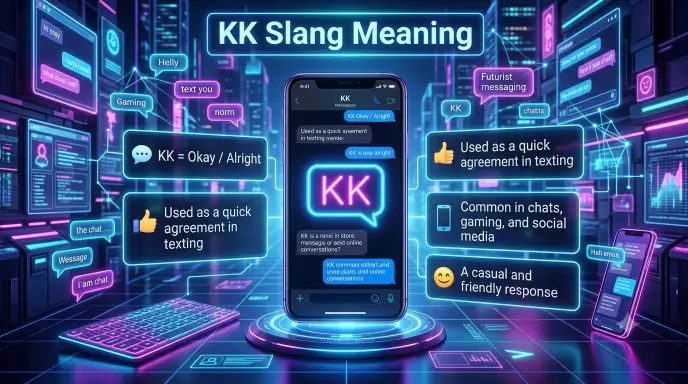
KK slang meaning in text is a short way to say “okay” or “okay, okay.” People use KK in messages, chats, and online conversations to show agreement, confirmation, or that they understand something. It is a casual texting expression that feels friendly and relaxed.
Many people search for kk slang meaning because they see it in conversations on messaging apps, social media, gaming chats, or online communities and want to know if it has a special meaning. While KK usually means “okay,” the feeling behind it can change depending on the conversation.
For example, a friend saying “KK, see you later” sounds normal and friendly. However, “KK.” with a full stop may sometimes feel shorter or less enthusiastic depending on the person and situation.
This guide explains what KK means, where it comes from, how people use it, if r it is rude, and when you should avoid using it.
Quick Answer:KK Slang
KK means “okay” or “okay, okay” in text messages and online chats. It is a casual way to show agreement, understanding, or acceptance.
What Does KK Mean in Text?
KK in text usually means “okay.” It is a simple response people use when they agree with something, understand information, or want to confirm a message.
Unlike a full sentence, KK is a quick reply that saves time. It is common in casual conversations where people do not need a long explanation.
Examples:
- “I’ll send you the file tonight.”
“KK, thanks!” - “Meet me outside at 7.”
“KK.”
In these examples, KK shows that the person received the message and understands what was said.
The meaning is similar to:
- Okay
- Got it
- Sure
- Alright
- Sounds good
However, the exact feeling depends on the context, punctuation, and relationship between the people talking.
A close friend may use KK warmly, while someone replying only “KK” during an argument may sound uninterested or annoyed.
KK Slang Full Form and Definition
The most common kk slang full form is:
KK = Okay, okay
It is an informal texting version of the word “okay.”
The repeated “K” creates a slightly different style from simply writing “K.”
Here is how these responses can feel different:
| Text | Possible Meaning | Tone |
| K | Okay | Very short, sometimes cold |
| KK | Okay, understood | Casual and friendly |
| Okay | Agreement | Neutral |
| Okkk | Okay with extra emotion | Playful or expressive |
| Sure | Agreement | Friendly or polite |
KK is not usually considered an abbreviation with a strict official expansion. Instead, it developed as a casual internet and texting habit.
What Does KK Stand For in Chat?
When people ask “what does KK stand for in chat?” they are usually asking if KK has a hidden meaning.
In most conversations, KK stands for a casual form of “okay.”
It does not usually represent another phrase. For example, it is not commonly used as an acronym for a longer sentence.
The meaning comes from the context:
- In texting: KK usually means agreement.
- In gaming chats: KK often means “got it.”
- In social media comments: KK can show quick approval.
- In group chats: KK can confirm plans.
Because online communication moves quickly, people often shorten common words. KK became popular because “okay” is one of the most frequently used responses in daily conversations.
Is KK Rude, Offensive, or Neutral?
KK is generally neutral and harmless. It is not a rude or offensive slang term.
However, like many short replies, the tone can depend on the situation.
A friendly conversation:
“Don’t forget to bring your charger.”
“KK, I got it.”
This sounds normal.
A serious conversation:
“I tried calling you three times.”
“KK.”
This may feel dismissive because the reply is very short.
The slang itself is not rude, but a very brief response can sometimes appear uninterested.
Factors that affect the tone include:
- The relationship between the people
- The topic of conversation
- Previous messages
- Use of punctuation
- Emojis or extra words
For example:
“KK 😊” feels warmer than:
“KK.”
Where Is KK Commonly Used?
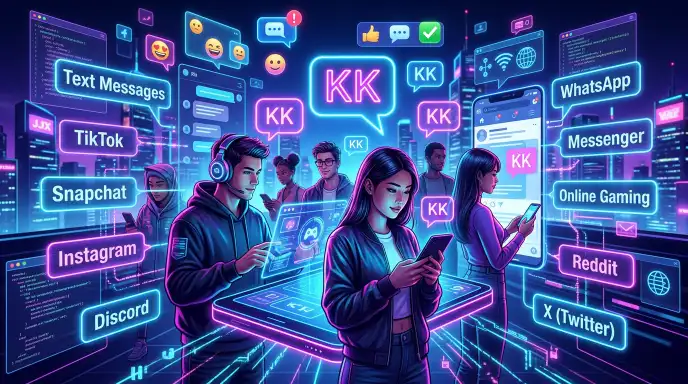
KK is mostly used in informal online communication. It appears in places where people send quick messages.
Common platforms include:
- Text messaging
- Instagram DMs
- Snapchat chats
- Discord conversations
- Gaming chats
- Online forums
- Group messaging apps
KK in Text Messages
In everyday texting, KK is often used between friends, classmates, and family members.
Example:
Person 1: “Can you pick me up after school?”
Person 2: “KK, I’ll be there.”
It works well when the conversation is casual.
KK on Social Media
On platforms like Instagram or Snapchat, users often prefer short replies because conversations move quickly.
Examples:
“Send me the picture when you get home.”
“KK”
The person is simply confirming they saw the message.
KK in Gaming Communities
Gamers often use quick messages because they need fast communication during gameplay.
Examples:
“Join my team next round.”
“KK”
In this situation, KK means the player understands the plan.
It is especially useful when players do not have time to type longer messages.
Origin and Background of KK Slang
The exact origin of KK as a texting expression is difficult to identify because people have used shortened forms of common words for many years. However, KK became widely recognized through online chats, instant messaging, gaming communities, and early internet communication.
The word “okay” has been shortened in many ways over time, including:
- K
- OK
- Okay
- Okey
- KK
KK likely became popular because repeating a letter can make a short reply feel softer than a single letter response. A single “K” may sometimes sound cold or annoyed, while “KK” often feels more friendly.
As online communication grew through platforms like chat rooms, gaming services, and social networks, users created faster ways to respond. KK became part of this culture of quick digital conversations.
It is important to understand that KK does not belong to one specific generation or community. Teenagers, young adults, gamers, and casual internet users may all use it. However, usage can vary by region, age group, and personal communication style.
Some people use KK regularly, while others prefer “okay,” “ok,” or “sure.”
Why Do People Use KK in Messages?
People use KK mainly because it is short, easy, and clear. Online conversations often happen quickly, so users prefer simple replies that communicate understanding without extra effort.
Common reasons people use KK include:
- Saving time while texting
- Confirming they received information
- Showing agreement
- Keeping conversations casual
- Avoiding long replies when they are unnecessary
For example:
Friend: “The movie starts at 8 PM.”
Reply:
“KK, see you there.”
The person does not need to explain more because the message already communicates agreement.
KK also helps conversations feel relaxed. In casual chats, writing a long sentence like “Okay, I understand what you mean” may feel unnecessary.
How KK Feels Compared to Other Replies
Although KK usually means okay, small differences in texting style can change the feeling of a message.
| Reply | Meaning | Possible Feeling |
| K | Okay | Very short, sometimes serious |
| KK | Okay, understood | Casual and friendly |
| OK | Agreement | Neutral |
| Okay | Clear confirmation | Normal or polite |
| Okkk | Okay | Playful or emotional |
| Got it | Understanding | More direct |
For example:
Message:
“Can you finish the homework before tomorrow?”
Different replies:
“K” May sound like the person does not care.
“KK” Sounds like they understand.
“Got it” Sounds more responsible.
The difference is not the meaning but the emotional tone.
KK Slang Meaning on Different Platforms
The meaning of KK stays mostly the same across platforms, but the way people use it can change.
KK on Snapchat
On Snapchat, users often send short replies because conversations are fast and casual.
Example:
“Send me the location.”
“KK”
This simply means the person will do it.
KK on Discord
Discord users, especially gaming communities, often use KK as a quick confirmation.
Example:
“Ready for the match?”
“KK”
The player is confirming they are ready.
KK on Instagram
On Instagram messages, KK can appear in casual conversations between friends.
Example:
“Your package arrived.”
“KK thanks!”
KK in Online Gaming
Gaming requires fast communication, so short expressions like KK are useful.
Players may use KK to mean:
- I understand
- I agree
- I will do that
- I received the message
Real Life Examples of KK Usage
Understanding examples makes it easier to recognize the tone behind KK.
Friendly Conversation
Friend 1:
“Want to grab coffee tomorrow?”
Friend 2:
“KK, what time?”
Here, KK sounds friendly and open.
Casual Texting
Person 1:
“I’ll email you the details later.”
Person 2:
“KK”
This means the person understands.
Family Conversation
Parent:
“Please call me when you arrive.”
Child:
“KK”
The reply confirms the message was received.
Gaming Context
Player 1:
“Follow me after we respawn.”
Player 2:
“KK”
The player confirms the plan.
Social Media Chat
Friend:
“I posted the photos.”
Reply:
“KK, I’ll check them.”
The meaning is simply acknowledgment.
Can KK Have a Different Meaning?
In most texting situations, KK means “okay.” However, some abbreviations can have different meanings in other areas.
For example, “KK” may represent different terms in specialized fields, organizations, names, or technical contexts. The meaning depends on where you see it.
In normal conversations, chats, and social media messages, KK almost always means “okay.”
When interpreting slang, context matters more than the letters themselves.
Common Misunderstandings About KK
Many people misunderstand KK because short messages can feel unclear.
Misunderstanding 1: KK Means Someone Is Angry
Some people think KK sounds annoyed. Usually, it does not.
However, a person’s tone can change based on the situation.
Example:
“KK.”
After a friendly message:
Normal confirmation.
“KK.”
During an argument:
May feel dismissive.
The surrounding conversation creates the emotion.
Misunderstanding 2: KK Is a Secret Code
KK is not usually a hidden internet code. It is simply a casual way to say okay.
Misunderstanding 3: KK Is Only Used by Teenagers
Although younger internet users often use short slang, KK is not limited to teenagers. Many adults also use it in casual conversations.
Is KK Appropriate for School or Work?
KK is acceptable in casual conversations, but it is usually not the best choice for formal communication.
In professional settings, clearer replies are better.
Instead of:
“KK”
Use:
- “Okay, thank you.”
- “Understood.”
- “Sounds good.”
- “I’ll take care of it.”
Examples:
Work chat:
Manager:
“Please send the report before Friday.”
Less professional:
“KK”
Better:
“Understood, I’ll send it before Friday.”
For friends and informal chats, KK is completely normal. For teachers, employers, or official messages, a more complete response is safer.
When Should You Avoid Using KK?
KK is a harmless slang term, but there are situations where it may not be the best choice. The main issue is not the meaning of KK but the possibility that the short reply may sound too casual.
You should avoid using KK in situations where you need to show respect, seriousness, or professionalism.
Examples of situations where KK may not fit:
- Job applications
- Professional emails
- Messages to teachers or managers
- Formal customer conversations
- Serious personal discussions
For example:
Teacher:
“Please submit your assignment by Monday.”
Reply:
“KK”
This may sound too informal.
A better response would be:
“Okay, I understand. I’ll submit it by Monday.”
The meaning is the same, but the tone is more respectful.
Polite Alternatives to KK
If you want to sound clearer or more professional, you can replace KK with other expressions.
Here are some alternatives:
| Casual Reply | More Polite Alternative |
| KK | Okay, I understand |
| KK | Got it |
| KK | Sounds good |
| KK | Sure, no problem |
| KK | I’ll do that |
| KK | Thanks for letting me know |
The best choice depends on the situation.
For friends:
“KK, see you later.”
For work:
“Got it, I’ll handle that.”
For teachers:
“Understood, thank you.”
Using the right tone helps avoid misunderstandings.
Why Do People Prefer KK Over Okay?
Many people choose KK because digital communication rewards speed and simplicity.
Typing “okay” takes only a little longer, but online conversations often encourage quick responses.
Reasons people choose KK include:
1. It Feels More Casual
KK sounds relaxed and friendly among people who know each other.
Example:
Friend:
“Movie night tomorrow?”
Reply:
“KK!”
This feels natural between friends.
2. It Matches Online Communication Style
Internet conversations often use shortened words, emojis, and abbreviations.
Examples include:
- LOL
- BRB
- BTW
- IDK
- OMG
KK fits into this style because it is short and easy to understand.
3. It Shows Quick Confirmation
Sometimes people do not need to add more information.
Example:
“Dinner at 7?”
“KK”
The reply confirms the plan without making the conversation longer.
Impact of KK on Digital Communication
Short slang terms like KK have changed the way people communicate online. They allow users to respond quickly and keep conversations moving.
Benefits of using KK:
- Faster communication
- Easy understanding
- Friendly casual tone
- Less typing effort
However, short replies can sometimes create confusion because they do not show much emotion.
For example:
Person 1:
“I worked really hard on this project.”
Person 2:
“KK”
The reply may feel disconnected because the person might expect encouragement instead of simple acknowledgment.
Digital communication lacks body language and voice tone, so short messages can sometimes be interpreted differently than intended.
KK vs Similar Texting Slang
KK is similar to several other short responses, but each one has a slightly different feeling.
| Slang | Meaning | Tone |
| KK | Okay, understood | Casual |
| K | Okay | Very short |
| OK | Agreement | Neutral |
| TY | Thank you | Appreciative |
| Sure | Agreement | Friendly |
| Bet | Agreement or confidence | Modern casual slang |
| Gotcha | I understand | Relaxed |
Understanding these differences helps you choose the right expression for each conversation.
KK Slang Meaning in Social Media Culture
KK fits into the larger trend of short online expressions. Social media users often prefer quick messages because conversations happen faster than traditional communication.
On platforms like:
- Snapchat
- Discord
- Gaming chats
people often use short replies to keep conversations active.
For example:
Friend:
“I uploaded the new pictures.”
Reply:
“KK, checking now.”
Here, KK works as a quick acknowledgment.
However, slang trends change over time. Some expressions become very popular, while others slowly become less common. KK remains understandable because it comes from one of the most common words in everyday communication: “okay.”
Is KK Safe to Use on Social Media?
Yes, KK is generally safe to use on social media. It does not contain offensive language, harmful meaning, or inappropriate content.
It is commonly used in:
- Friendly conversations
- Group chats
- Gaming communities
- Casual online discussions
The main thing to remember is context.
Safe examples:
“Can you join the call later?”
“KK”
“Send me the link.”
“KK, thanks.”
Less suitable examples:
“KK” as a response to someone sharing serious news.
In emotional situations, a longer reply usually shows more care.
Does KK Sound Different With Punctuation?
Yes. Punctuation can affect how people interpret KK.
Compare these:
“KK”
Usually feels normal and casual.
“KK!”
Feels more energetic or friendly.
“KK 😊”
Feels warm and positive.
“KK.”
Can sometimes feel short or serious.
This does not mean punctuation always changes the meaning. It only affects the emotional tone people may feel when reading the message.
Examples of KK in Different Situations
Friendly Example
Person 1:
“Let’s meet after class.”
Person 2:
“KK, see you then!”
Meaning:
The person agrees happily.
Casual Example
Person 1:
“I’ll text you later.”
Person 2:
“KK”
Meaning:
The person understands.
Argument Example
Person 1:
“You never listen to what I say.”
Person 2:
“KK.”
Meaning:
The reply may sound dismissive because the situation is serious.
Gaming Example
Player 1:
“Wait here while I get supplies.”
Player 2:
“KK”
Meaning:
The player understands the plan.
Social Media Example
Friend:
“I tagged you in my post.”
Reply:
“KK, I’ll look.”
Meaning:
The person acknowledges the message.
Frequently Asked Questions About KK Slang Meaning
Q1: What does KK mean in texting?
KK means “okay” or “okay, okay” in texting. People use it as a quick way to show agreement, understanding, or confirmation during casual conversations.
Example:
“Can you call me later?”
“KK”
The person is simply saying they understand.
Q2: Is KK rude in a text message?
No, KK is not naturally rude. It is a neutral and casual slang expression. However, the tone can depend on the situation.
A friendly conversation:
“KK, see you tomorrow!”
sounds normal.
A serious conversation:
“KK.”
may feel cold because the reply is very short.
The context matters more than the word itself.
Q3: What does KK stand for in chat?
KK usually stands for “okay, okay.” It is a casual internet and texting expression used to confirm that someone has received or understood a message.
It is not usually an acronym with a longer hidden phrase.
Q4: Is KK still used on social media?
Yes, KK is still understood and used in many online conversations. People may use it in texting, gaming chats, Discord, Snapchat, and other casual platforms.
However, slang popularity changes over time, and some users may prefer newer expressions like “got it,” “bet,” or “sure.”
Q5: Can I use KK at work?
It depends on the workplace and the person you are talking to. KK may be acceptable in relaxed team chats, but it is usually better to use clearer replies in formal communication.
Professional alternatives include:
- “Understood.”
- “Sounds good.”
- “I’ll take care of it.”
- “Thanks, I’ll do that.”
Q6: Is KK different from K?
Yes, many people feel there is a small difference between KK and K.
“K” is shorter and may sometimes appear cold or annoyed.
“KK” usually feels softer and more friendly because it looks like a more complete response.
Example:
Friend:
“Don’t forget your keys.”
“K” Could feel very brief.
“KK” Feels more like “okay, got it.”
Q7. What does KK mean in texting?
In texting, “KK” means “okay” or “got it.” It is a casual way to show agreement, confirmation, or that you understand a message.
Q8. What does KK mean for a girl?
When a girl uses “KK” in a chat, it usually means “okay” or “sure.” The meaning depends on the conversation tone and relationship.
Q9. What does KK short for?
“KK” is short for “okay” or “OK, cool.” It is a common texting abbreviation used in casual online conversations.
Q10. Does KK mean OK Cool?
Yes, “KK” can mean “OK cool” in texting. It shows that someone agrees, accepts something, or is fine with a plan.
Conclusion:
KK slang meaning in text is simple: it usually means “okay” or “okay, okay.” People use it as a quick, casual response to show agreement, understanding, or confirmation.
The expression is common in texting, social media chats, gaming conversations, and online communities because it is fast and easy to type. It does not have a negative meaning by itself, and most people understand it as a friendly acknowledgment.
However, like many short texting expressions, the feeling behind KK depends on context. A message between friends may sound relaxed, while the same reply during a serious conversation may seem uninterested.
For casual chats, KK is perfectly normal. For school, work, or formal communication, a clearer response like “understood” or “sounds good” is often a better choice.
The main lesson is that slang is not only about the words themselves. Tone, relationship, and situation all affect how a message is received. Understanding these details helps you communicate more clearly online.