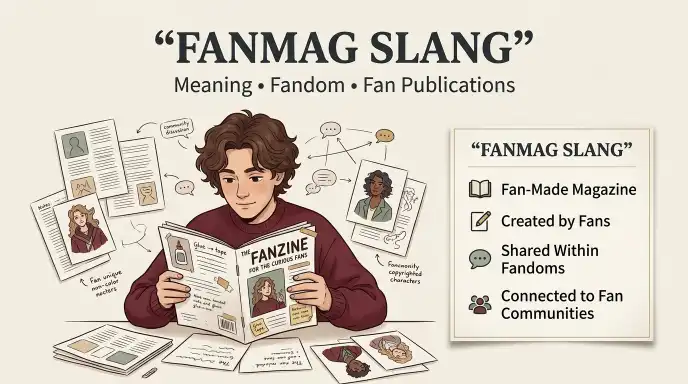
Fanmag slang is an older fandom term that means fan magazine, a publication created for or by fans around a shared interest. It is especially connected with science fiction fandom and other fan communities where people share writing, artwork, news, reviews, and opinions.
The word fanmag is a shortened form of “fan magazine” and is closely related to fanzine, although the terms can have slightly different uses. If you have seen fanmag in an old fandom discussion, understanding its context makes the meaning much easier to understand.
Quick Answer: What Does Fanmag Mean?
Fanmag means fan magazine. It describes a publication made for fans or created by fans around a shared fandom, interest, or community.
A fanmag can contain fan writing, artwork, reviews, stories, interviews, fandom news, and reader contributions. The term is especially associated with older fandom vocabulary and science fiction fandom.
Fanmag is closely related to fanzine, but the words are not always used in exactly the same way.
What Does Fanmag Mean?
The word fanmag is a shortened form of fan magazine. It refers to a publication that focuses on fans, fandom, or a subject with a dedicated fan community.
A fanmag can be created by fans for other fans. Its content may include articles, reviews, artwork, stories, interviews, letters, and community updates.
The term is most useful when discussing fan culture and fan publications. It may appear in older fandom writing, especially material connected with science fiction communities.
Because fanmag is a specialized term, its exact meaning can depend on the surrounding context. In most cases, however, it points to a fan-focused magazine or publication.
Is Fanmag a Slang Word?
Fanmag can be described as specialized fandom slang or informal fandom vocabulary. It is not the type of slang people normally use in everyday texting.
The word is mainly useful within discussions about fandom, fan publications, and fan culture. It is also a shortened form of “fan magazine,” which gives it a shorthand quality.
Depending on the source, fanmag may be described as a fandom term, informal expression, shorthand, or slang term. These descriptions overlap because fandom communities often develop their own vocabulary.
What Does Fanmag Stand For?
Fanmag stands for “fan magazine.” The word combines “fan” with a shortened form of “magazine.”
A fanmag can focus on many different interests, including:
- Science fiction
- Fantasy
- Books
- Movies
- Television
- Comics
- Anime
- Music
- Gaming
The term is especially useful when talking about older fan communities and their publications.
Fanmag as a Fandom Term
Fanmag is closely connected with fandom culture because fan magazines give communities a way to share ideas and creative work.
A fanmag may include articles, reviews, artwork, interviews, stories, and community news. Different publications can have very different styles depending on their creators and readers.
The term is particularly useful when discussing historical fan communities. Older fandom discussions may use fanmag alongside terms such as fanzine and fan publication.
A fanmag can also represent a sense of community. Fans are not simply reading about a subject; they may also contribute their own writing, artwork, opinions, or other material.
What Is a Fan Magazine?
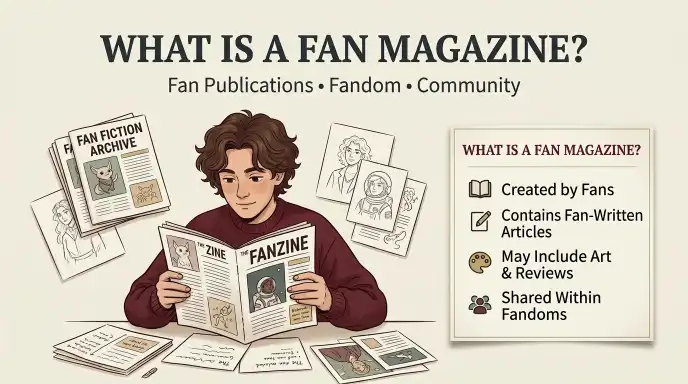
A fan magazine is a publication created for people who have a strong interest in a particular subject, fandom, person, or entertainment community.
Unlike a general magazine, a fan magazine usually has a more focused audience.
Content in a fan magazine may include:
- Fan-written articles
- Reviews and commentary
- Fan art
- Stories
- Interviews
- Fandom news
- Announcements
- Letters and reader contributions
The people producing the publication may also be fans themselves. This gives fan magazines an important connection to fan-created media and community publishing.
Fanmag in Fandom
Fanmag has a strong connection with organized fandom and fan communities. These publications gave fans a way to share ideas, creative work, news, and opinions about subjects they enjoyed.
Fanmag in Science Fiction Fandom
Science fiction fandom is an important setting for older fan-publication terminology. Fans created publications where they could exchange articles, stories, reviews, artwork, letters, and opinions.
These publications helped connect fans who shared similar interests. They also became an important part of early fan culture and amateur publishing.
Fanmag and Other Fandoms
Although fanmag has strong historical connections with science fiction fandom, the idea can apply to many other fan communities. Publications may focus on books, television, movies, comics, anime, music, or gaming.
The main idea remains the same: fans create or read a publication centered on a shared interest.
Fanmag and Fan Communities
A fanmag can give community members a place to exchange information and express creativity. Readers may also contribute writing, artwork, reviews, letters, or personal opinions.
As a result, these publications can become part of the communication and creative culture within a fandom.
Fanmag vs. Fanzine
Fanmag and fanzine can describe similar fan publications, which is why the terms are sometimes confused. Both are connected with fan communities, but each word places emphasis on a slightly different idea.
A fanmag is short for fan magazine and highlights the magazine or publication format. A fanzine is a fan-created publication and emphasizes its independent, often small-scale nature.
For example:
“The fanmag featured interviews, reviews, and fandom news.”
This focuses on the publication as a fan magazine.
Another example is:
“She created a fanzine for fans of the series.”
This emphasizes an independently created fan publication.
The terms can overlap, so a particular publication might reasonably be described using both words. However, they should not automatically be treated as perfect synonyms in every context.
For beginners, the easiest distinction is:
Fanmag = fan magazine
Fanzine = fan-created or independent fan publication
Context remains important, especially when reading older fandom material.
Fanmag vs. Magazine
A magazine is a broad term for a periodical publication. It can cover news, entertainment, business, science, hobbies, lifestyle, or many other subjects.
A fanmag, on the other hand, is specifically connected with fans or a fan community.
| Term | Basic meaning |
| Magazine | General publication covering one or more subjects |
| Fanmag | Fan-focused magazine or publication |
| Fanzine | Independent publication created by or for fans |
The main difference is the audience and purpose. A regular magazine may target a large general audience, while a fanmag focuses more closely on a particular fan community or interest.
Fanmag vs. Zine
A zine is an independently produced publication that can cover almost any subject. Zines may focus on music, art, politics, hobbies, personal writing, fandom, or other interests.
A fanmag is more specific because it refers to a publication connected with fans or fandom.
The two can overlap. For example, a fan-created publication about a television series could be both a fanmag and a zine.
However, not every zine is a fanmag. A zine about personal art or poetry, for example, may have no connection to fandom.
What Does Fanmag Mean Online?
Online, fanmag can still refer to a fan magazine or fan-focused publication.
Modern fandom communities have many digital ways to share content, including websites, forums, social media, blogs, and group chats.
A person might use the word fanmag while discussing an older publication or a digital project designed like a fan magazine.
For example:
“I found an old fanmag about the series.”
The meaning here is still fan magazine.
Because modern users have many newer terms for online fan content, fanmag may sound less familiar than words such as fanfic, fanart, fan blog, or fansite.
How Is Fanmag Used?
Fanmag is normally used as a noun.
Someone might use it when talking about a particular fan publication:
“I bought an old fanmag at the convention.”
It can also appear in discussions about fandom history:
“The collection contains several early fanmags.”
The word may also be used to describe a project:
“They are working on a new fanmag for the community.”
In each example, the context shows that fanmag refers to a fan-focused publication.
Fanmag Examples
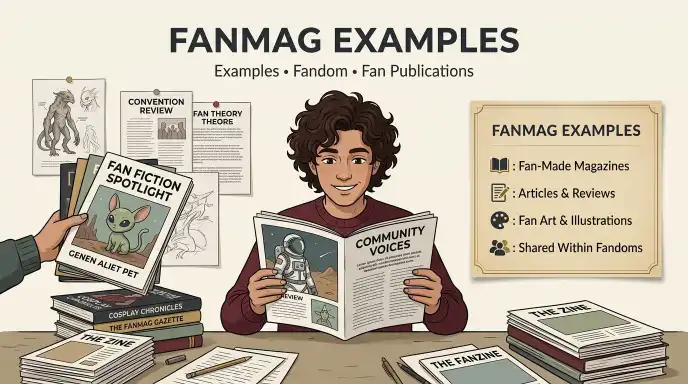
Here are some simple examples showing how fanmag can be used in different fandom settings.
Science Fiction Example
“The science fiction fanmag included stories and reviews from community members.”
Book Fandom Example
“She contributed an article to a fanmag about her favorite book series.”
Television Fandom Example
“The fanmag discussed the latest episodes and included fan artwork.”
Gaming Example
“The gaming community created a fanmag with reviews and player interviews.”
Fan Community Example
“Our fanmag gives community members a place to share their work.”
Online Discussion Example
“Someone posted a scan of an old fanmag in the fandom group.”
Casual Conversation Example
“Have you ever read a fanmag from that fandom?”
These examples show that fanmag normally describes the publication itself rather than a single article, post, or fan creation.
What Does Fanmag Mean in a Sentence?
Here are several natural examples of fanmag in a sentence:
- “The old fanmag contained several fan-written stories.”
- “She found a science fiction fanmag from an earlier fandom community.”
- “The group published a monthly fanmag.”
- “I read an interesting interview in a fanmag.”
- “The fanmag included artwork from community members.”
- “They discussed the history of the fandom through old fanmags.”
- “A new fanmag was created for fans of the series.”
- “The library had a collection of historical fanmags.”
These sentences show how the term works naturally as a noun.
What Kind of Content Appears in a Fanmag?
The content of a fanmag depends on its fandom and its creators. There is no single required format.
Fan Writing
Fan-written articles, stories, essays, and commentary can appear in fan publications.
Fan Art
Some fanmags include fan art created by members of the community.
Fandom News and Updates
A fanmag may share announcements, community news, upcoming events, or information about the subject being discussed.
Interviews and Discussions
Interviews with fans, creators, writers, or other community members may also appear.
Reviews and Commentary
Readers may contribute reviews of books, shows, movies, games, or other works connected with the fandom.
Reader Contributions
Letters, opinions, questions, and other contributions can help make a fanmag a community-focused publication.
Fanmag and Fan Culture
Fanmag is closely connected with fan culture because it represents a way for fans to create and share their own material.
Fan culture is not limited to consuming official media. Fans may also write stories, create artwork, discuss characters, review releases, and communicate with other members of their communities.
Fan publications provide another way to support this creative activity.
A fanmag can therefore be viewed as a form of community communication and fan expression.
Fanmag and Fanzine Culture
The history of fanmag is closely related to the broader tradition of fanzines and amateur fan publishing.
Before social media and online communities became common, fans used printed publications to communicate with people who shared their interests.
These publications could include creative work, reviews, letters, artwork, and fandom discussions.
Over time, fan communities gained digital tools that made publishing and sharing much easier. Websites, blogs, forums, and social media now allow fans to publish material quickly.
Even with these changes, older terms such as fanmag and fanzine can still appear when people discuss the history of fandom.
Is Fanmag Still Used Today?
Fanmag is still understandable today, but it is not one of the most common everyday internet terms.
Modern fans have many ways to publish and share content, including websites, social media accounts, blogs, forums, newsletters, and digital magazines.
Because of this, someone who is familiar only with modern internet vocabulary may not recognize fanmag immediately.
The term remains useful when discussing older fandom publications, fan culture, and fan-created magazines. It can also describe a modern project that follows the idea of a fan magazine.
Not every modern piece of fan content should be called a fanmag. A single social media post, fanfiction story, or artwork is not automatically a fanmag.
How to Understand Fanmag From Context
If you see fanmag and are unsure what it means, look at the surrounding words.
First, check if the conversation is about fandom or fan communities. If it is, fanmag probably refers to a fan magazine.
Next, look for words such as publication, magazine, issue, article, pages, readers, writers, or zine. These words can help confirm the meaning.
The time period can also matter. If the discussion involves older fandom history, fanmag is more likely to refer to a historical fan publication.
For example:
“The archive contains several fanmags from the early fandom.”
The words “archive” and “early fandom” strongly suggest that fanmag means fan magazine.
Common Misunderstandings About Fanmag
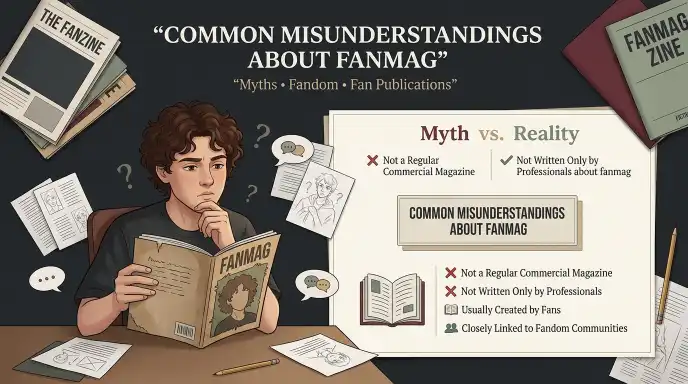
There are several easy mistakes people can make when first seeing the word fanmag.
Fanmag Does Not Mean Every Fan Post
A social media post made by a fan is not automatically a fanmag. The term normally refers to a publication or magazine-style project.
Fanmag Is Not Always a Commercial Magazine
A fanmag can be created by fans and distributed within a community. It does not have to be a professionally produced commercial publication.
Fanmag and Fanzine Are Not Always Identical
The terms can overlap, but fanmag emphasizes a fan magazine, while fanzine often emphasizes an independent fan-created publication.
Fanmag Is Not Limited to One Fandom
The concept can apply to many fandoms, including science fiction, books, television, movies, comics, anime, music, and gaming.
Fanmag Is Not Automatically Printed
A fanmag can refer to a digital publication as well, depending on how the term is being used.
Fanmag Does Not Mean Fanfiction
Fanfiction is fictional writing created by fans. A fanmag is a publication that may contain fanfiction but can also include many other types of content.
Is Fanmag Positive, Negative, or Neutral?
Fanmag is generally a neutral descriptive term.
The word itself does not mean that a publication is good, bad, popular, professional, or poor quality.
A particular fanmag may receive positive or negative opinions from readers, but those opinions come from the publication itself rather than from the meaning of the word.
So, when you see fanmag, it is best to understand it first as a neutral description of a fan magazine or fan-focused publication.
Is Fanmag Appropriate in Formal Writing?
The word fanmag is most natural in casual, fandom, or specialized writing.
For formal writing, fan magazine or fan publication may be clearer, especially for readers who are unfamiliar with fandom terminology.
In academic or historical writing, fanmag can still be appropriate when it is the term used by the source or community being discussed.
For professional communication, consider the audience. If readers may not know the term, writing a fan magazine (fanmag) for the first time can make the meaning clear.
Fanmag in Texting and Chat
Fanmag is not a common everyday texting abbreviation like “LOL,” “BRB,” or “IDK.”
However, it can appear in chats where people are discussing fandoms, fan publications, or fandom history.
For example:
“Did you see that old fanmag?”
Or:
“Someone shared a scan of the fanmag in the group.”
In these examples, the surrounding fandom context makes the meaning clear.
There is no widely established everyday texting meaning that replaces the basic fan magazine meaning.
Fanmag Synonyms and Related Terms
If you are looking for another way to describe a fanmag, several terms may fit depending on context. Some are close synonyms, while others are related types of publications.
| Term | Meaning |
| Fan magazine | Magazine created for or focused on fans |
| Fan publication | Broad term for a publication connected with a fan community |
| Fanzine | Independently produced publication created by or for fans |
| Fandom publication | Publication centered on a particular fandom |
| Fan-created magazine | Magazine produced by fans |
| Fan newsletter | Fan publication often focused on news or community updates |
| Zine | Independent publication that can cover many subjects, including fandom |
The closest direct equivalent to fanmag is fan magazine. Fanzine is closely related, but the exact meaning can depend on the context.
Fanmag vs. Other Fandom Terms
Fanmag is one of many terms used to describe fan-created content. Understanding the differences can prevent confusion.
| Term | Meaning |
| Fanmag | Fan magazine or fan-focused publication |
| Fanfic | Fiction written by fans |
| Fanart | Artwork created by fans |
| Fansite | Website dedicated to a fandom or subject |
| Fan blog | Blog focused on fan opinions, news, or commentary |
| Fan newsletter | Publication that often shares community news and updates |
For example, a fanfiction story is a piece of creative writing, while a fanmag can contain many types of material, including fanfiction.
Similarly, a fansite is mainly a website, while a fanmag refers to the publication itself.
Fanmag: Simple Meaning for Beginners
For beginners, fanmag simply means fan magazine. It is a publication made for fans or created by fans who share an interest in a particular subject, fandom, or community.
A fanmag may contain fan writing, artwork, reviews, interviews, stories, news, or community updates. The exact content depends on the people creating it and the fandom it covers.
The word fanmag is a shortened form of “fan magazine.” It is more common in older or specialized fandom discussions than in everyday texting.
If you see fanmag in a fandom conversation, think of it as a fan-focused publication. It can be closely related to a fanzine, although the two terms can have slightly different meanings depending on context.
In simple words:
Fanmag = a magazine or publication made for or by fans.
FAQs About Fanmag Slang
Q1. What does fanmag slang mean?
Fanmag slang means fan magazine, a publication created for or by fans around a shared fandom or interest.
Q2. What does fanmag stand for?
Fanmag stands for fan magazine. It is a shortened form of the phrase.
Q3. Is fanmag a slang word?
Yes, fanmag can be described as specialized fandom slang or informal fandom vocabulary. It is not common everyday texting slang.
Q4. Is fanmag the same as fanzine?
They can overlap, but they are not always identical. Fanmag emphasizes a fan magazine, while fanzine usually emphasizes an independent fan-created publication.
Q5. What is a fan magazine?
A fan magazine is a publication focused on a particular fandom, interest, celebrity, entertainment subject, or fan community.
Q6. Where is fanmag commonly used?
Fanmag is mainly found in fandom discussions, fan-publication history, and communities connected with subjects such as science fiction, books, television, comics, and gaming.
Q7. Is fanmag still used today?
Yes, but fanmag is less common than many modern fandom terms. You are more likely to encounter it in older fandom material or specialized discussions.
Q8. Can a fanmag be online?
Yes. A fanmag can refer to a digital fan publication, although the term has strong connections with older print-based fandom culture.
Q9. What content can a fanmag contain?
A fanmag may include fan writing, artwork, reviews, interviews, stories, fandom news, commentary, and reader contributions.
Conclusion:
Fanmag slang means fan magazine, a publication created for or by fans around a shared interest. The term is closely connected with fandom culture, fan publications, and older fan communities.
A fanmag may include fan writing, artwork, reviews, interviews, stories, news, and community contributions. It can overlap with a fanzine, although the two terms can carry different emphasis.
Today, fanmag is more likely to appear in specialized or historical fandom discussions than in everyday texting. Understanding the surrounding context can help you recognize what the term means when you encounter it online or in older fandom material.