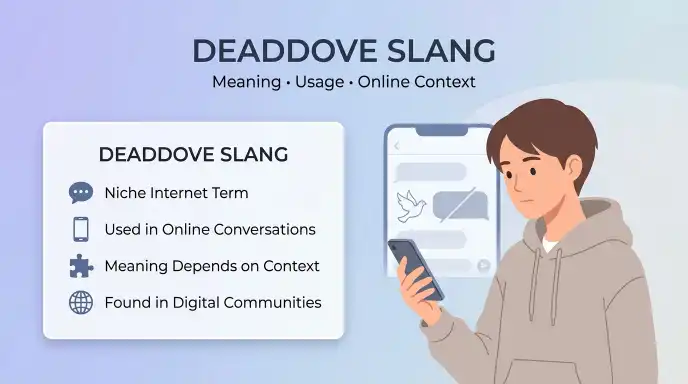
If you have seen deaddove slang in fanfiction, fandom discussions, or online communities, you may wonder what it means. Deaddove slang comes from “Dead Dove: Do Not Eat,” a fandom warning that tells readers to take the listed content tags seriously.
It is mainly connected with fanfiction, fandom terminology, and stories that contain dark, disturbing, or sensitive themes. Understanding deaddove meaning can help readers understand what a warning means before they start reading.
The term is common in fanfiction and online fandom communities. In simple terms, deaddove means to take the content warnings seriously and check the tags before reading.
Quick Answer: What Does Deaddove Slang Mean?
Deaddove slang means “Dead Dove: Do Not Eat,” a fandom warning that tells readers the difficult, disturbing, or sensitive content mentioned in a story’s tags is actually present. It is especially associated with fanfiction and online fandom communities.
In simple terms, deaddove means “take the warnings seriously.” The phrase does not identify one specific type of content. Instead, it tells readers to check the other tags and warnings before reading.
What Does Deaddove Mean?
Deaddove is a shortened form of “Dead Dove: Do Not Eat.” In fandom spaces, the expression is used to emphasize that the content listed in a work’s tags should not be ignored.
For example, a fanfiction may contain tags related to violence, abuse, death, or other difficult themes. If the work also uses a Dead Dove: Do Not Eat tag, readers should understand that those themes are genuinely part of the story.
The term does not necessarily mean that every scene is extremely graphic. It also does not mean that the story is bad. Instead, it communicates an important message about the relationship between the story and its warnings.
The basic idea is simple:
The tags tell you what is there, and Dead Dove tells you to believe them.
Deaddove Slang Meaning in Texting
In ordinary texting, deaddove slang is much less common than it is in fandom discussions. When someone uses the term in a text message, they are usually talking about a fanfiction, fictional story, or another piece of content with serious warnings.
For example:
“That fic is deaddove. Read the tags first.”
Here, the speaker is warning the other person that the story contains the difficult themes listed in its tags.
Because deaddove is niche fandom slang, someone unfamiliar with fanfiction may not understand it immediately. Context is important when the term appears in a text conversation.
What Does Deaddove Mean on Social Media?
On social media, deaddove can appear when people discuss fanfiction, fictional works, fandom culture, or dark stories.
Someone may describe a story as “dead dove” to remind others that its content warnings should be taken seriously. It may also appear in comments or recommendations where readers are discussing a story’s tags.
For example:
“Check the warnings before opening this. It is a very dead dove.”
The meaning is not simply “this story is dark.” It is closer to saying that the warnings accurately describe what readers will encounter.
Since slang can vary between online communities, the surrounding conversation and tags provide the best context.
How Is Deaddove Used in Conversation?
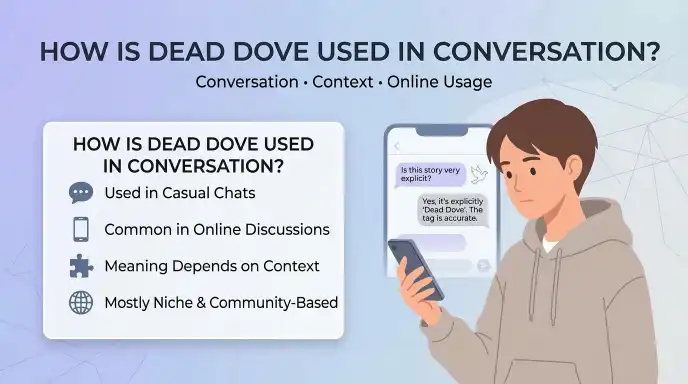
Deaddove is mainly useful in conversations about fanfiction, fandom, and stories with difficult themes.
A person might say:
“That fic is a dead dove, so check the tags.”
Another example is:
“I knew it was deaddove, but I still checked every warning.”
The expression is informal. It works best when the people involved already understand fandom language.
If you are talking with someone who has never encountered the phrase, explaining Dead Dove: Do Not Eat is clearer than using the shortened term alone.
Deaddove in a Sentence
Here are some simple examples showing how deaddove can be used:
- “That fanfic is deaddove, so check the tags before reading.”
- “The author marked the story as a dead dove because of its dark themes.”
- “I checked the warnings because someone said the fic was deaddove.”
- “This recommendation comes with a Dead Dove: Do Not Eat warning.”
- “If you do not enjoy dark fiction, you may want to skip this deaddove story.”
In these examples, the word points readers toward the story’s warnings rather than judging the quality of the writing.
Real Text Conversation Examples With Deaddove
Person A: “Have you read that new fanfic?”
Person B: “Not yet. Is it safe?”
Person A: “Check the tags first. It is deaddove.”
Person B: “Thanks for the warning. I will read the tags.”
Another example:
Person A: “Why does this story have a Dead Dove tag?”
Person B: “It means the warnings are important and the tagged content is really in the story.”
Person A: “Got it. I will check everything before reading.”
These examples show how deaddove slang works as a quick warning between people who understand fandom terminology.
Is Deaddove Positive or Negative?
Deaddove is not automatically a positive or negative word.
It mainly functions as a warning or tagging expression. The tone depends on the situation.
Someone may use it seriously to warn another reader about difficult content. Other fandom users may use the expression casually or humorously when discussing fictional works.
Importantly, deaddove does not mean “bad story.” It also does not necessarily mean the writer supports or approves of the themes shown in a fictional work.
It is better to understand the word as information about content rather than as a rating.
Why Do People Say Deaddove?
People use deaddove slang because it communicates a complicated idea in only a few words.
Instead of saying:
“Please understand that the content warnings are accurate and you should not assume the difficult material is only mentioned briefly.”
Someone familiar with fandom language can simply say:
“It is a dead dove.”
This shorthand can be useful in online communities where people already understand the expression.
The main purpose is to encourage readers to pay attention to the tags and content warnings before continuing.
Where Might You See Deaddove?
You may encounter deaddove in places where people discuss fictional or fan-created works.
Common contexts include:
- Fanfiction discussions
- Fandom communities
- Story recommendations
- Comments and replies
- Online fandom chats
- Discussions about dark fiction
- Fanwork tagging
- Conversations about content warnings
The full phrase “Dead Dove: Do Not Eat” may also appear instead of the shortened form.
Is Deaddove Common Slang?
Deaddove is not common everyday English slang. It is much more closely associated with fandom and fanfiction terminology.
Someone who regularly reads fanfiction may recognize Dead Dove: Do Not Eat quickly. A person outside fandom communities may not understand the phrase at all.
This is why context matters. If you see deaddove in a discussion about fanfiction or story tags, its intended meaning is much easier to identify.
Deaddove Pronunciation and Spelling
The phrase dead dove is pronounced just like the ordinary English words “dead” and “dove.”
You may see several written forms, including:
- deaddove
- dead dove
- Dead Dove: Do Not Eat
- DDDNE
The exact formatting can vary between communities.
Although deaddove is often written as one word in searches and informal discussions, the original phrase is Dead Dove: Do Not Eat.
Deaddove vs. Other Similar Fandom Terms
Several fandom terms can seem similar to deaddove, but they do not mean exactly the same thing.
| Term | Meaning |
| Deaddove | Emphasizes that the listed content should be taken seriously |
| Content warning | Alerts readers to potentially difficult content |
| Trigger warning | Highlights material that may be distressing to some readers |
| Darkfic | Fiction that focuses on dark or disturbing themes |
| Angst | Fiction focused strongly on emotional pain, conflict, or distress |
| Fanfiction | Fiction created by fans using existing characters or settings |
The important difference is that deaddove is mainly a warning/tag concept, while terms such as darkfic can describe the nature or style of a story.
Common Misunderstandings About Deaddove
There are several common misunderstandings about deaddove slang.
First, deaddove does not mean a story is bad. It describes how seriously readers should treat the content information.
Second, it does not identify one specific disturbing subject. The actual subject depends on the other tags attached to the work.
Third, not every dark story automatically needs to be described as deaddove. The expression has a more specific meaning connected to taking listed warnings seriously.
Finally, someone who has never encountered fandom slang may misunderstand the phrase literally. The surrounding context usually makes its intended meaning clearer.
Is Deaddove Appropriate for Formal Writing?
Deaddove is an informal fandom language, so it is generally not the best choice for formal writing.
In academic, professional, business, or school writing, a clearer phrase would usually be better.
For example, instead of writing:
“This novel is deaddove.”
You could write:
“This novel contains several disturbing themes and includes content warnings.”
However, if you are writing an article about fandom slang, fanfiction, or internet culture, using deaddove is appropriate because the term itself is the subject.
When Should You Use Deaddove?
Use deaddove when you are speaking with people who understand fandom or fanfiction terminology.
It can work well when:
- Discussing fanfiction
- Talking about story tags
- Warning a friend about difficult content
- Discussing fandom culture
- Explaining a recommendation
- Talking about dark fictional works
The term is most effective when the audience already understands what Dead Dove: Do Not Eat means.
When Should You Avoid Using Deaddove?
You may want to avoid deaddove slang when your audience is unfamiliar with fandom language.
It is also better to avoid unexplained slang in:
- Formal documents
- Academic papers
- Business communication
- Professional reports
- Important instructions
For sensitive subjects, direct language can also be clearer than relying on an unfamiliar slang term.
If there is any doubt, write out Dead Dove: Do Not Eat and explain what it means.
Deaddove and Internet Culture
Deaddove is a good example of how internet communities develop their own shorthand.
Online fandoms often use tags and short expressions to communicate information quickly. Because readers may encounter many different stories and themes, familiar terminology can make discussions easier.
The phrase Dead Dove: Do Not Eat became strongly associated with fandom culture and fanfiction tagging.
Its use shows how an expression from popular culture can develop a more specialized meaning within an online community.
How Context Changes the Meaning of Deaddove
The meaning of deaddove depends heavily on context.
If you see it beside fanfiction tags, it probably refers to Dead Dove: Do Not Eat as a warning concept.
If someone simply says “dead dove” without explaining it, a person unfamiliar with fandom might understand the words literally.
The important distinction is:
Deaddove gives the warning, while the other tags usually give the specific details.
Therefore, you should not try to guess the exact content from the word deaddove alone.
Deaddove Examples: Different Situations
In a fanfiction recommendation:
“This one is deaddove, so read the warnings first.”
In a fandom comment:
“The tags were definitely accurate. Very dead dove.”
In a private chat:
“You might want to skip this fic. It is deaddove.”
In a discussion about story tags:
“The Dead Dove tag tells readers not to ignore the other warnings.”
Each example uses the term as a reminder that the listed content is meaningful and should be taken seriously.
What Is the Origin of Deaddove?
The phrase Dead Dove: Do Not Eat comes from the television comedy series Arrested Development.
The phrase originally appears as part of a joke involving a bag labeled “Dead Dove: Do Not Eat.” The humor comes from the fact that the warning is extremely clear, yet the character still investigates what is inside.
Fandom communities later adopted the phrase as a way to communicate a similar idea: the warning says what it says, so do not assume the tagged content is something else.
Over time, the phrase became associated with fanfiction and other online fandom spaces.
Deaddove in Fanfiction and Fandom
Deaddove in fanfiction is mainly connected with tagging and content expectations.
A story may contain several specific tags describing difficult themes. Adding Dead Dove: Do Not Eat emphasizes that readers should take those tags seriously.
The label itself does not provide all the details. Readers still need to review the specific warnings.
This makes deaddove different from a genre label. It tells you how to approach the listed content rather than simply describing what kind of story you are about to read.
Deaddove and Content Warnings
A content warning tells readers that a work contains a potentially difficult subject.
Deaddove goes one step further by emphasizing that the listed material should not be dismissed or treated as an insignificant detail.
For example, if a story has a warning for a particular disturbing theme and also carries a Dead Dove tag, readers should not assume that the theme is merely mentioned once and forgotten.
The specific content warnings remain important. The deaddove tag does not replace them.
Deaddove vs. Darkfic
Darkfic and deaddove are related but different terms.
Darkfic describes fiction that explores dark, disturbing, or difficult themes.
Deaddove refers to the warning idea that readers should take the story’s listed content seriously.
A story can be dark without being described as deaddove, and a Dead Dove: Do Not Eat tag does not by itself tell you exactly which dark themes are present.
So, think of darkfic as describing the fiction and deaddove as emphasizing the warnings.
Deaddove and the “Don’t Like, Don’t Read” Idea
The phrase Don’t Like, Don’t Read is another concept found in fandom culture.
It generally reflects the idea that readers can avoid fictional content they do not enjoy or do not want to encounter.
Deaddove has a more specific function. It emphasizes that readers should pay attention to the available tags and warnings before deciding if to continue.
Both ideas involve reader choice, but they are not identical.
Is Deaddove a Warning or a Genre?
Deaddove is better understood as a warning or tagging concept, not a genre.
A genre tells you what type of story something is, such as romance, mystery, fantasy, or horror.
A Dead Dove tag does not work that way. It tells readers to take the listed content seriously.
The story itself could belong to many different genres while still using the expression.
How Writers Use Deaddove Tags
Writers may use Dead Dove: Do Not Eat alongside more specific content tags.
The specific tags provide the useful details. The Dead Dove label reinforces the idea that readers should not overlook those details.
For example, a story might have several content-related tags and then include a Dead Dove warning.
Writers should not rely on the phrase alone when readers need specific information. Clear and accurate tags remain important.
How Readers Should Understand a Deaddove Tag
When you see a deaddove tag, the best approach is to stop and read the other available warnings.
The phrase itself does not tell you exactly what the story contains.
Instead:
- Read the specific tags.
- Check any available content warnings.
- Consider if the themes are suitable for you.
- Make your own decision about reading the work.
The key message is simple: do not ignore the warnings.
Why Is Deaddove Important in Fandom Communities?
Different readers have different comfort levels with fictional themes.
Some people enjoy dark fiction, while others prefer lighter stories. A clear tagging system gives readers more information before they begin.
Deaddove can serve as a quick signal for people who already understand fandom terminology.
It does not tell readers what they should enjoy. Instead, it helps them make a more informed choice about the content they are about to read.
Common Mistakes People Make With Deaddove
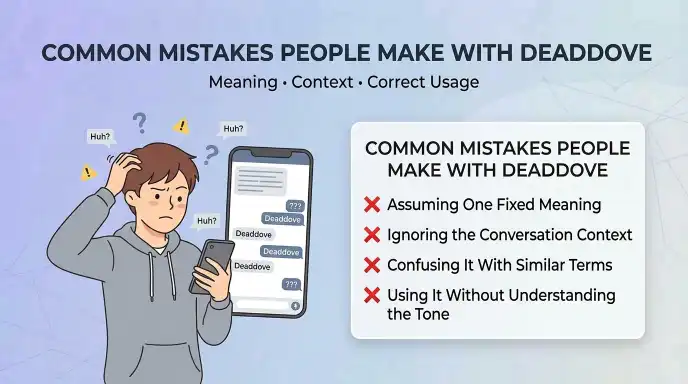
One common mistake is assuming deaddove means “bad story.” It does not.
Another mistake is thinking that the term identifies one particular disturbing subject. It does not. The specific tags provide that information.
Some readers also make the mistake of seeing Dead Dove and ignoring the other tags. That defeats the purpose of the warning.
Finally, people unfamiliar with fandom may use the term incorrectly because they interpret “dead dove” literally rather than understanding its fandom meaning.
Is Deaddove Common Outside Fandom?
Deaddove is not widely used in everyday English outside fandom communities.
It is much more recognizable among people who are familiar with fanfiction, fandom terminology, and online story tagging.
If you use the term with someone outside that environment, they may not understand what you mean.
For general audiences, the full phrase Dead Dove: Do Not Eat followed by a short explanation is usually clearer.
Deaddove vs. Content Warning and Trigger Warning
These terms are related, but they serve different purposes.
| Term | Main Purpose |
| Deaddove | Emphasizes that the listed content should be taken seriously |
| Content warning | Alerts readers to potentially difficult content |
| Trigger warning | Highlights content that may be distressing to some people |
| Darkfic | Describes fiction with dark or disturbing themes |
The main point is that deaddove does not replace a detailed content warning.
Deaddove Meaning in Online Fandom Communities
In online fandom communities, deaddove meaning is usually understood through the phrase Dead Dove: Do Not Eat.
People may use the term while discussing:
- Fanfiction
- Fanworks
- Story recommendations
- Dark themes
- Fandom tags
- Content warnings
- Reader reactions
The shortened spelling deaddove can be especially convenient in casual online conversations.
Still, not every fandom community uses terminology in exactly the same way. Context remains important.
What Does Deaddove Mean on AO3?
Deaddove on AO3 generally refers to the fandom warning concept associated with Dead Dove: Do Not Eat.
Readers who encounter the tag should pay close attention to the other tags attached to the work.
The phrase itself does not tell you which specific themes are included. Instead, it signals that the other warnings should be taken seriously.
For that reason, reading the full tag list is more useful than relying only on the Dead Dove label.
Deaddove Meaning in Fanfiction
In fanfiction, deaddove meaning centers on reader awareness.
The term tells readers that the content identified through the story’s tags should be understood literally and seriously.
It does not necessarily describe a particular genre, writing quality, or opinion about the story.
A fanfiction can be well written, poorly written, popular, unpopular, dark, humorous, romantic, or dramatic while still using the Dead Dove concept.
Is Deaddove a Negative Label for a Story?
No. Deaddove is not automatically a negative label.
It does not tell you if a story is well written or poorly written.
It also does not necessarily tell you if the author agrees with or promotes the fictional behavior or themes.
The purpose is mainly to communicate information about content.
if someone considers the content enjoyable, uncomfortable, disturbing, interesting, or unsuitable is a personal matter.
Deaddove and Reader Choice
One of the most useful parts of deaddove is that it supports reader choice.
Readers have different interests and boundaries. A clear warning gives them an opportunity to decide before they begin reading.
For one reader, a particular theme may be acceptable. For another reader, it may be something they prefer to avoid.
The Dead Dove concept encourages readers to make that decision with better information.
Frequently Asked Questions About Deaddove Slang
Q1. What does deaddove slang mean?
Dead Dove slang means “Dead Dove: Do Not Eat,” a fandom warning that tells readers to take a story’s listed content tags seriously.
Q2. What does deaddove mean in texting?
In texting, dead dove usually refers to the fandom phrase “Dead Dove: Do Not Eat,” especially when people are discussing fanfiction or dark fictional content.
Q3. What does deaddove mean on social media?
On social media, deaddove is generally used in fandom-related discussions to emphasize that a story’s warnings and tags should be taken seriously.
Q4. Is deaddove an internet slang word?
Yes. Deaddove can be considered niche internet and fandom slang, although it is not common everyday slang.
Q5. How do you use deaddove in a sentence?
You can say, “That fanfic is deaddove, so check the tags before reading.” The sentence uses the term as a warning about the story’s content.
Q6. Is deaddove positive or negative?
Deaddove is neither automatically positive nor negative. It mainly functions as a warning about the content of a fictional work.
Q7. Can deaddove be used as an insult?
It is not normally an insult. Deaddove is mainly a fandom warning or tagging expression, although people may use it jokingly in casual conversations.
Q8. Is deaddove appropriate in formal English?
Usually, no. Deaddove is informal fandom slang. In formal writing, it is clearer to explain the specific content or use a standard content-warning phrase.
Q9. Is deaddove a common slang term?
No. Deaddove is relatively niche and is mainly associated with fandom and fanfiction communities rather than everyday conversation.
Conclusion:
Dead Dove slang comes from the phrase “Dead Dove: Do Not Eat” and is mainly associated with fandom and fanfiction communities. It works as a warning that tells readers to take a story’s tags and content warnings seriously.
The term does not describe one specific type of disturbing content. It also does not mean that a story is automatically good or bad. Instead, the specific tags provide the important details about what readers may encounter.
If you see deaddove online, especially while discussing fanfiction or fandom, the best approach is simple: check the tags, understand the warnings, and decide if the content is right for you.